
Travel journalism has taken me around the world and back again. When people ask how many countries I’ve visited, I do my best Johnny Cash scowl and say in a deep basso, “I’ve been everywhere, man.” Truth be told, I have no idea, and I find country tally boasts as obnoxious as body count brags.
I’ve been to bucket-list cities like Paris, Tokyo, and Rome, but frankly, I’m in no hurry to return. Sure, there were epic meals, breathtaking art museums, and dazzling hotels, but there were also plenty of headaches: insufferable lines, swarming crowds, and exorbitant prices. Vacationing in Paris felt like attending Burning Man: I was happy I did it, but once was plenty.
My finest trips have been to off-the-beaten-track cities. The architectural beauty of Riga rivaled that of Paris, and the Latvian capital’s nonpareil museums had no lines and cost just a few euros. In Asheville, North Carolina, I saw concerts as memorable as any I’ve seen in New York City—and in venues so intimate that I drank with the musicians between sets. Vineyards in Argentina were prettier than those in Tuscany—and I’ll let you guess which ones were easier on the wallet.
I’m not trying to talk anyone out of going to Paris, London, or Rome. They’re eternal cities for a reason. But if you’re as allergic to crowds, curt manners, and sticker shock as I am, consider visiting these ten cities—hidden gems untrammeled by the selfie stick-wielding hordes.

Overlooking Riga from the Grand Poet.
Photo courtesy of Semara Hotels Riga
Riga, Latvia
Where to Stay: A Medieval rune stone over a fjord in Norway reads, “God protect us from the Courlanders.” The ancient inhabitants of Latvia, once called Courland, were so large and warlike that they struck terror into the hearts of even the Vikings. In stark contrast, modern Latvians are among the most welcoming people in Europe.
Nowhere is Latvian hospitality better epitomized than at the Grand Poet Hotel in Riga. A quick walk from the Old Town, the Grand Poet houses two luxury restaurants and a renowned spa with saunas, steam rooms, and cold plunges. Rooms overlook the stately gardens of Bastejkalns Park, and mini-fridges stay stocked with gorgeous Latvian wines.
What to Do: As an architecture nerd, I relished strolling through Riga, the European capital with the highest concentration of Art Nouveau buildings. It lies across the Baltic Sea from Copenhagen, and many Latvian chefs boomerang back after stints in New Nordic temples like Noma and Alchemist. In 2024, the Michelin Guide recognized Riga, and you can find Baltic-inflected New Nordic cuisine at restaurants like 3Pavari and Ferma.

The stunning exterior of the NH Collection Prague Carlo IV hotel.
Photo courtesy of NH Collection
Prague, Czech Republic
Where to Stay: Holy Roman Emperor Charles IV left his mark all over Prague, lending his name to the Czech capital’s oldest university, most iconic bridge, and most sumptuous hotel—NH Collection Prague Carlo IV. The Neo-Renaissance tower was once a bank, and the vault now serves as a cocktail bar. The marble floors, frescoes, and soaring ceilings in the lobby evoke the grandeur of a palace. After exploring nearby Senovazne Namesti—a serene, leafy neighborhood steeped in history—book an appointment at the spa or swim laps in the mosaic-lined pool. 1890 Restaurant & Bar serves traditional Czech cuisine with gourmet pizzazz. Breakfast is a smorgasbord of cold cuts, cheeses, jams, and omelets.
What to Do: The National Gallery Prague is one of the finest and most extensive art collections in Central Europe, home to masterpieces by titans like Bruegel and Rubens. Beyond artistic and architectural treasures, Prague is a legendary party city. The statistics don’t lie: the Czech Republic consumes more beer per capita than any other nation in the world. And, as a Bohemian bartender quipped to me: “Sex is the national sport of the Czech Republic.”

Photo courtesy of Anantara New York Palace Budapest Hotel
Budapest, Hungary
Where to Stay: New York Café, dubbed “The World’s Most Beautiful Coffeeshop,” is a rococo jewel as dazzling as a Habsburg drawing room. It’s one of Budapest’s most Instagrammable locales, and the Sachertorte and Esterházy cake are almost as memorable as the décor. You may be surprised to learn that New York Café is part of Anantara New York Palace Budapest Hotel, a temple of luxury designed by Alajos Hauszmann, a 19th-century architectural giant. Visit The Poet Bar to try rare Tokaj wines or book a dinner table at White Salon to savor Hungarian classics reimagined with Michelin-level finesse.
What to Do: Budapest is a tale of two cities: Buda, the ancient hilltop fortress built by the Romans and expanded by the Magyars; and Pest, the newer settlement across the Danube, home to the Jewish Quarter and districts of Art Nouveau splendor. If you have a free afternoon, stroll between the two cities via the Chain Bridge (Széchenyi Lánchíd). The ruin bars in the Jewish Quarter were once dilapidated buildings but are now Budapest’s most iconic nightlife hotspots—lively watering holes filled with graffiti, cheap beer, and a healthy mix of locals and tourists. There are several ruin bars in District VII, also called the Jewish Quarter, but Szimpla Kert is the oldest and most famous.
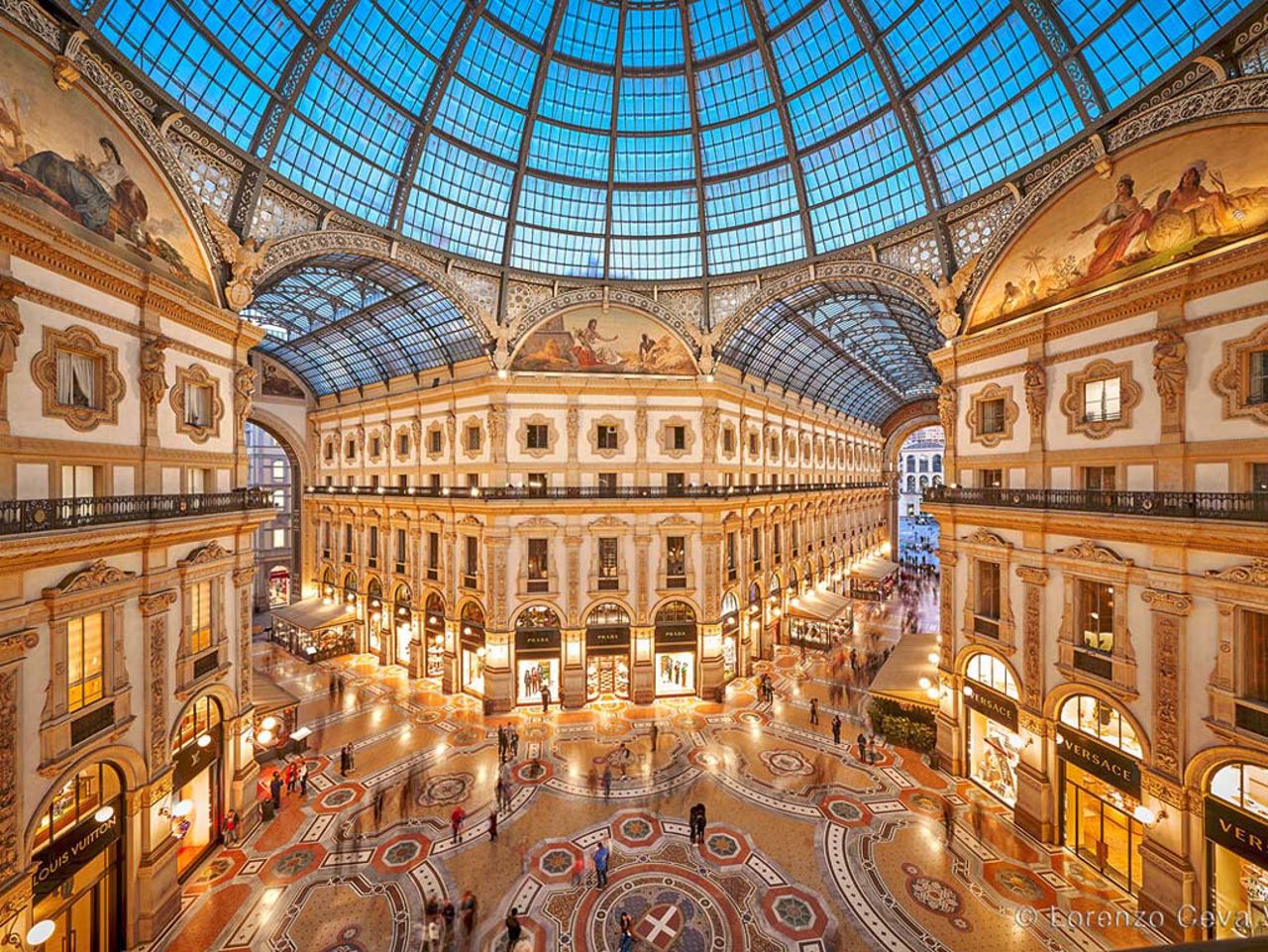
Photo via Galleria Vik Milano
Milan, Italy
Where to Stay: Built in the 19th century in honor of Italy’s first monarch, the Galleria Vittorio Emanuele II is a shrine to high fashion—a soaring glass-and-iron arcade adorned with frescoes, marble, and statuary. The Galleria houses flagship stores of Italian luxury labels like Gucci, Prada, and Bottega Veneta. Stop by Camparino in Galleria, the bar that invented the Negroni, if you need a touch of liquid courage before an upscale shopping spree.
Galleria Vik Milano epitomizes Milan’s artistic élan, refined taste, and sprezzatura. With floor-to-ceiling frescoes and a replica of Rodin’s The Thinker, the hotel’s lobby feels like the entrance to a grand art museum. Each of the 89 guest rooms is named after an artist, with original works on the walls within. Settle by the window with a glass of Lambrusco to listen to the heartbeat of Milan—the rhythmic click of stilettos on marble, the whirr of espresso machines, and the musical cadences of Italian conversation. The rooftop pizzeria treats guests to charred pies, Negronis, and breathtaking views.
What to Do: Lombardy is synonymous with wealth and innovation, traits that extend to Milanese fashion, design, and cuisine. Milan’s most emblematic dish is risotto alla Milanese, a golden, slow-cooked rice infused with saffron, Parmigiano-Reggiano, and occasionally bone marrow. Legend has it the dish originated in the 16th century when a stained-glass artist tossed saffron—then used as a pigment—into his pot of boiling rice. Trattoria Masuelli San Marco has been an institution for the dish since 1921 and still follows an old-school recipe with both butter and marrow.
While it’s tempting to spend all your waking hours in Milan shopping and dining, the city is a trove of cultural treasures. Book a tour of the Duomo di Milano, a magnificent Gothic cathedral near the Galleria. Special tickets grant access to the rooftop terraces, where you can walk among marble spires and savor sweeping views of the city. With tickets booked weeks in advance, you can view Da Vinci’s Last Supper at the Convent of Santa Maria delle Grazie.

Photo by Johnny Motley
Kobe, Japan
Where to Stay: Tucked among brick mansions once home to 19th-century Dutch and English traders, Kobe Kitano Hotel blends the luxury of a European inn with omotenashi, the refined spirit of Japanese hospitality and meticulous attention to detail. Restaurant Ash, the hotel’s Michelin-starred dining room, prepares local ingredients—including generous portions of Kobe beef—with French technique. The lobby bar holds rare bottles of Yamazaki and Hibiki—one of the finest Japanese whisky collections in either the East or the West.
What to Do: Kobe is a town that makes you wish you had multiple stomachs. From the street carts in Chinatown to Francophile bakeries and Michelin restaurants, Kobe is a culinary extravaganza.
One of the first Japanese ports to open to Western merchants following the Meiji Restoration, Kobe’s rich patisserie culture alludes to its links to Europe. And yes, you’ll find copious quantities of the eponymous beef—usually at a fraction of what you’d pay outside Hyōgo Prefecture. When you’re ready to digest, head to Arima Onsen, a hot spring town just 30 minutes outside the city. Patronized by emperors and extolled by poets, Arima is famed for its two types of geothermal waters—golden and silver—each said to confer distinctive healing benefits.

Photo by Johnny Motley
Salta, Argentina
Where to Stay: Salta’s jagged peaks and sun-scorched deserts earned the Argentine province the nickname of El Impenetrable. Just a few hours by car from Bolivia, Salta is home to a large community of Indigenous Quechua speakers. Its vineyards are the highest in the world outside of Tibet, and the Andes’ intense sunlight and mercurial weather produce grapes with exceptionally concentrated flavors. Estancia Colomé is a remote retreat nestled in the Calchaquí Valley, with sweeping mountain and vineyard views. Founded in 1831, Bodega Colomé is the oldest continuously operating winery in Argentina. Tyrian purple in the glass, Colomé’s Malbecs possess all the power and elegance of Diego Maradona in his prime.
What to Do: Salta City is a colonial jewel of Baroque churches, cobblestone streets, and plazas echoing with the melodies of chacarera music. The Calchaquí Valley is laced with hiking trails that wind past cactus-studded canyons and adobe villages. Salta is the land of Torrontés, a fragrant white wine renowned for its notes of peach and honeysuckle. Visit Bodega Amalaya and Bodega Colomé to taste majestic expressions of Torrontés, alongside equally memorable reds and sparkling wines.
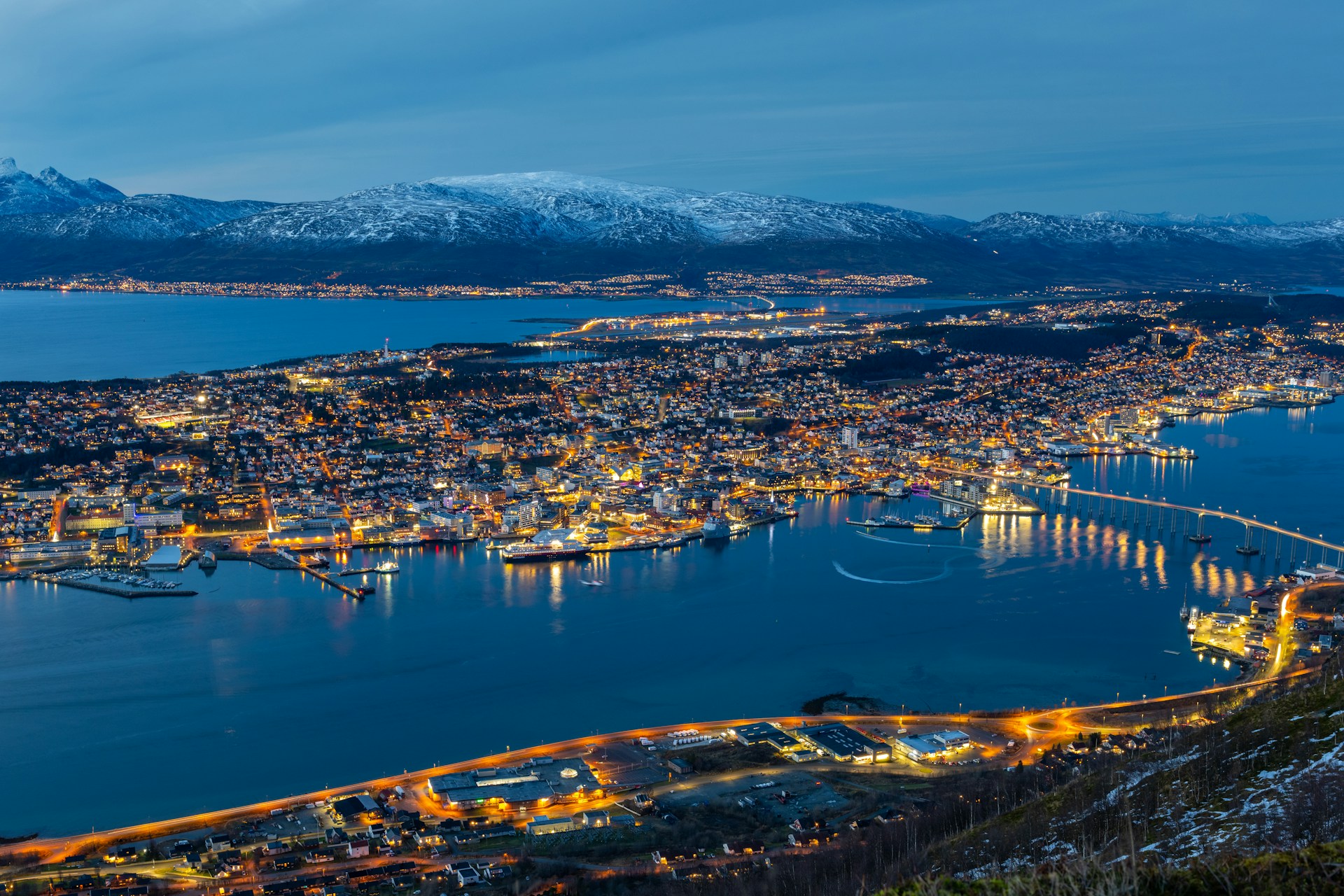
Photo by Felix Rottmann on Unsplash
Tromsø, Norway
Where to Stay: Tromsø is the largest city above the Arctic Circle. Once a launch point for expeditions to the North Pole, it’s now a bustling port with a sizable Sami community—reindeer herders who represent one of Europe’s only protected Indigenous populations. Smarthotel Tromsø offers comfy, affordable lodging just a short stroll from the harbor. Equal parts fishing village and college town, Tromsø punches above its weight when it comes to pub life. Ølhallen pours an impressive selection of Norwegian craft brews and also hosts live music. If you need to soak up the booze, head to the nearest street cart slinging reindeer hot dogs.
What to Do: Roads are few and far between in the Arctic, and the best way to see its fjords, mountains, and fishing villages is by ship. While many cruises pay lip service to sustainability, Havila Voyages walks the walk. Their fleet runs partially on batteries, reducing fuel consumption, and they serve à la carte menus instead of wasteful buffets. The dishes—fresh Arctic seafood and Scandinavian delicacies—are almost as memorablee as the views from the dining room. Havila’s cabins are quiet and comfortable, and amenities include a gym and several elegant bars. For those “chasing the green dragon,” a winter cruise is your best bet to see the northern lights. (Note: Don’t wave at the aurora. Norwegian lore holds them to be ferocious celestial beings.)

Street meats in Potsdam
Photo by Johnny Motley
Potsdam, Germany
Where to Stay: During my freebooting twenties, Berlin was my favorite European capital. Now in my thirties, I prefer to stay in Potsdam—a serene city just twenty minutes from Berlin by train. The Prussian philosopher-king Frederick the Great built Sanssouci Palace here, and the “Prussian Versailles” remains one of Germany’s most-visited UNESCO World Heritage Sites. MAXX Hotel Sanssouci Potsdam is a stone’s throw from both Sanssouci Palace and Potsdam’s Brandenburg Gate. Don’t skip the breakfast buffet of cold cuts, muesli, and espresso. It’s the kind of spread I like to think Frederick the Great would have offered Voltaire during the philosopher’s visits to the Prussian court.
What to Do: Potsdam is an architectural potpourri, where grandiose Prussian buildings stand alongside Chinese façades and Egyptian obelisks. Spend an afternoon wandering the city’s stately squares and leafy avenues, perhaps pausing at a currywurst stand to refuel. Be sure to explore the magnificent gardens and rococo halls of Sanssouci Palace. The Soldier King was enamored with French court culture, and the palace’s name derives from the French sans souci—“without a care.” A romantic as well as a statesman, warrior, and philosopher, Frederick hung a plaque in the foyer that reads: “When the dawn in its brilliance returns, let it find us here, discussing love and poetry.”
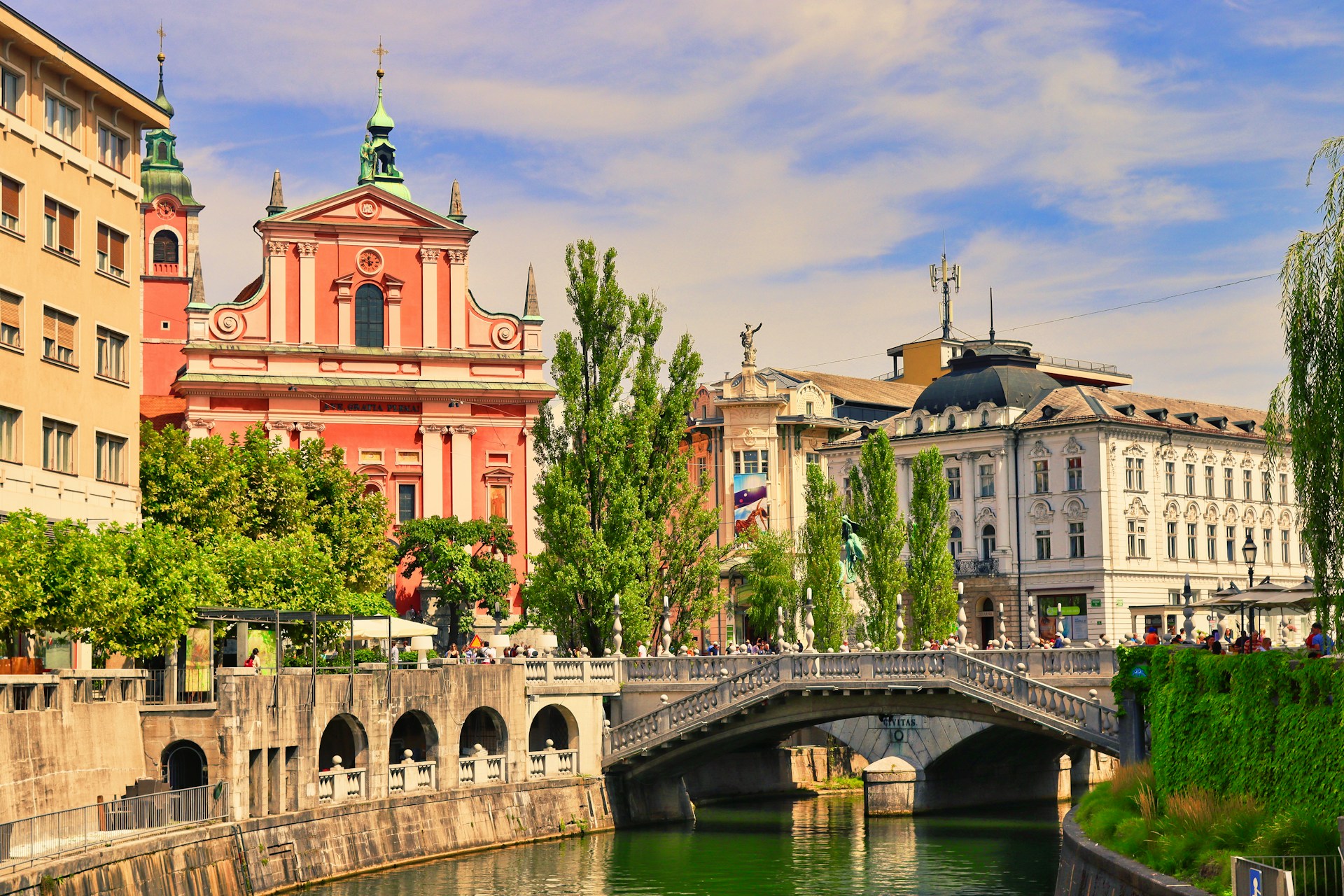
Photo by detait on Unsplash
Ljubljana, Slovenia
Where to Stay: Slovenia is the crossroads of Germanic, Slavic, and Latin Europe. In its cuisine, music, and phenotypes, you’ll find hints of Italy, the Balkans, and Austria. Lush, green, and misty, the Slovenian capital of Ljubljana evokes the poetic charm of Dublin. InterContinental Ljubljana sits in the shadow of Ljubljana Castle, a 12th-century fortress overlooking the city. The hotel is just a short walk from the Old Town and Riverside districts, neighborhoods alive with cafés, market stalls, and pub life. Upper-floor rooms offer sweeping views of the medieval skyline and the serpentine Ljubljanica River.
What to Do: Ljubljana looks like a city lifted from the pages of a fairytale, but Metelkova Mesto, known as the Free Zone, feels like a slice of Bushwick dropped into Eastern Europe. Festooned with graffiti and thrumming with bars and clubs, Metelkova once housed the Yugoslav military headquarters. After the barracks crumbled with the regime, a mix of squatters, anarchists, and artists moved in. Slovenian authorities initially condemned Metelkova, but the neighborhood is now celebrated as Ljubljana’s countercultural epicenter. After an afternoon of bar-hopping in Metelkova, dine at Strelec, a Michelin-starred restaurant inside Ljubljana Castle. The panoramic views of the city match the opulence of the fare.

Ancient architecture in Zadar
Photo by Johnny Motley
Zadar, Croatia
Where to Stay: Founded over 3,000 years ago, Zadar is one of the oldest continuously inhabited cities in Europe. Like Dubrovnik or Kotor, it was once an Adriatic fortress encircled by limestone ramparts and ornate gates. Abutting its ancient walls is Hotel Bastion, a boutique auberge with just 28 rooms. Restaurant Kaštel overlooks the Adriatic, and chef Marijo Čepek serves fresh seafood with glorious simplicity—often with nothing more than a kiss of Croatian olive oil and a sprinkle of artisanal salt. The wine list, a love letter to Croatia’s finest vineyards, is worthy of the restaurant’s Michelin accolades.
What to Do: Zadar’s rhythms are as languid as the gentle Adriatic breeze. It’s a seaside sanctuary to sip slowly. Spend your morning ambling through the Old Town, admiring elegant churches, elaborate gates, and sun-drenched plazas. Or do as the locals do: post up at an al fresco café with a good book and a pack of cigars. For an even more subdued pace, take a ferry to Dugi Otok, an island off the coast with more sheep than people. Its sea cliffs, lighthouses, and hidden beaches promise glorious hikes.