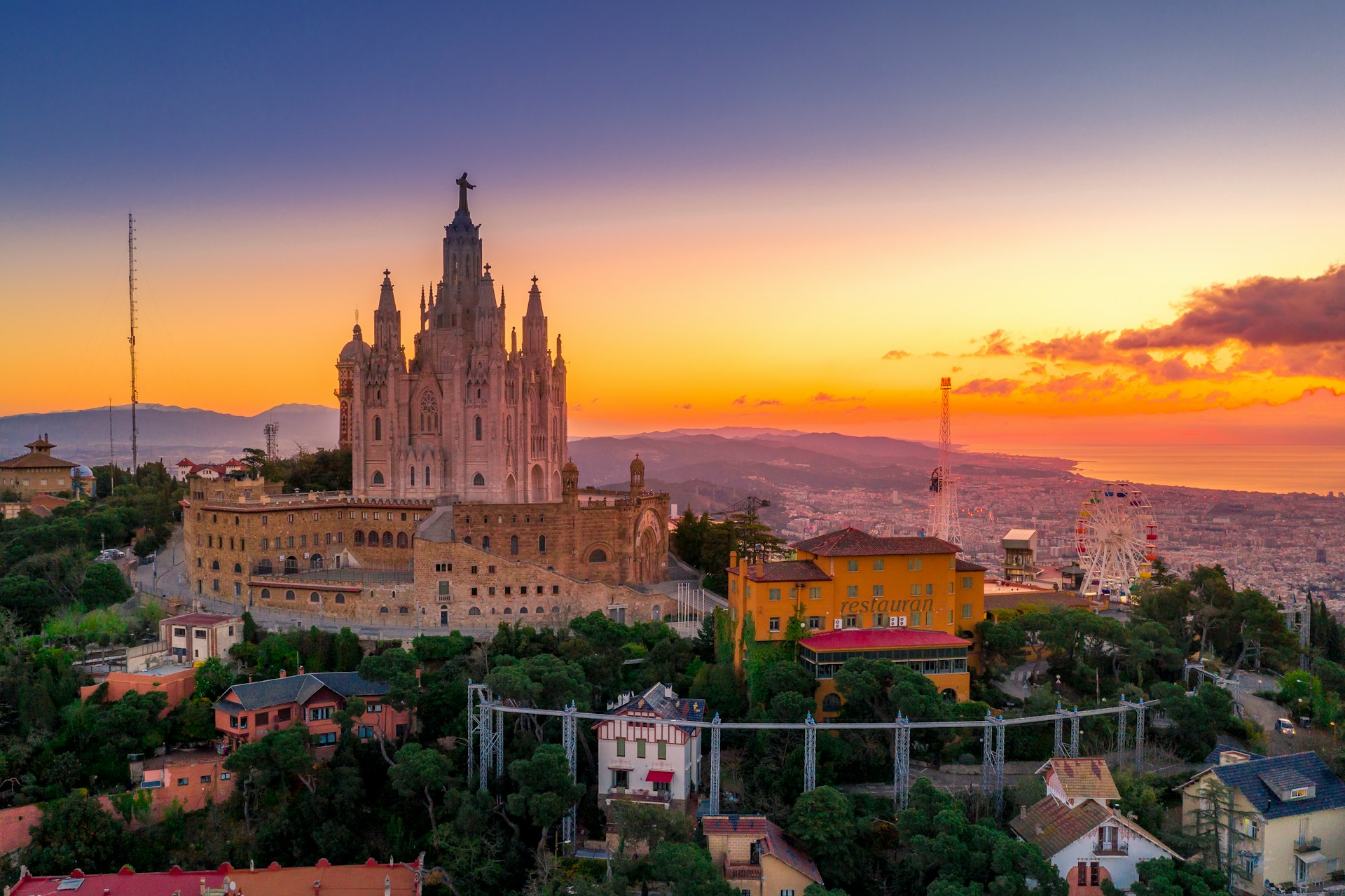
I once dismissed Barcelona as a wine-soaked playground for frat bros “studying” abroad. But the more I traveled through Europe, the more glowing reports I heard about the Catalonian capital—the dazzling restaurants, the superb nightlife, the feast of architectural and artistic marvels. Then a woman I fancied—a ginger-haired, aquamarine-eyed German—mentioned she was heading to Barcelona for yoga training. Flights from NYC hovered around $650. All signs pointed to Northern Spain.
On my first morning, I stumbled into Base Elements, a gallery of drawings by Spanish graffiti artists. Sporting an Appetite for Destruction T-shirt, a Shinola Mechanic, and vintage Persols, the gallery’s owner Robert Burt looked every bit as cool as the art he sold. He had pulled up stakes from Hollywood in the ’90s, learned Catalan fluently, and carved out a name for himself in Barcelona’s underground art scene. I offered to buy him a round in exchange for some city recs.
Robert shared historical tidbits as we drained a bottle of cava. “Legend has it that Hercules founded Barcelona during his travels,” he said. “But the earliest historical records mention Barcino, a first-century Roman fortress on the fringe of Caesar’s empire.” He ordered a bowl of Arbequina olives and jamón ibérico to soak up the booze. “Catalunya reminds me of California—the sunny climate, the sea pressed up against the mountains, the fabulous wine.” Topping off my glass, he added, “But remember: Barcelona isn’t a city to chug. Savor it slowly, like a good cava.”
I was so grateful for Robert’s list of restaurants, bars, and museums that I went back to Base Elements on my last day in town and bought a painting by Pez, an iconic Catalan street artist.


Where to Stay
I’m nostalgic for the communal energy of hostels, but my middle-aged body revolts against the idea of sleeping in a dorm. Moxy Hotels are for those of us who want the social ethos of a hostel but who also need our creature comforts. You’ll find the comfy couches, buzzy lobby bars, and communal breakfast tables of a good hostel, but also enjoy private rooms with plush mattresses, marble bathrooms, and beautiful decor.
In the charming blue-collar neighborhood of Sants, Moxy Barcelona lies just a few blocks from a metro stop. The snacks at the 24-hour grab-and-go station are a godsend after drinking wine until 4 a.m.—something that seems to happen often in Barcelona. (It also stocks local wine and craft beer.) Breakfast is a spread of Spanish cheeses, charcuterie, eggs, fresh bread, and such. Pull an espresso shot and enjoy the breeze on the wrap-around patio off the dining area. Don’t leave Moxy Barcelona without checking out the rooftop, a sunny sanctuary with a pool, bar, and panoramic views.
For a more extravagant stay, The Mercer Hotel is a palace of luxury in El Barrio Gótico, a neighborhood of serpentine alleyways, hole-in-the-wall bars, and majestic churches. With 28 beautiful guest rooms, the hotel encompasses several historical buildings in the Gothic Quarter. The interior, designed by Pritzker Prize-winning Spanish architect Rafael Moneo, showcases Roman walls and 12th-century frescoes. Look closely at the weathered stone walls in the dining room—they were once part of the ramparts of the Roman fortress of Barcino.
Rooms feature jacuzzi tubs and windows overlooking the orange trees and gardens of the central courtyard. The sunny rooftop has a garden, pool, and lounge chairs. If you need sightseeing recommendations or hard-to-snag restaurant reservations, the concierge team—all Les Clefs d’Or certified—has you covered.
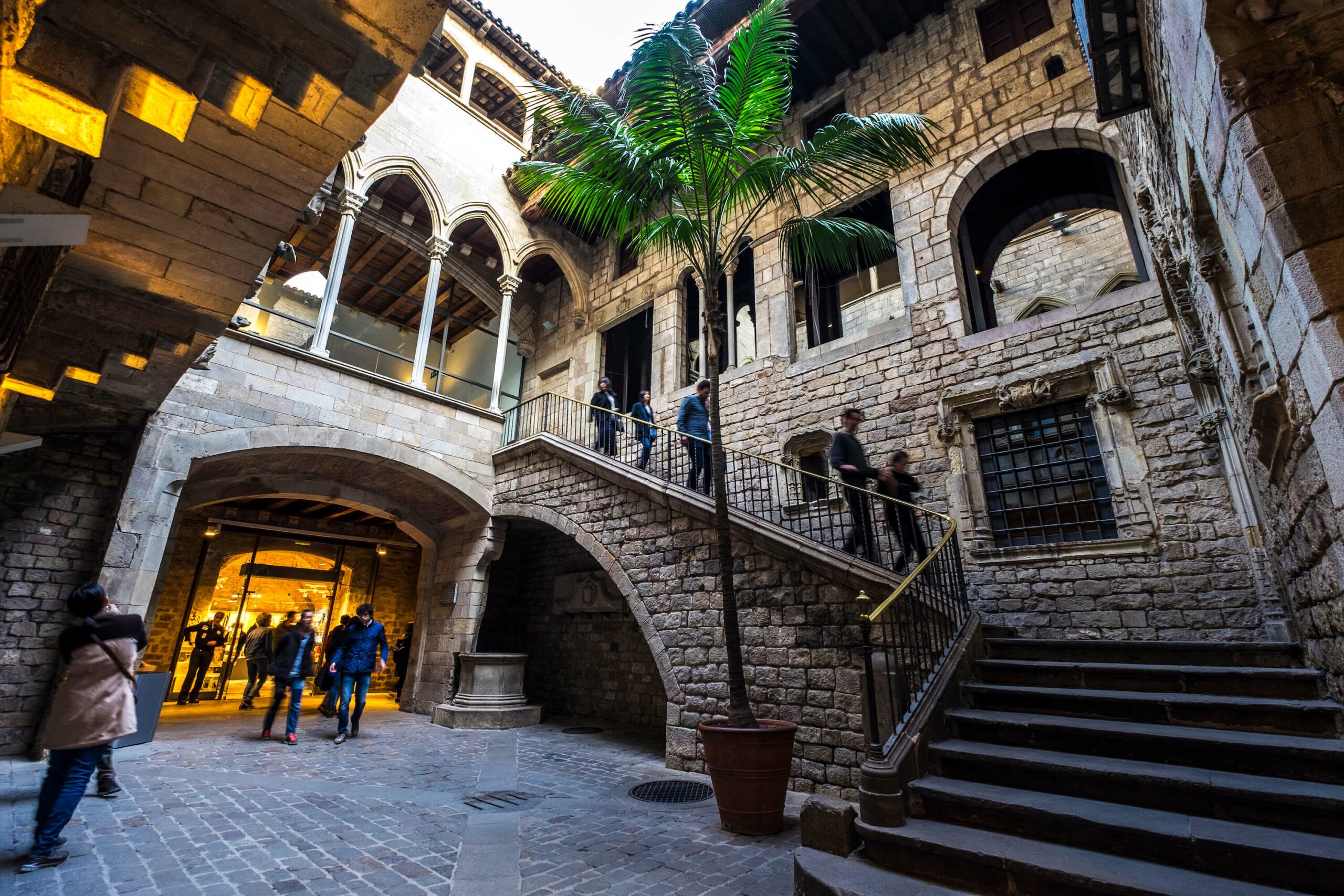
Photo via Museu Picasso Barcelona
What to Do
Founded in 1963 in collaboration with Pablo Picasso, the Picasso Museum houses more than 4,000 works by the Cubist master. The halls exhibit iconic paintings like Las Meninas and The First Communion, as well as Picasso’s ceramics and engravings. Exhibits unfold chronologically, showing how his style evolved over his career. In old age, Picasso’s brush grew even more dreamlike, affirming one of his most touching reflections: “It took me four years to paint like Raphael, but a lifetime to paint like a child.”
The museum’s gift shop is excellent. I purchased a copy of Las Meninas printed on Hahnemühle paper from Germany, which the cashier rolled and sealed in a sturdy cardboard tube for my flight. After marveling at the works of genius, do as Picasso himself might have done: settle in for a midday glass of wine at a tapas bar in El Born, the surrounding medieval neighborhood buzzing with street life and music.
Catalonia is famous for wine, but even in such a vaunted viticultural mecca, I still require the occasional beer. Estrella Damm, a crisp, zippy Pilsner, has kept Catalans refreshed and merry since 1876. You’ll spot the brand’s iconic red star on taps everywhere, from humble neighborhood bars to Michelin-starred restaurants. Estrella Damm operates two breweries: the original in the center of Barcelona and a larger, modern facility in the suburb of El Prat. Take a tour of either to taste rare pours like Voll-Damm, a robust German-style Doppelbock, and Inedit Damm, a wheated beer created in collaboration with chef Ferran Adrià.

Where to Eat
Barcelona has been a cosmopolitan entrepôt for centuries, with conquest and trade introducing ingredients like almonds, saffron, and citrus into Catalan larders. Mountain-and-sea combinations are a hallmark of the region’s cuisine—think fish with mushrooms, pig’s feet with shrimp, or squid stuffed with shredded pork.
As with Tokyo or Rome, Barcelona has superb cuisine at every price point. One of the best meals of my trip was a simple lunch of jamón ibérico, olives, and pa amb tomàquet—bread rubbed with garlic and tomato pulp. The humble dish, no more than a few euros, was as memorable as the gourmet treats I savored in the city’s Michelin-starred temples.
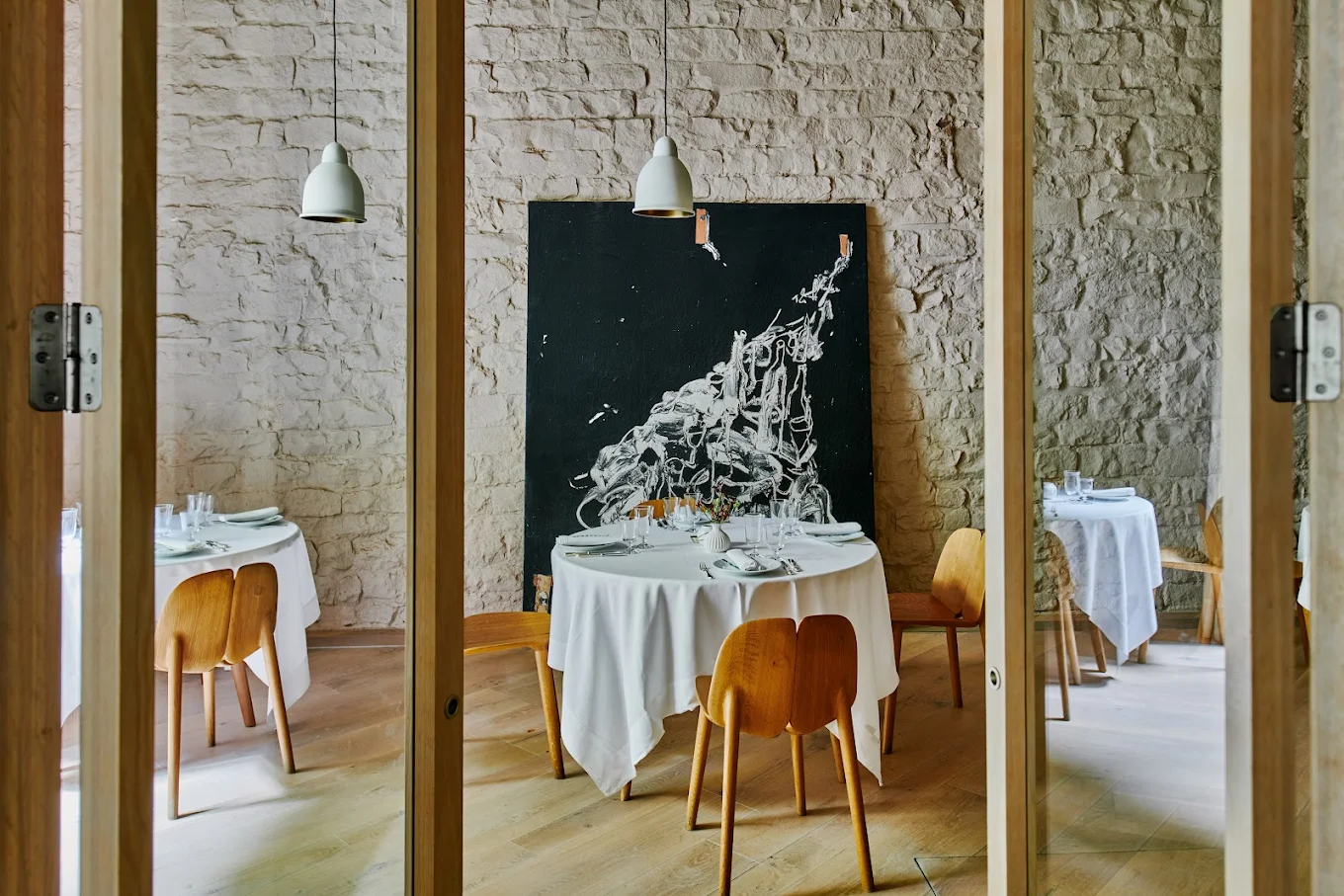
Mercer Restaurant head chef Xavier Lahuerta cut his teeth at El Bulli, a restaurant crowned best in the world for four consecutive years. With the flair of an artist, Lahuerta adorns his seafood, vegetables, and meats with colorful sauces, broths, and pickles. Foams and aromatic powders add playful touches of molecular gastronomy—avant-garde techniques pioneered at El Bulli—to his dishes. Floor-to-ceiling glass panes and an ancient Roman wall frame the elegant dining room. The wine pairing with the tasting menu is a parade of Catalonian reds, whites, and bubbles—each pour thoughtfully curated to make the taste of olive oil, pork, and fresh fish sing.
Chef Lahuerta also oversees Le Bouchon, a tapas bar. The ambiance is more relaxed than the Mercer Restaurant, but the fare is just as memorable. In a well-lit, intimate salon, guests share family-style small plates like patatas bravas—crispy fried potatoes coated in romesco sauce—and carxofes fregides, crispy strips of artichoke finished with lemon and sea salt. The cod ceviche is a standout—tender fish bathed in citrus, garnished with black olive powder, and drizzled with Spanish olive oil as fragrant as perfume.
Three El Bulli alumni opened Disfrutar, a restaurant with three Michelin stars and the top spot on the World’s 50 Best Restaurants list. Despite Disfrutar’s lofty accolades, the atmosphere is refreshingly laid-back.
The restaurant’s name—to enjoy in Spanish—alludes to its playful and relaxed spirit. The staff is warm and knowledgeable, the dining room bright and airy, and guests sip cava in the restaurant’s patio garden after dinner.
Disfrutar offers two tasting menus: the Classic, a greatest-hits compilation; and the Seasonal, which changes with the calendar. The staff recommends the Classic for first-time visitors, and a vegetarian version is available with advance notice. Like the paintings of Salvador Dalí, Disfrutar’s edible art is anchored in Catalonia but often veers into the surreal. Highlights include spheres of Iberian ham essence, pasta made from shaved mushrooms, and a bao bun laden with Beluga caviar. It’s one of the most coveted reservations in Europe, so book well in advance. Once seated, settle in—the 30- to 32-course experience unfolds over three to five hours.