
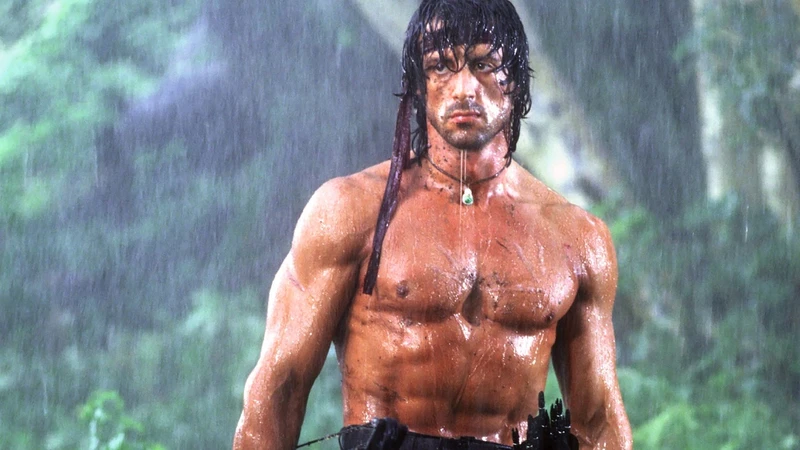
Timing is everything, including a cosmic punchline: director Robert Allen Schnitzer’s 4K restoration of Rebel, released in 1974 as No Place to Hide and starring Sylvester Stallone in his first lead role, returned to theaters on June 6. Back in May, Rambo: First Blood Part II turned 40.
In Rebel, Stallone plays Jerry, an anti-war activist-cum-domestic terrorist, bent on destroying a corrupt cookware company profiting from selling torture chambers—“tiger cages”–during the Vietnam War. Contrast that with Rambo: First Blood Part II, made by George P. Cosmatos 11 years later, where Stallone plays a battle-scarred Green Beret on a Vietnam War mission of his own: to retrieve POWs left in enemy custody long after the United States’ withdrawal. You get the sense that Jerry might feel sympathetic to John, a man stricken with PTSD and survivor’s guilt, now given a return ticket to the place where he picked up these conditions. You also get the sense, by the end of First Blood Part II, that John would approve of Jerry’s violent means toward peaceful ends.
At the same time, First Blood Part II is a sweat-slicked, pulpy betrayal of 1982’s First Blood, one of cinema’s exemplary anti-war movies. The Rambo series started out as a portrait of America indulging its authoritarian tendencies, and First Blood reflects the treatment of the soldiers fortunate enough to make it home, traumatized by their experiences and subject to contempt by people like Jerry.
Tristar Pictures
A Strange Successor
One could make the case that structurally, both films are wading in similar waters. One couldn’t argue, though, that they’re alike in any other way. First Blood cuts right to Rambo’s humanity, courting viewers’ compassion by centering on Rambo as a tragic figure instead of a hero (a designation denied him by his own countrymen). In First Blood Part II, that humanity is compartmentalized; Rambo still takes umbrage with his government’s callous maltreatment of the armed forces, but his killin’ wheels are far better greased than they were three years prior. Gone are the stakes that reconcile the gulf in wartime experience between Rambo and the sheriff’s deputies tormenting him in First Blood, replaced by plot armor thick enough to withstand electroshock torture. Here, Rambo graduates from mere man to “unstoppable badass,” as if a slasher villain working on the United States’ behalf.
Penal labor does that to a man, perhaps; Rambo’s been splitting rocks as punishment for his actions in First Blood, and frankly, he seems at peace. Then, along comes Trautman (Richard Crenna), who led Rambo’s Green Beret program, asking for a favor: he wants Rambo to go back to Vietnam, solo, to rescue imprisoned POWs. Rather than a carrot, Trautman dangles a pardon at the end of a stick.
If First Blood Part II was a standalone action movie about a character other than Rambo, one could guiltlessly enjoy it in the same vein as countless other cheesy and jingoistic genre fare of the decade. Frankly, one could enjoy it anyways if they simply jam their fingers in their ears and spend most of the exercise trilling “la la la la” over the audio track. But the 180 that First Blood Part II takes from First Blood is dizzying in the extreme, setting Rambo on the path toward becoming the superhuman killing machine he’s acknowledged as today–rather than as a victim of police abuse and bureaucratic disregard for soldiers’ lives.
Tristar Pictures
Big Dumb Fun
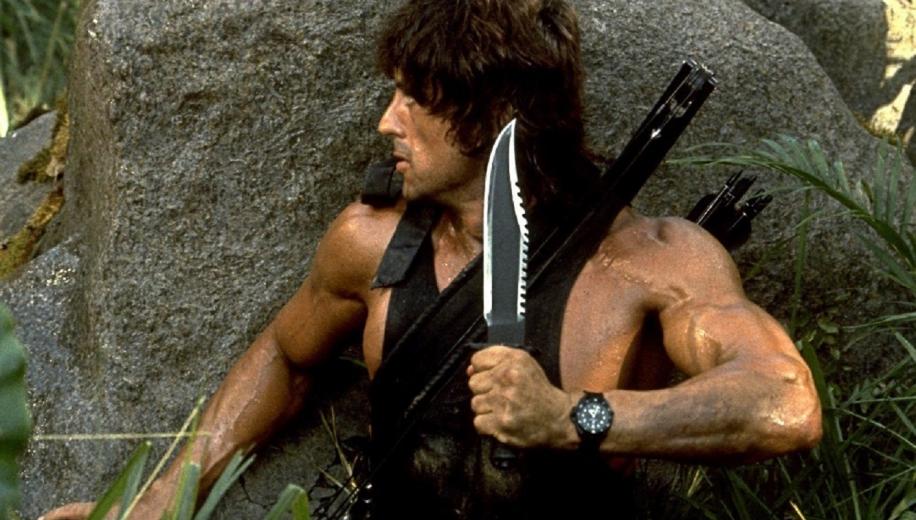
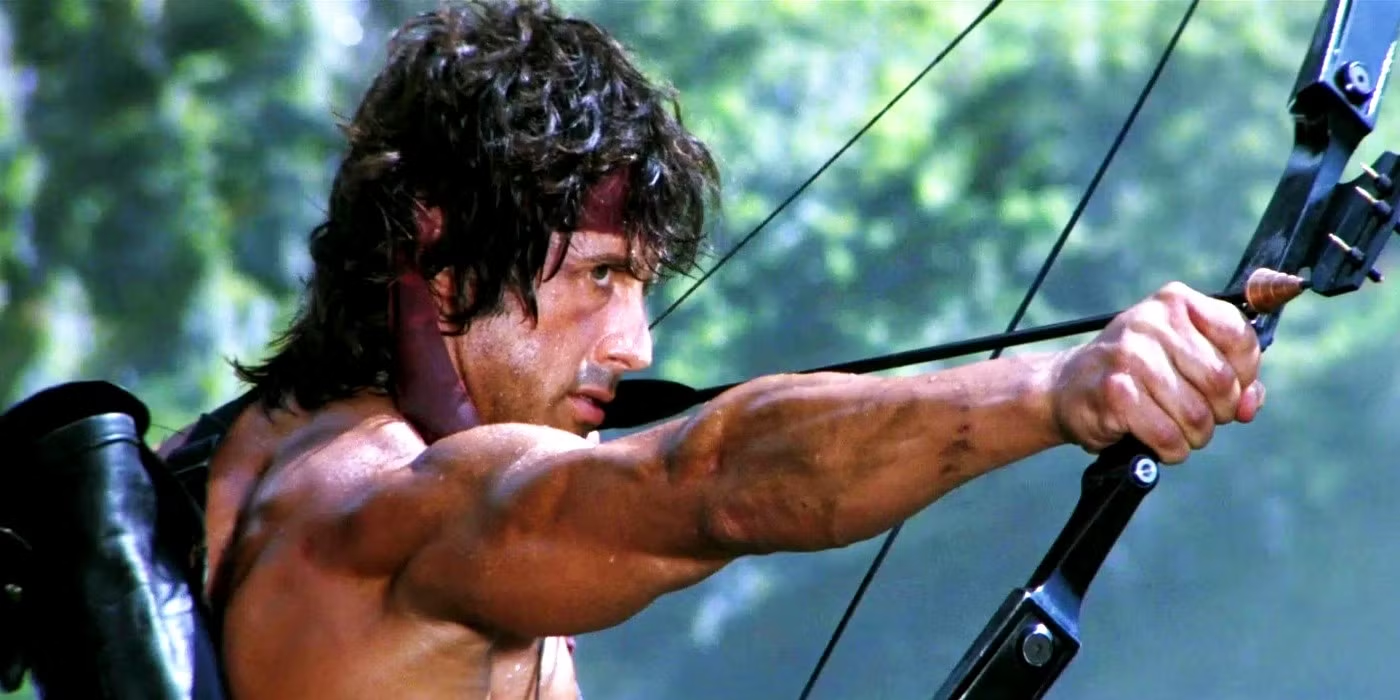
Popular culture doesn’t recognize Rambo for his pathos. His amazing knack for tearing out men’s throats with his bare hands and his preternatural capacity for annihilating enemies with his survival knife, bow and arrow, and wits, are far more enthralling. The Mortal Kombat fighting game series obviously didn’t have any use for Rambo’s emotions over his martial know-how, but his DLC inclusion in 2019’s Mortal Kombat 11 tells of the lasting influence First Blood Part II has had on perceptions of his character; the game makes routine visual references specifically to this movie, in his first teaser trailer, “mission accomplished” victory pose, and “Parilla Thrilla” fatality.
Granted, Weird Al Yankovic beat NetherRealm Studios to the homage 30 years prior in UHF, though “homage” in Yankovic’s hands is, of course, high caliber parody; Charlie Sheen followed suit in 1993 with director Jim Abrahams’ Hot Shots! Part Deux. If only this is how we remembered First Blood Part II: as a joke, and not as the character’s canonized interpretation. There’s a reason UHF and Hot Shots! Part Deux both took the piss out of the movie: enjoying it on its merits as a lunkheaded, jingoistic blockbuster is an exercise in suppressing giggles. (The UHF sequence, while exaggerated, isn’t really that far off from the actual movie.) If Stallone and Cosmatos didn’t take the narrative so seriously, then maybe the cheeseball absurdity would come as a pleasure instead of a punishment.
First Blood Part II goes in the direction of broad, bland action cinema for a variety of reasons. But none excuses the degradation of Rambo from a symbol of American indifference toward its servicemen, a hypocrisy that continues to this very day, to a symbol of the very same “might makes right” ideology that First Blood scrutinizes.