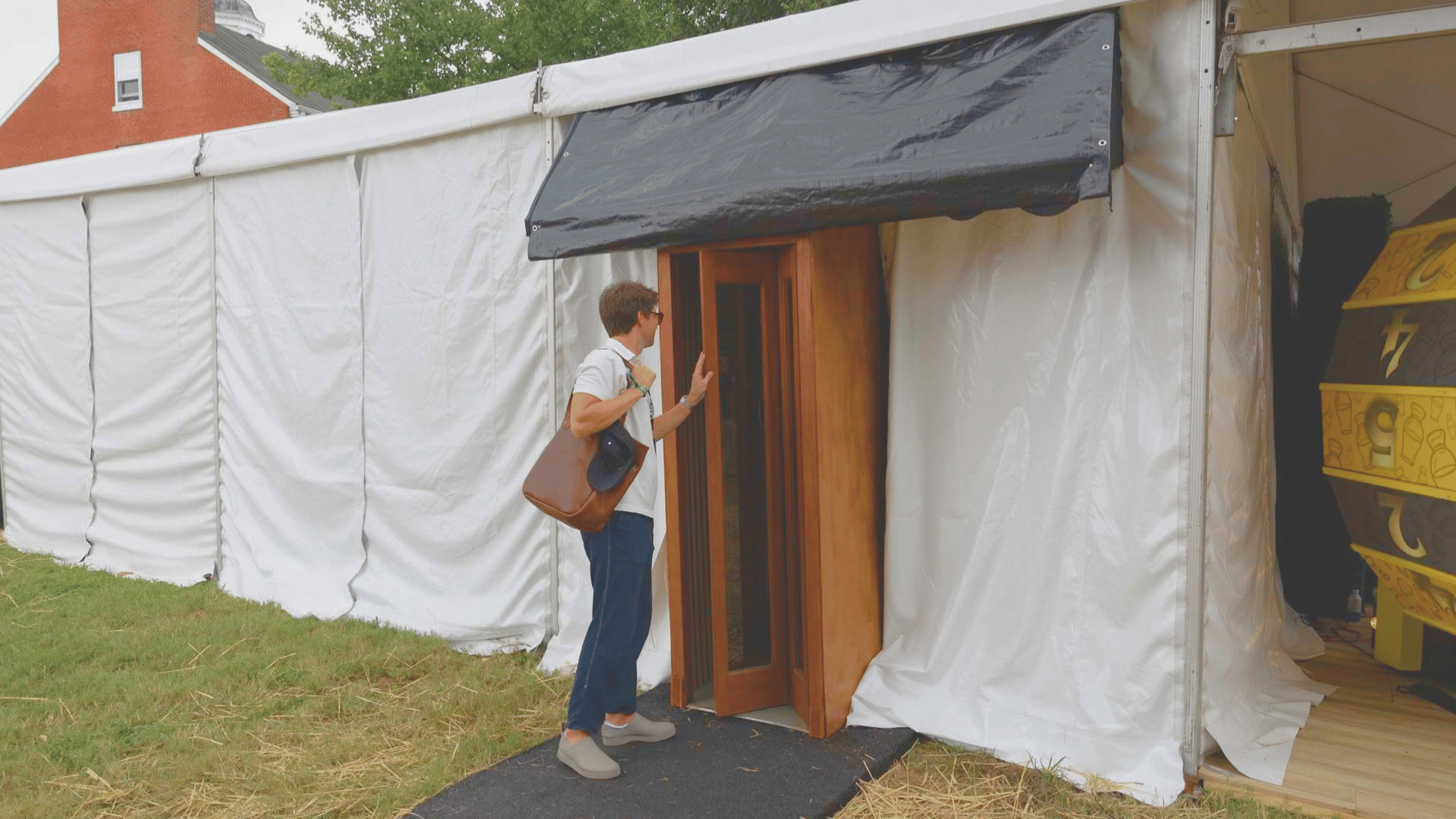
There was a little door on the side of the CaskX booth at the Kentucky Bourbon Festival that looked like it belonged on a phone booth.
Outside, thousands of people were drinking bourbon. Inside, some of them were investing in it.
The door opened into the CaskX Lounge. There was a private bar, food, a chandelier, a record player, standing tables, and couches. Master distillers stopped by to pour their latest creations. CaskX investors came and went.
There were even really nice private bathrooms. Which might not sound particularly luxurious. But spend an afternoon at a festival with 6,000 other people and get back to me.
CaskX had previously been part of the festival’s larger VIP footprint (those tickets went for up to $6,995/ticket). This year, the company decided to build its own version.
“We thought, you know what, let’s just have our own,” CaskX CEO Jeremy Kasler told me as we sat inside. “We’ve got the air [conditioning], we’ve got our own bathroom. It doesn’t sound like much, but festivals. We’ve all been to festivals.” Yes. Yes we have.
A few days earlier, I’d arrived in Bardstown trying to understand what had happened to bourbon. As I wrote in my story about the Kentucky Bourbon Festival, what started 35 years ago as a relatively modest celebration has become a four-day, sold-out destination attracting thousands of people from around the world, dozens of distilleries, collectors, master distillers, bottle hunters, and increasingly serious money.
The CaskX Lounge felt like a page from the next chapter.
If the festival showed me what bourbon has become, the conversation I had behind that little door offered a glimpse of where it might be going.
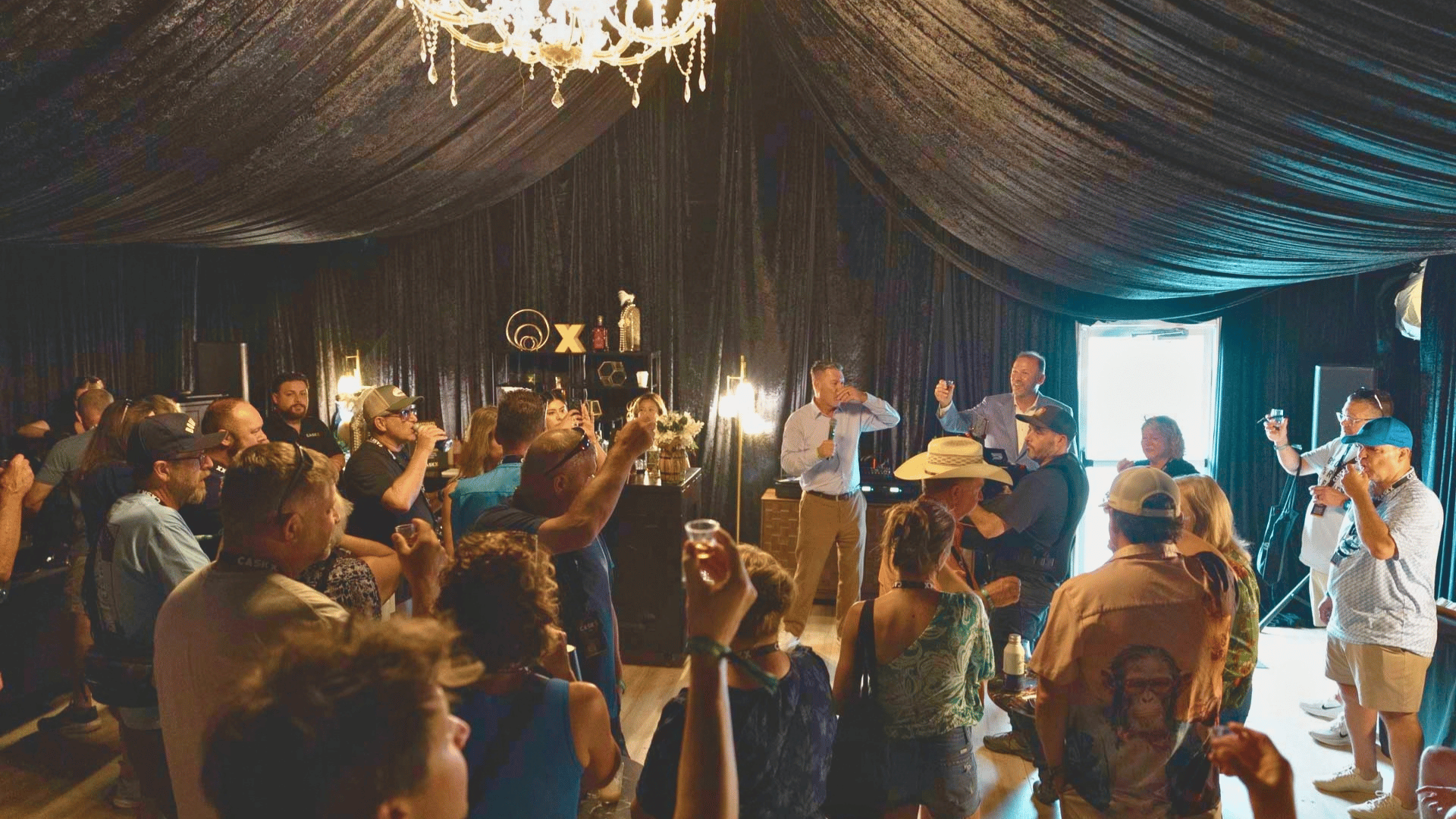
CaskX Lounge at Kentucky Bourbon Festival | Photo by Russ Caldwell
THERE'S A LOT OF BOURBON SITTING AROUND
Here’s one way to understand what has happened to American bourbon.
In 2014, there were about 5.7 million barrels of bourbon aging in Kentucky. Today, there are about 16.1 million. Those barrels have a tax-assessed value of roughly $10 billion. That’s a staggering amount of bourbon. It’s also a staggering amount of money sitting around doing absolutely nothing.
Well, not nothing. The whiskey is aging. The barrel is interacting with the liquid. Time and temperature are doing their thing. But nobody can sell you a pour from a barrel of whiskey that’s supposed to become an eight-year bourbon when it’s six months old.
That’s one of the peculiarities of the whiskey business. A vodka producer can make vodka and sell it. Gin doesn’t require a four-, eight-, 12- or 20-year nap before anyone gets paid. Whiskey does.
“There’s always a lot of jealousy from whiskey makers to vodka and gin,” Kasler told me. “Vodka, gin—bottle it, send it. Your Scotch and your bourbon have to wait.”
CaskX once got its hands on a bottle of 72-year-old Scotch.
“Imagine waiting 72 years to get paid,” he said.
That is an extreme example. But the underlying problem applies to every barrel sitting in a rickhouse right now. Someone has to pay for the whiskey while everyone else waits to drink it.
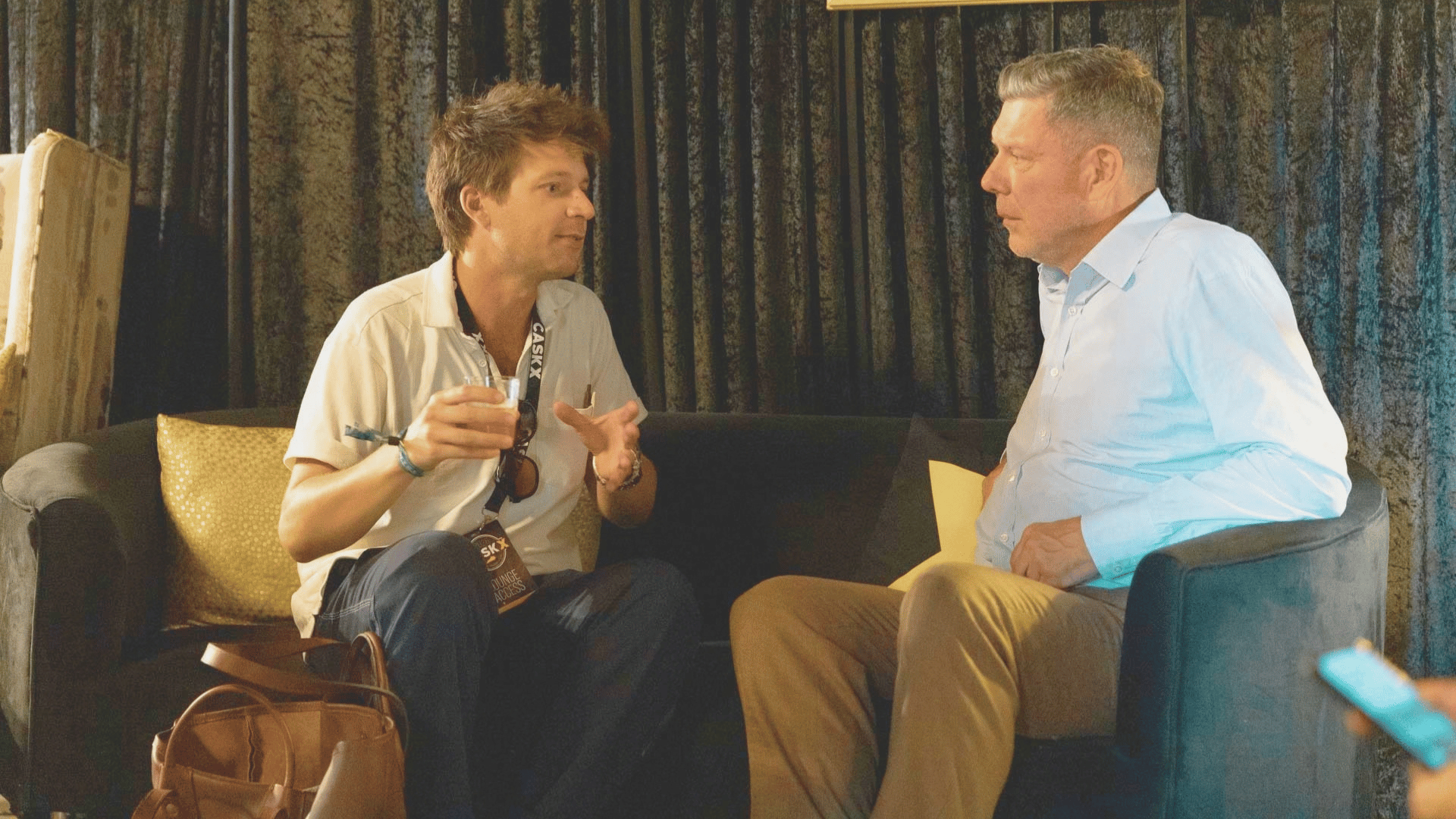
Lanny Fuller and Jeremy Kasler | Photo by Russ Caldwell
WHO PAYS FOR THE WAIT?
This is where CaskX comes in. The basic model is surprisingly simple.
CaskX buys newly filled barrels from producers in bulk. Investors can then purchase portfolios of those barrels, which remain stored at the facility where the whiskey was produced while they mature.
Kasler gave me a hypothetical example: CaskX buys 1,000 barrels of new make, then sells 100 to one investor, 50 to another and so on. The distillery gets paid now. The investor owns an asset that may eventually be more desirable because the whiskey inside has had years to mature.
It’s whiskey as an alternative investment. Like art.
There are obvious caveats here. A barrel of bourbon is not a savings account. Age alone doesn’t guarantee a return. Whiskey quality, demand, storage, evaporation, provenance, eventual buyers and broader market conditions all matter.
But there is something unusual about the proposition. The investor isn’t simply betting on a company making a successful product someday. The product is already sitting there, physically changing.
Unlike some other recently popular alternative investments (think: crypto, NFTs, etc.), Kasler likes the tangibility of whiskey.
“I know what wood is. I know what whiskey is,” he said. “And I know that in eight years’ time, people are still going to be drinking whiskey.”
CaskX didn’t invent investing in whiskey barrels. Kasler readily admits that people inside the industry have been doing versions of it for a long time. What his company is trying to do is make that world accessible to investors who aren’t distillers, brokers, or somebody whose neighbor happens to have 20 barrels he’d like to sell.
And according to Kasler, the people buying aren’t simply finance guys looking for the next alternative asset. He estimates that 99 percent of CaskX clients drink bourbon themselves. Which changes the investing experience considerably.
Investors can visit distilleries, go on VIP tours, meet master distillers, and see the barrels they own. CaskX also brings clients to events like the Kentucky Bourbon Festival, where they end up in a private lounge drinking whiskey with the people who make it.
“It’s an emotional dividend as well as a financial dividend,” Kasler said.
That may be the best explanation of the appeal here.
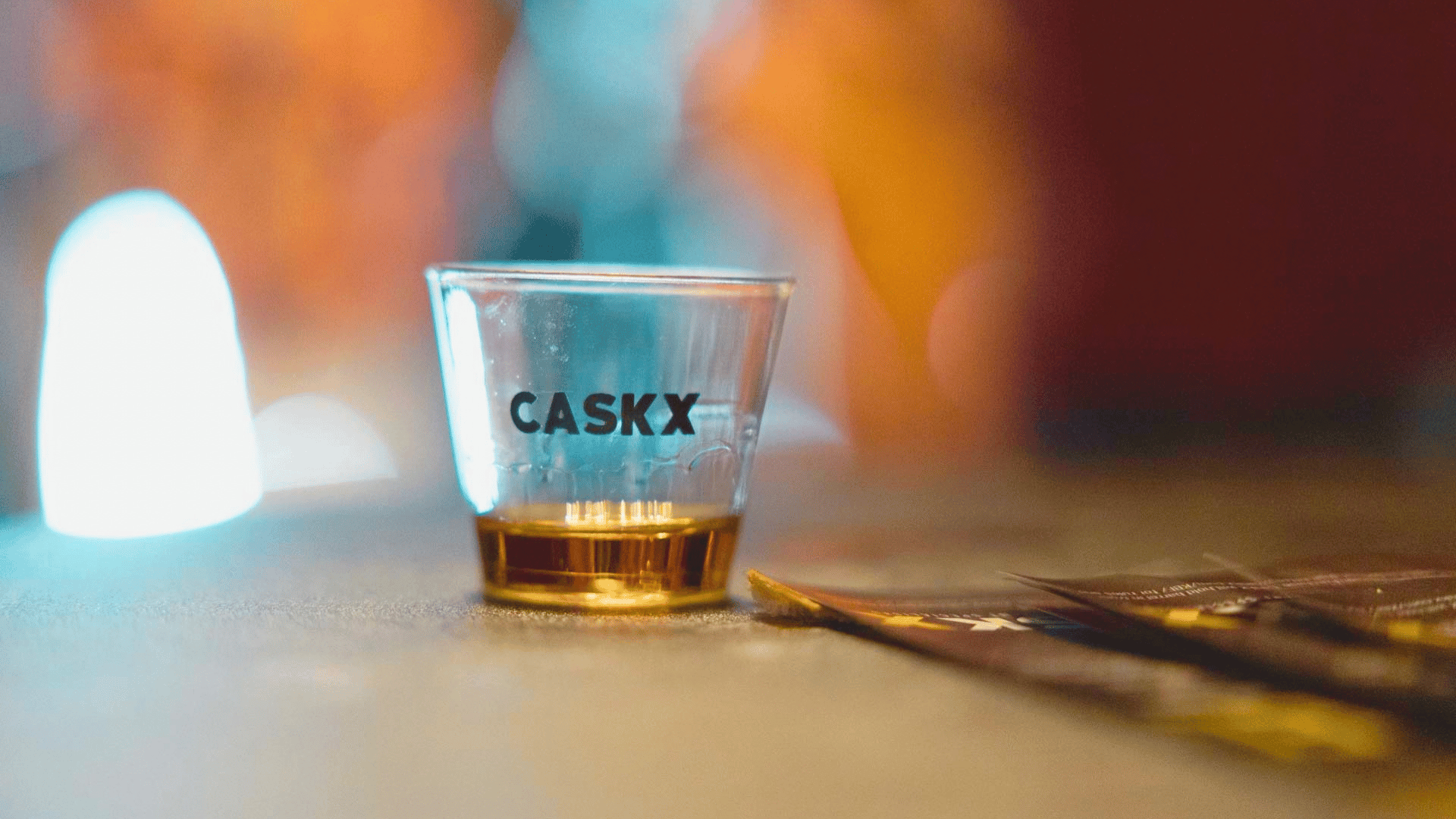
Bourbon Tasting in CaskX Lounge | Photo by Russ Caldwell
BOURBON ISN'T JUST GETTING BIGGER
It’s getting better at selling itself. That’s a different skill.
For much of its history, bourbon didn’t need an elaborate story. The story was Kentucky. Maybe there was an old barn, an even older family recipe, and a picture of a guy who looked like he’d call you “son.”
The whiskey did most of the work. That’s changing.
During our conversation, I mentioned Bardstown Bourbon Company, which has become one of my favorite examples of what the modern bourbon experience can look like.
Visit its distillery and the whole thing feels less like an old Kentucky homestead and more like Sonoma. There’s serious architecture. There’s a restaurant with an executive chef. There are experimental releases, collaborations, and bottles with stories designed to travel well beyond the tasting room.
Kasler thinks bourbon could do a lot more of it.
“There’s a long way to go, I think, in terms of how [bourbon] markets itself—the packaging, the Napa style, the Bardstown experience,” he said.
His model is Scotch. Scotland has spent decades turning whiskey into more than something you pour into a glass. There are distillery pilgrimages. Beautiful bottles. Elaborate boxes. Age statements. Limited releases. Provenance. Hotels. Entire vacations built around drinking the stuff where it was made.
Scotch has also become extraordinarily good at exporting that experience.
In 2025, Scotland exported £5.3 billion worth of Scotch whisky to roughly 163 markets around the world. The equivalent of about 1.34 billion bottles.
American whiskey isn’t playing on that scale yet.
American whiskey exports totaled about $1.08 billion in 2025, down 19 percent from the year before amid trade disruptions and steep declines in major markets including the European Union and Canada.
But there’s another number worth paying attention to. Outside the EU, Canada, and Japan, American whiskey exports grew about 13 percent in 2025.
There are a lot of potential whiskey drinkers beyond Kentucky.
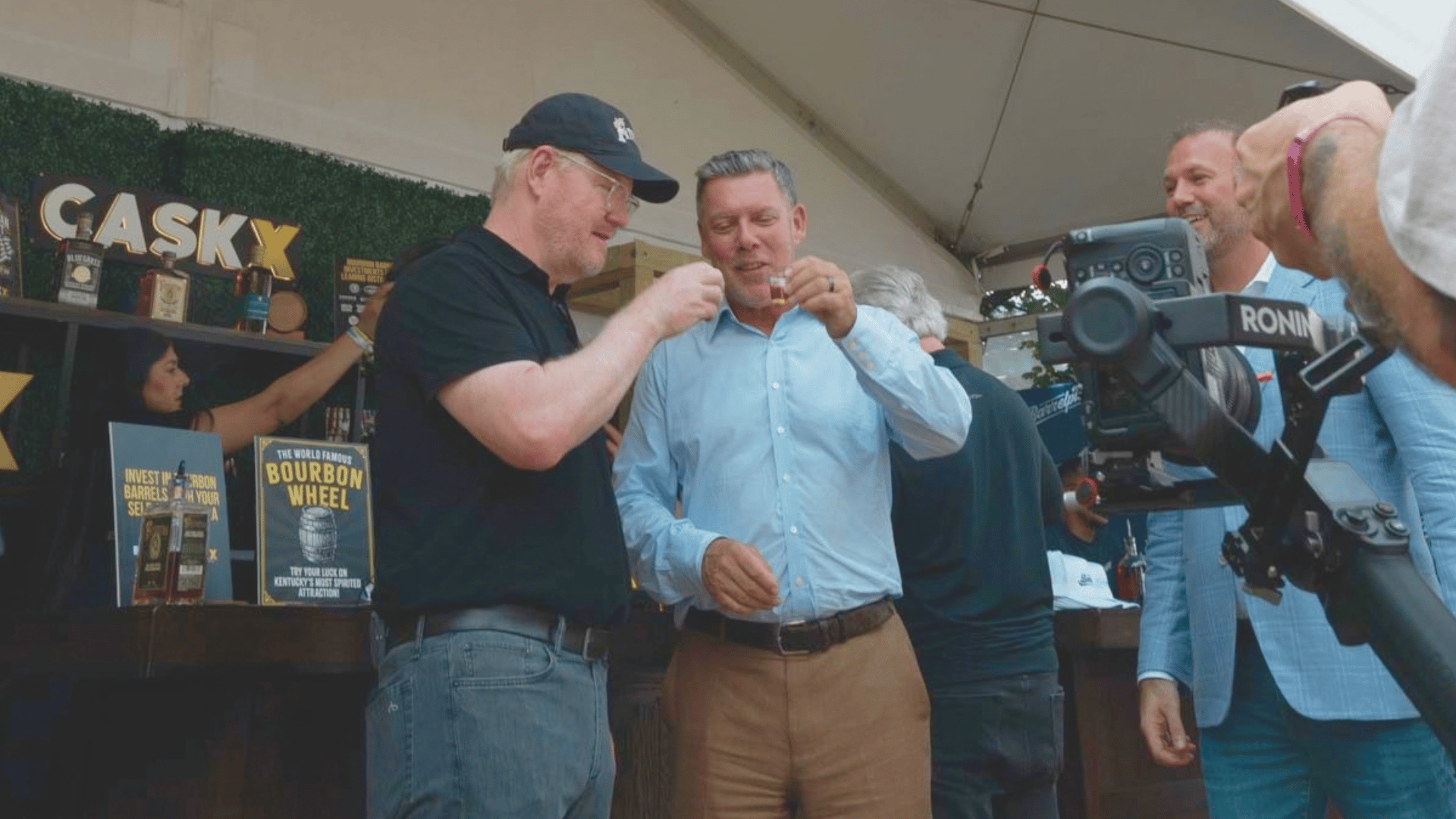
Jim Gaffigan and Jeremy Kasler | Photo by Russ Caldwell
GIVE THEM SOMETHING TO TALK ABOUT
Getting those drinkers may require bourbon makers to think differently about what they’re selling.
Not just whiskey. Stories.
At one point, Kasler and I started talking about some of the increasingly creative things bourbon brands are doing around releases.
His advice was simple. “Give people a story. Something that’s interesting. It’s what bourbon’s about.”
He brought up Jefferson’s Ocean. The idea behind the whiskey is irresistible. Barrels travel aboard ships, where motion, temperature fluctuations, and salty sea air become part of the maturation story.
Kasler was amused by the supposed novelty of sending barrels of booze across the ocean. People have been doing that for centuries. Doesn’t matter. It’s a great story.
He’s right. A great bottle of bourbon gets poured. A great bottle of bourbon with a story gets passed around the table.
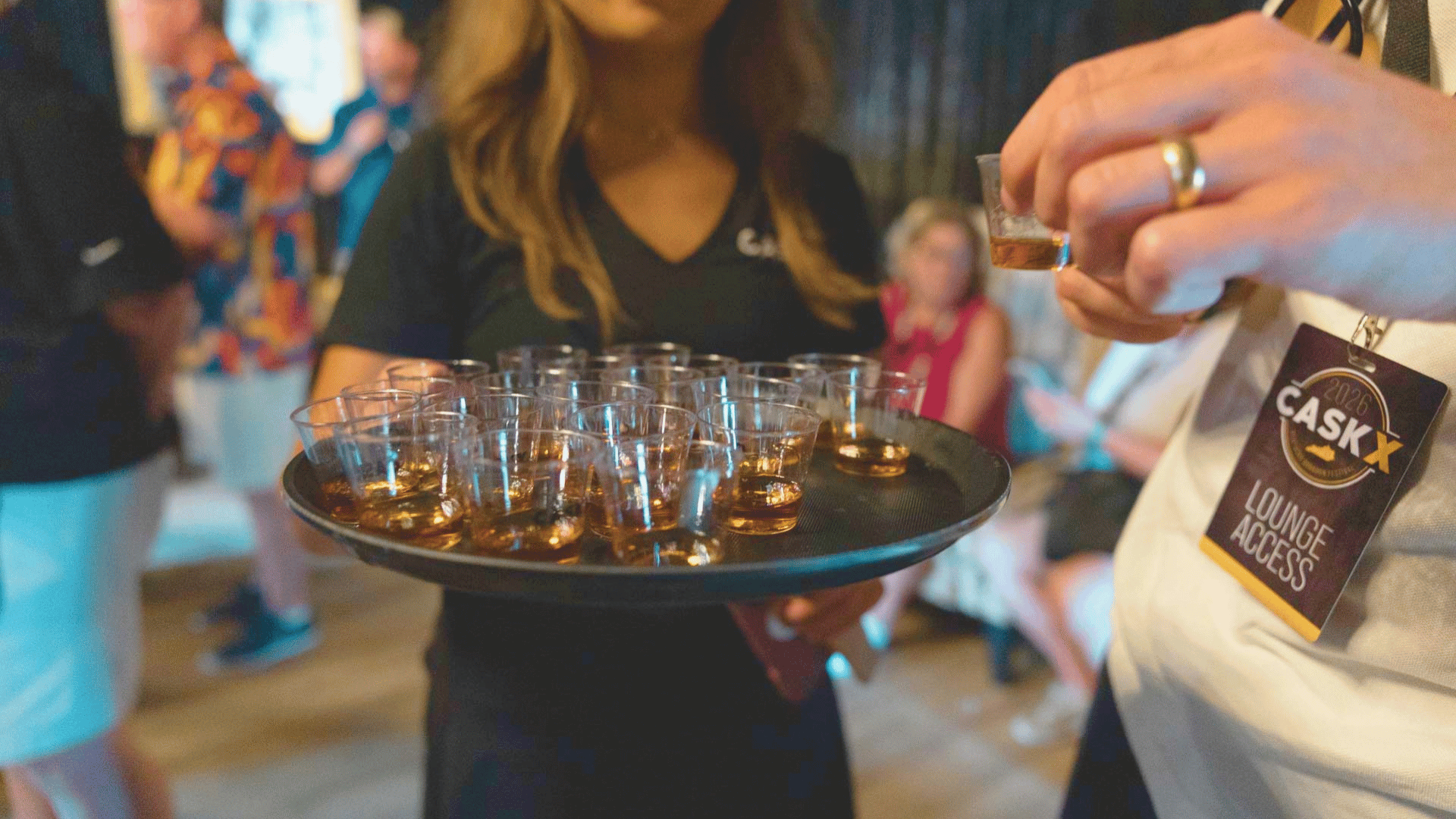
Bourbon Tasting in CaskX Lounge | Photo by Russ Caldwell
BOURBON'S NEXT DRINKER MAY NOT BE AMERICAN
There’s a less comfortable reason the bourbon industry may need those stories. Americans aren’t drinking the way they used to.
In 2025, U.S. supplier sales of American whiskey declined slightly, while most other major spirits categories also fell. At the same time, Kentucky warehouses are holding more aging bourbon than ever.
More whiskey waiting to be sold. A softer market waiting for it.
That’s a forecasting problem when the product you’re making today won’t necessarily be ready for years. I asked Kasler about the concern that younger people are drinking less and what that might mean for all this whiskey. He didn’t dispute the premise. He widened the map.
“What we also have to consider is the market is not just the U.S.,” he said.
That’s another lesson bourbon can take from Scotch. Scotland is a small country selling whisky nearly everywhere. India was Scotch’s largest export market by volume in 2025. China, Taiwan, Singapore, and other Asian markets remain significant destinations.
American distillers increasingly have reason to look in those directions, too.
“I think we’ve got to think internationally,” Kasler said.
Maybe he’s right. Maybe bourbon itself becomes the next truly global American luxury product. Maybe American single malt gets there, too.
Either way, the old assumption, that you make Kentucky bourbon for American bourbon drinkers and wait for them to show up, looks increasingly incomplete.
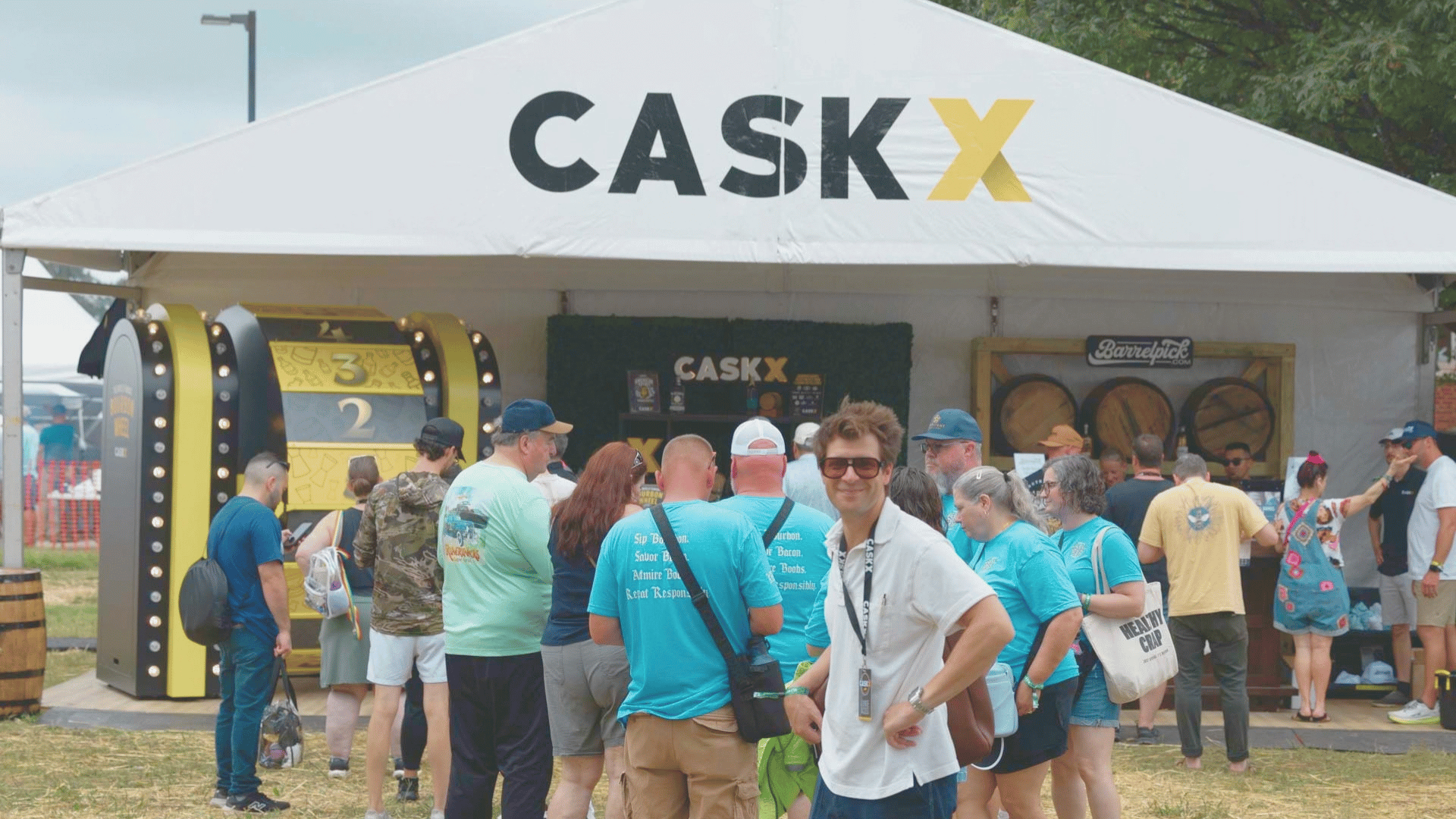
Spin the Wheel for a Chance to Taste Pappy | Photo by Russ Caldwell
THE OTHER SIDE OF THE DOOR
By the time I left the CaskX Lounge, the Kentucky Bourbon Festival was still going full bore outside.
People were waiting for pours. Buying bottles. Meeting distillers. Comparing tasting notes. Hunting releases they’d heard about online. Bourbon was everywhere. But behind that little door was the machinery that makes some of it possible. Capital. Barrels. Patience. Hope.
Investors betting that someone, somewhere, will want the whiskey when it’s finally ready. And an industry figuring out how to make sure they do.
The future of bourbon may involve better bottles, better stories, more ambitious distilleries, new markets overseas, and experiences that increasingly resemble California or Scotland.
It may also require new ways to pay for all that whiskey while it sleeps. That’s the strange thing about the future of bourbon. Some of it is already here. It’s just sitting in a barrel, waiting.
More Lifestyle
How to Serve Great Cocktails Without Missing Your Own Party
World-class spirits, classic cocktails, and no time spent shaking and stirring.

Finding Nature and Nurture in Puerto Vallarta
Come for the mountains, ocean, and adventure. Stay for the martinis, massages, and freshly cleaned sunglasses.
What To Watch If You Loved (Or Hated) Digger
8 picks for the Digger faithful and the Digger deniers.
-
Lifestyle
How to Serve Great Cocktails Without Missing Your Own Party
World-class spirits, classic cocktails, and no time spent shaking and stirring.
-
Lifestyle
Finding Nature and Nurture in Puerto Vallarta
Come for the mountains, ocean, and adventure. Stay for the martinis, massages, and freshly cleaned sunglasses.
-
Lifestyle
What To Watch If You Loved (Or Hated) Digger
8 picks for the Digger faithful and the Digger deniers.