
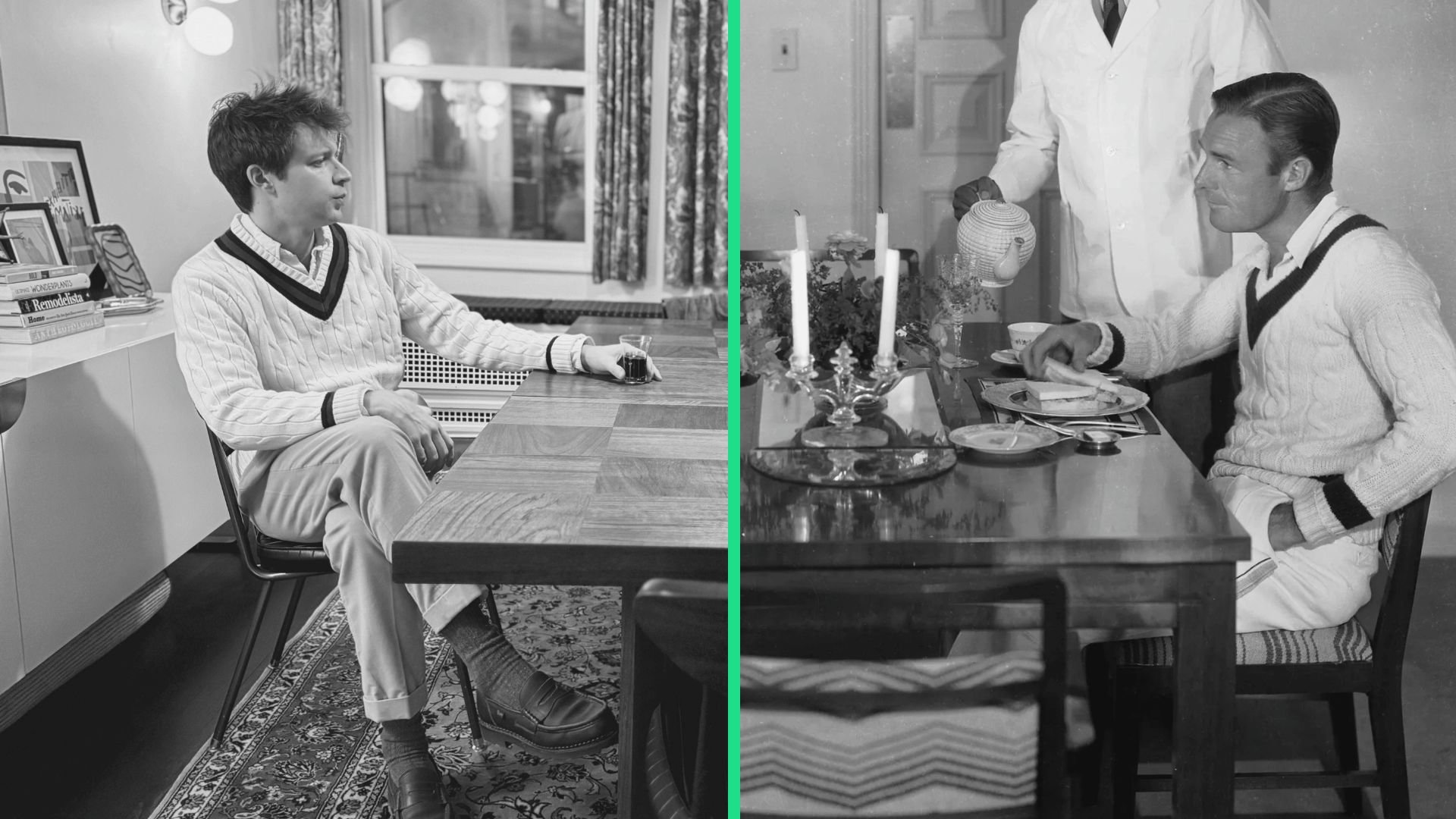
When I see an outfit I like on a man (on the street, in a magazine, frozen mid-gesture in some old black-and-white photograph), I remember it. The proportions. The posture. The way the clothes sit when nothing is being performed. What I liked. What I’d change.
And then I steal it.
Because style theft isn’t a crime, your honor.
That’s how Cary Grant entered my house.
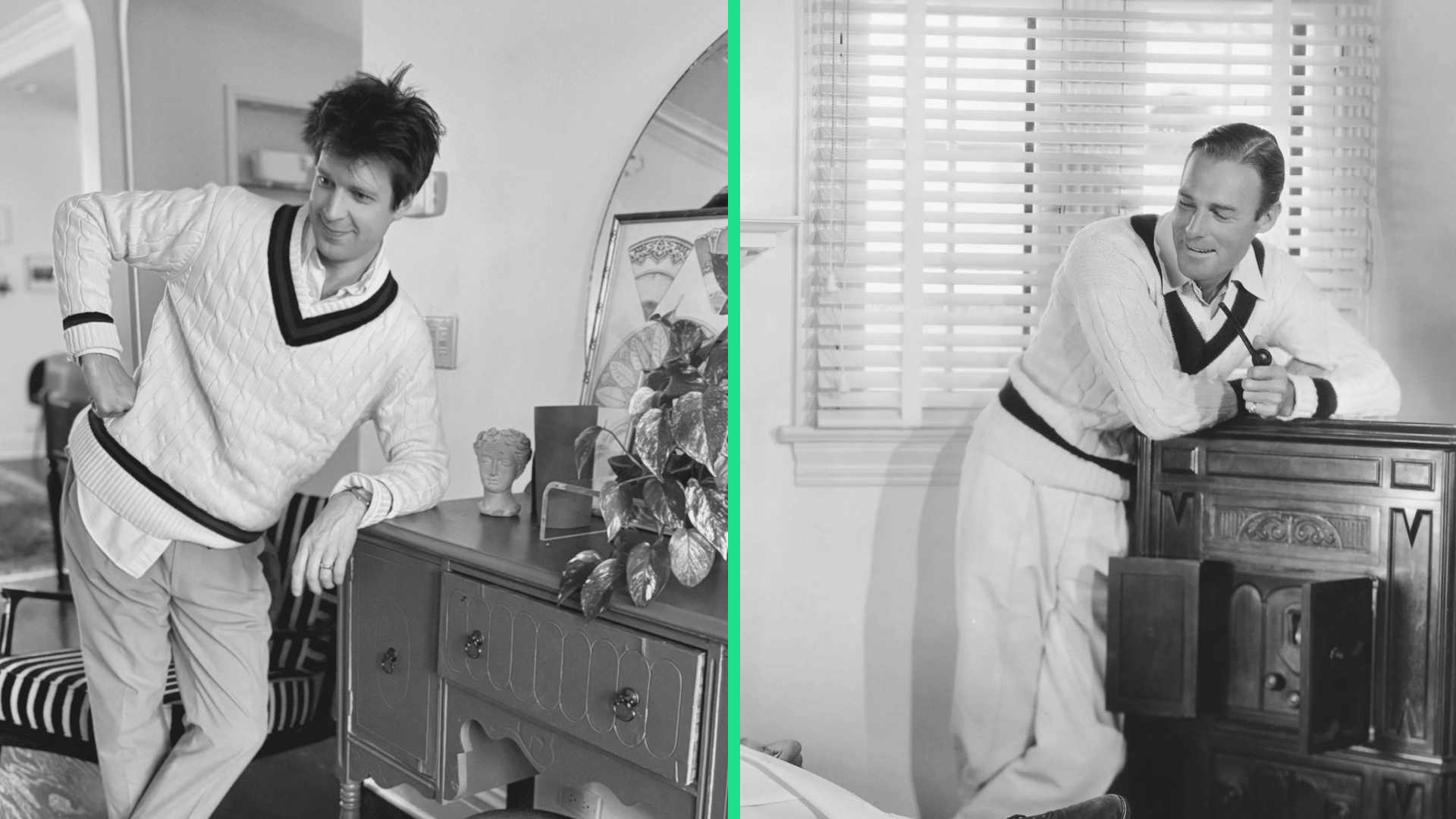
Not literally, of course. But close enough. I was reading an Architectural Digest piece about Cary Grant at home. How he lived, how he dressed when the cameras weren’t rolling, and there it was. The sweater. Cable-knit. Tennis-adjacent. Crisp but relaxed. The kind of thing that looks better leaning against furniture than it ever would under studio lights.
“I pretended to be somebody I wanted to be, and finally I became that person.”
—Cary Grant
The sweater felt like part of that alchemy. Not costume. Not armor. Just quiet intention.
So I rebuilt his look. For 2026.
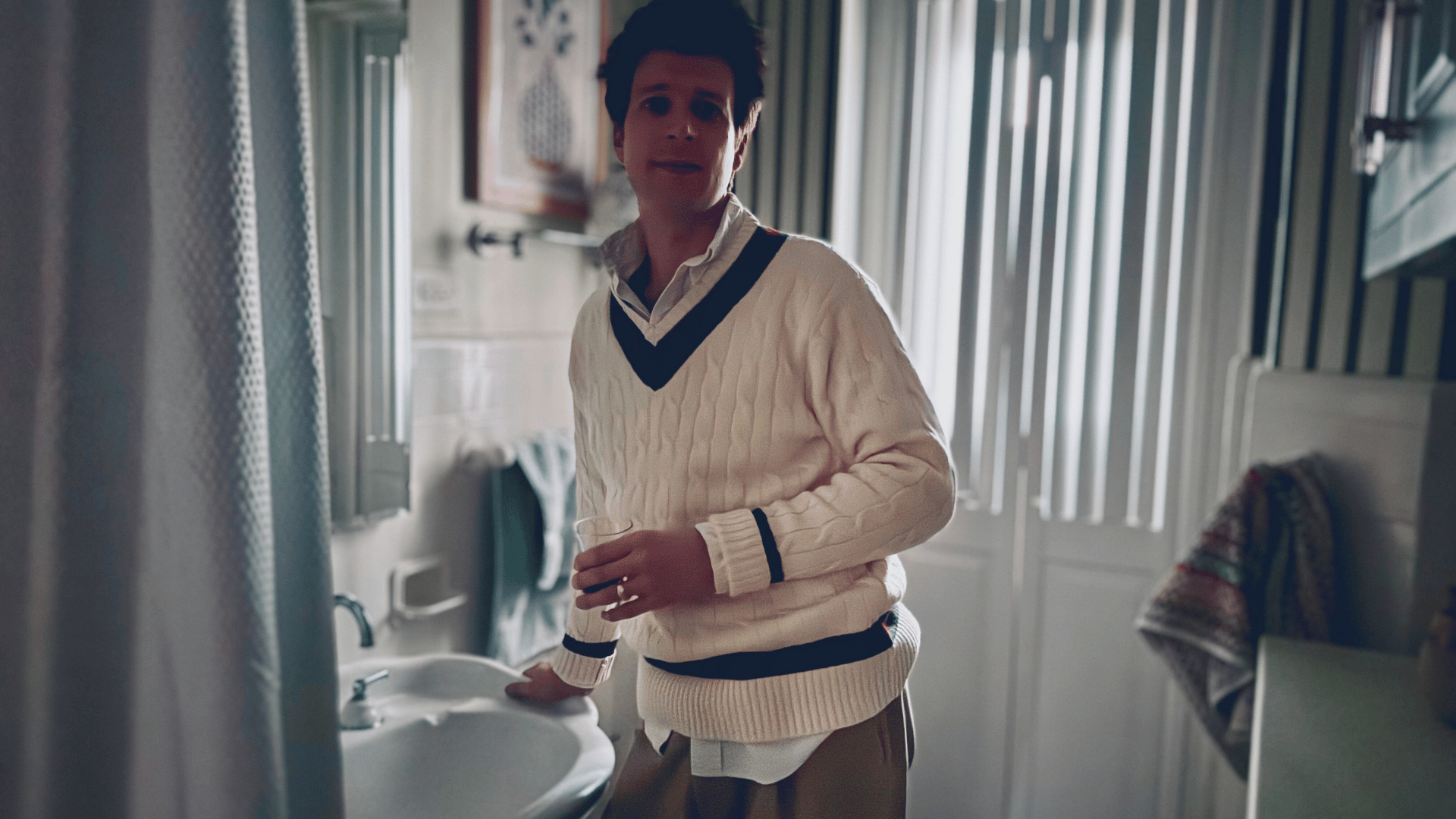
The Sweater, Updated
The modern stand-in is Boast’s cable-knit sweater, which manages the rare trick of feeling both archival and alive. It’s recognizably classic. The ivory knit. The dark V-neck, wrist, and waist trim. But it’s not precious. You can sit in it. Slouch in it. Drink something brown in it.
Boast, if you don’t know the brand, has always lived in that interesting overlap between serious sport and silly personality. Founded in the ’70s, reborn with a knowing wink, it’s tennis wear for people who play tennis, sure, but also for those who like the idea of tennis more than the obligation of playing it. I speak from experience on the latter.
“I have spent the best part of my life contradicting my image.”
—Cary Grant
Same.

The Boast Leaf
And then there’s the logo.
The leaf.
No, not that leaf, officer.
It’s a Japanese maple leaf. An old symbol of quality and endurance. Originally adopted as a subtle middle finger to the aggressively serious tennis brands of the time. A reminder that style, even when rooted in tradition, doesn’t need to be humorless. I believe Mr. Grant would’ve appreciated this. Elegance, sans snobbery.

Dressing for No One (Except Yourself)
Here’s the thing I keep coming back to. Cary Grant dressed the way he did for himself. Those at-home photos aren’t aspirational in a Hollywood way. They’re aspirational in a livable way.
I talk a lot about getting dressed to go out. Less about getting dressed to stay in.
Materialism gets a bad rap. Often rightly so. But objects made with intention have a strange power over me. Clothing especially. Not as a flex. As a nudge. If I’m stuck, foggy, dragging myself through the gray of hibernation season, changing what’s on my body can change what’s happening in my head.
Working outside in.
There’s something calmly radical about putting on a good sweater when no one is coming over. About choosing trousers with structure for a day that doesn’t require them. About leaning against a table, catching your reflection, and thinking, Okay. I can work with this version of myself.
“The confident man does not try to impress.”
—Cary Grant
At home, especially, that matters.

Stealing the Right Things
This isn’t about copying Cary Grant stitch for stitch. It’s about recognizing a vibe and translating it forward. The calm confidence. The ease. The sense that style doesn’t have an expiration date. It waits patiently to be reinterpreted.
That’s the joy of stealing from the past. You’re not plagiarizing. You’re collaborating across time.
So yes, this is a story about a sweater I bought based on an article I saw on the internet about Cary Grant.
But it’s also about remembering that getting dressed can be an act of self-respect, even on days when the only audience is the cat and the wife.
Cary Grant figured that out decades ago.
I’m just catching up.