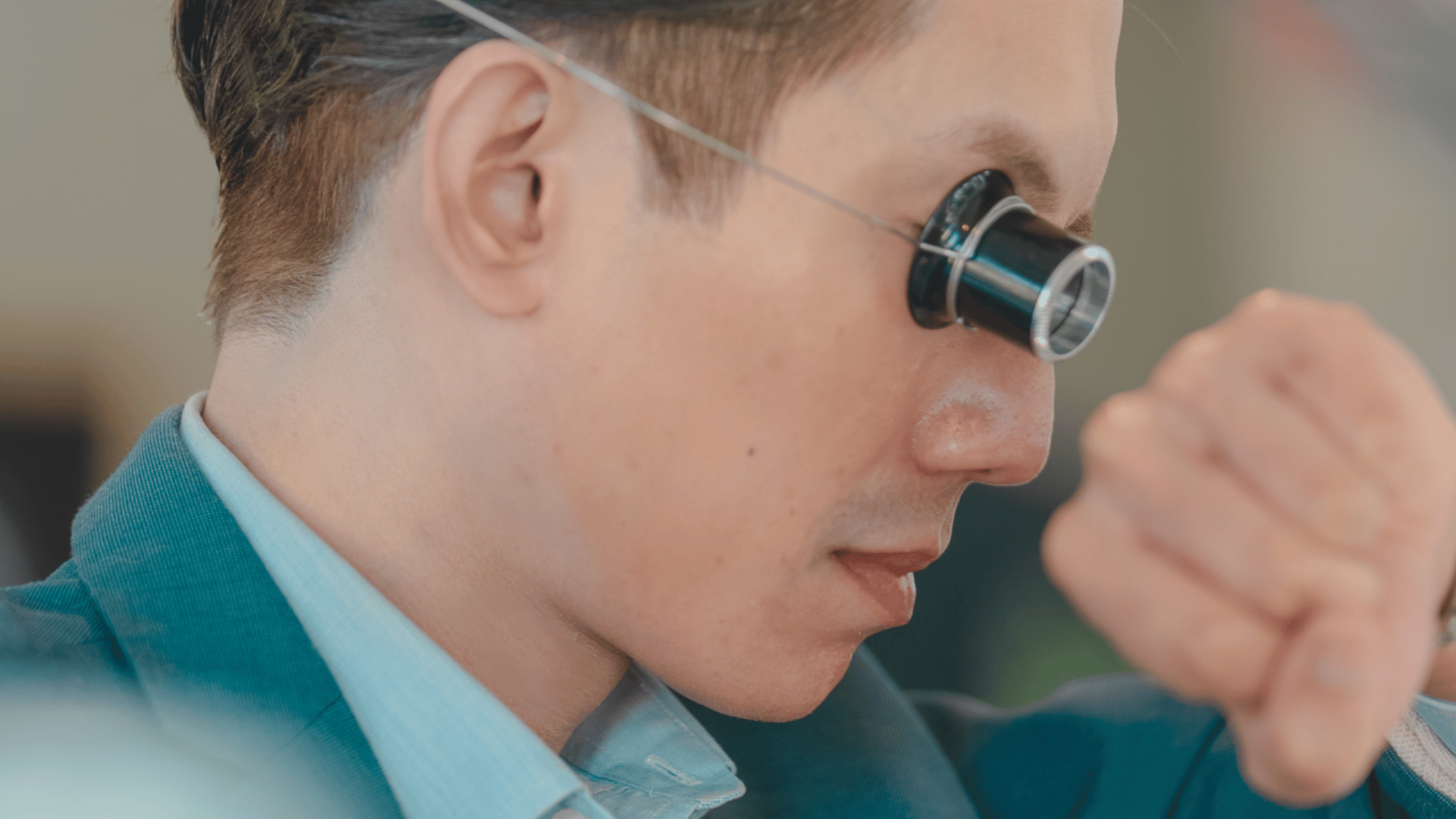
I recently attended an exhibit called Icons of Time. It was hosted by Hodinkee’s Ben Clymer in partnership with UBS House of Craft, a fresh and edifying initiative honoring art in all forms. There, I journeyed through history’s horological hard-hitters, hearkened to Mr. Clymer’s address on the joyful importance of timekeeping tales, and spent too much time hovering over a watchmaker deftly at work. In an enchanted state, I made a casual decision: I’d become a certified watch expert.
Perhaps by kismet, the Fondation Haute Horlogerie was soon brought to my attention. The renowned watchmaking non-profit now offers certification to consumers, originally reserved for trade professionals. Through this, I became timepiece certified all from the comfort of my home. The program is, in a way, a shortcut to mastery. But as my experience will elucidate, you definitely have to put in the work.
Here’s who it is and isn’t for.
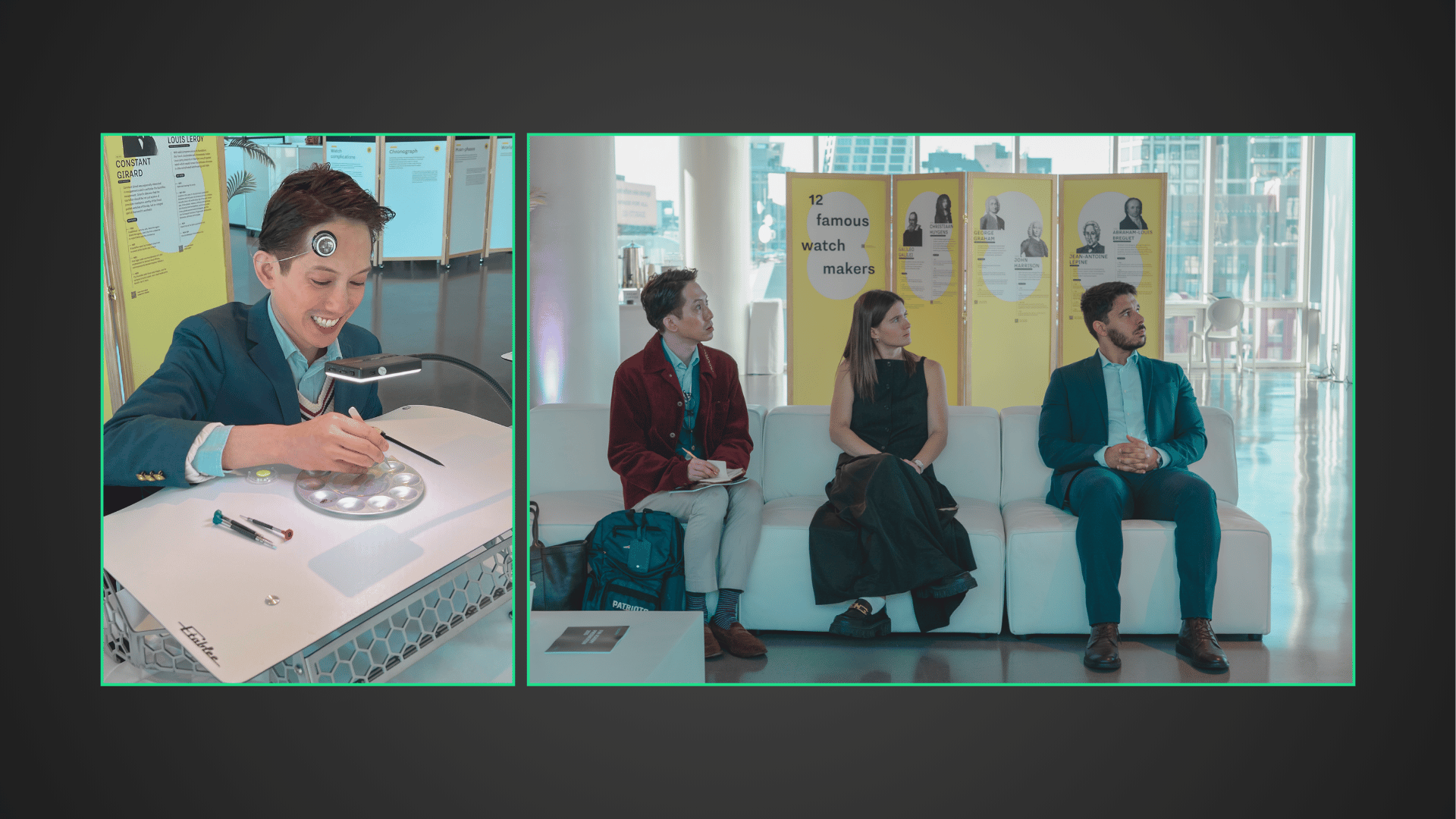
Photos via Battalion PR
How the FHH Certification for Consumers Stacks Up
I spoke to FHH Vice Presidents, Pascal Ravessoud and Aurélie Streit, about the certification program. And I found its brand neutrality most appealing. Many individual watch brands offer educational workshops to varying degrees of accessibility; the FHH was established as a Public Interest Foundation by Audemars Piguet, Girard-Perregaux, and the Richemont Group, giving a nonpartisan lens to their coursework. Still, the institutional knowledge and global recognition are there. After all, this is the same group that founded and organized the Salon International de la Haute Horlogerie, which would go on to become Watches & Wonders.
There are three levels of certification, each progressively digging deeper into technical knowledge, market players, watch materials, and history and culture. After three hours of interactive video education, I became FHH certified as a Watch Advisor. The level after that is Watch Specialist, then finally, Watch Expert.
I initially thought I’d score lowest in the technical category, but ultimately I found the market players segment most challenging. Sure, I can easily retain that luxury conglomerates like LVMH and Swatch, more than independent brands and artisans, far exceed market share. What I couldn’t do? Accurately classify, 100% of the time, any of the countless conglomerate-owned watch brands into their respective groups.
Another major advantage of the program? It’s as flexible as a tropic watch strap. It’s offered in several different languages, you’re given a month to finish it, and it’s fully remote. You can do it at your own pace, but the deadline ensures you don’t let it fall by the wayside.
Photos via Karlton
Know What You’re Getting Into: Quick Doesn’t Mean Easy
First off, keep in mind that five minutes of coursework isn’t always five minutes of coursework. Here’s what I mean by that. The Watch Essentials video series is broken up into 10 sessions, each featuring a video or two. Some sessions are overtly technical and dense. For example, on the lesson about watch movement parts, I found myself rewinding and rewriting notes so often, the 20-minute video took me three days to complete. All that to say, I now know that the gear train transmits the power that, without the escapement, would simply spring forward uncontrollably. I can also draw you quite the diagram.
Second, some of the videos are conversational, which is more engaging than a professor standing in front of a whiteboard. However, when two experts are in conversation, there are times when you can feel lost in the shuffle. Don’t worry. By the time you get to the end of the video, everything will make sense. During one lesson, we visit a watchmaking student who shows us how to bevel a surface. Throughout, it seemed to me that the words “gentian” and “diamond paste” were being used interchangeably. It eventually became clear that gentian wood is the tool used to apply diamond paste to mirror-polish a surface. (It also became clear why fine watches are so expensive.)
And finally, the entire program is just a neat experience. After years of writing about watches, I knew a good 50% of the material. However, I still found the entire course of study worth my time as my previous knowledge was fortified with new, related knowledge. Moreover, it was fun and enlightening to see apprentices make their very own timepieces, tour facilities with pressurizing tanks, and listen to interviews from players at brands like Chanel and Ulysse Nardin.
Photos via Karlton
My Results: Should You Get FHH Certified?
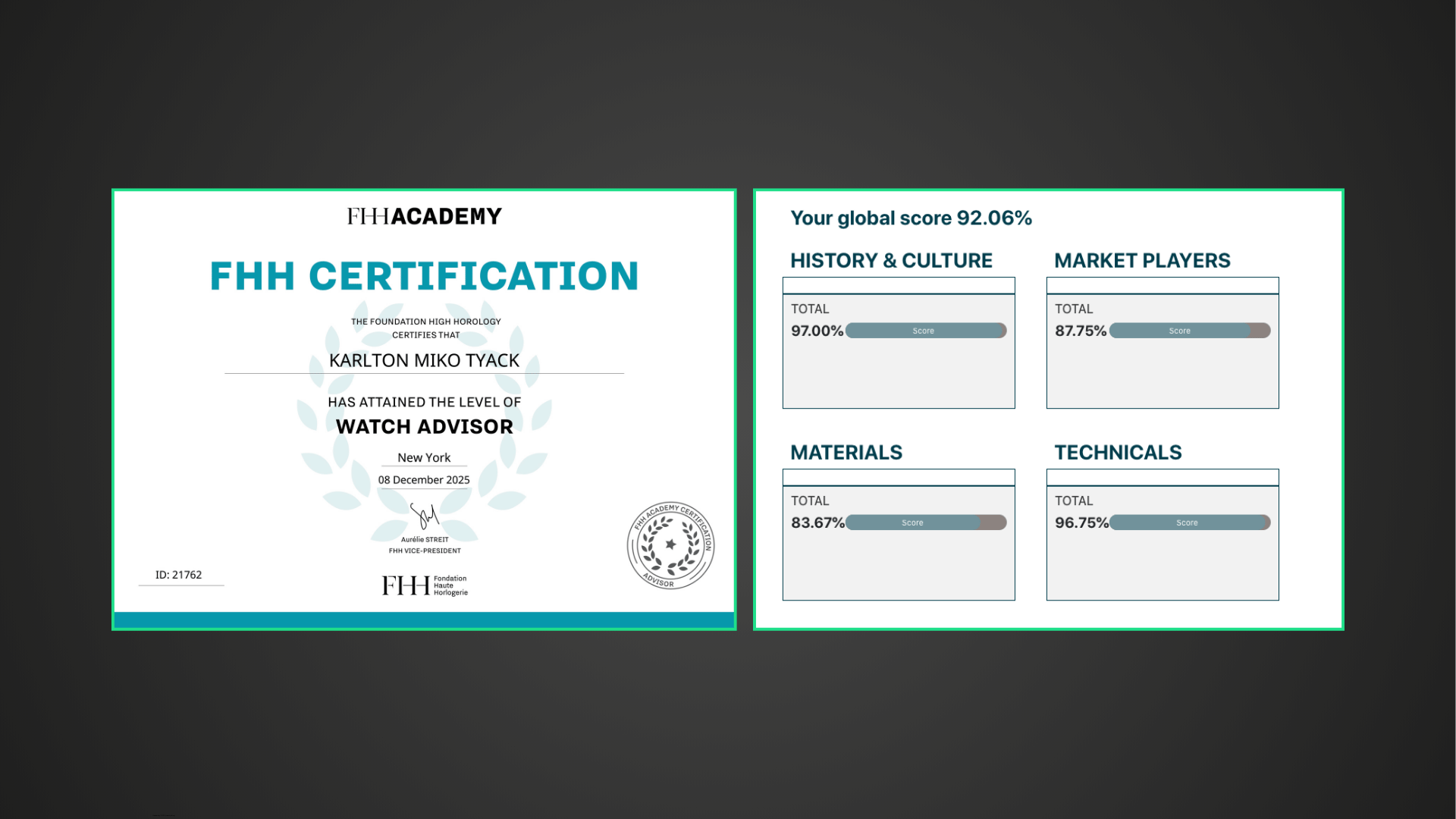
To get officially certified, you’ll schedule an exam date with an administrator. To keep you honest, you’ll share your camera and your computer screen with this admin. After my first practice test, which I scored a 77% on, several education games on the FHH app, and another practice test (82% this time), I aced the actual certification exam with a solid 92% on Monday, December 8, 2025. I was always an A-minus student.
I scored highest in the history and culture category with 97%. Unsurprising, since it’s what I often write about. Not too far behind that, at 96.75%, was the technical segment. Likely because it intimidated me the most and got the bulk of my attention.
My lowest score was in materials, conversely, because I think I was overconfident. I’ve written so much spec copy, so of course I know that titanium is hypoallergenic. Of course I know that jewels were used in movements to reduce friction. It was humbling to find out that I, a former AP chemistry student, am nerdy enough to know that the Latin word for gold is aurum, but not nerdy enough to remember that its elemental symbol is Au because of that. Truly, watch expertise requires using multiple disciplines in tandem.
I want to impart two pieces of wisdom based on my experience.
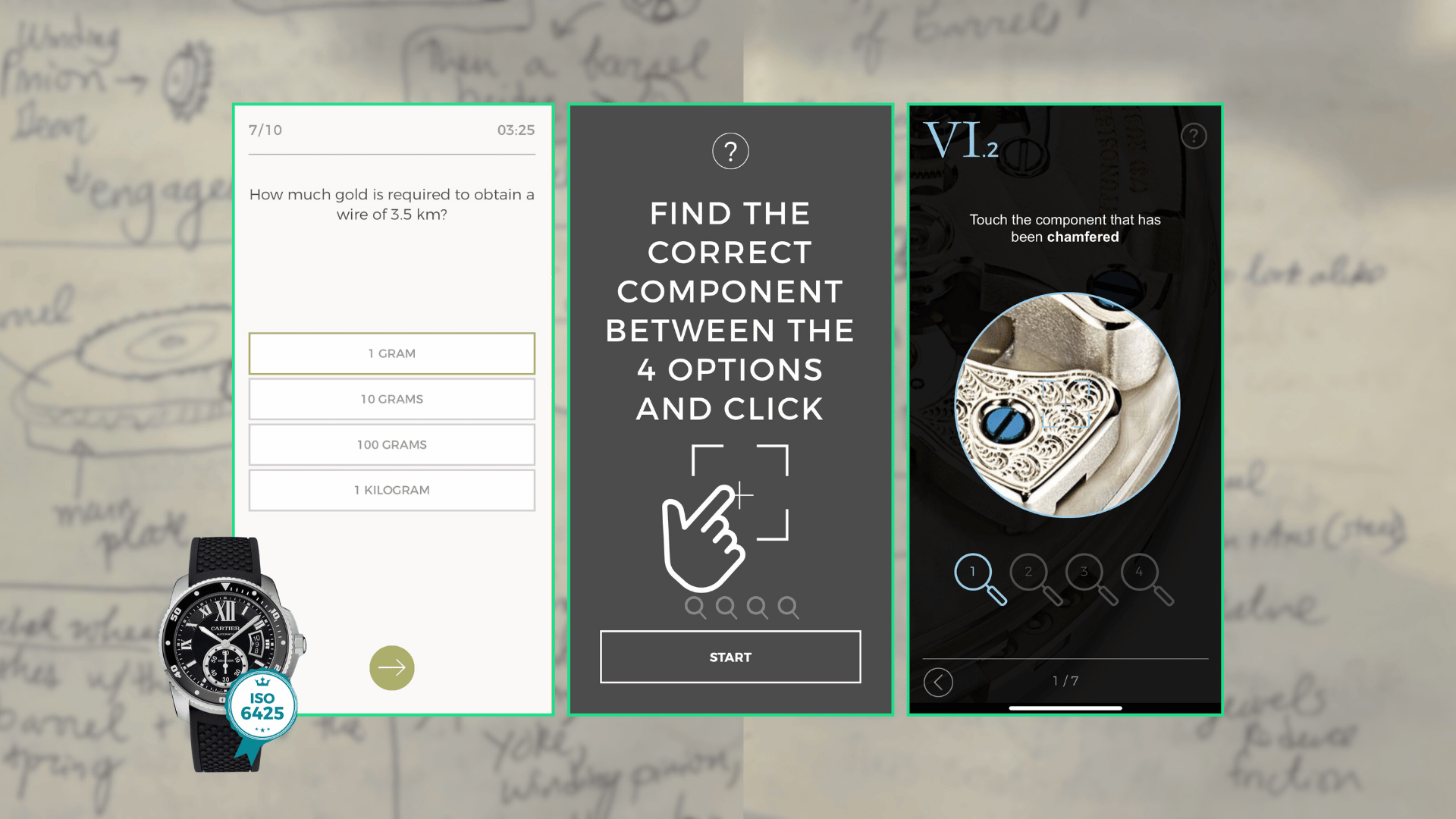
You can really make this FHH program worth your time. Rewatch videos, take notes, and I highly advise you to use the FHH Watch Essentials app, which gamifies the information DuoLingo style. There were a few things I missed or didn’t fully grasp during the coursework that the app games clarified.
Second, I recommend this program for a range of people. Perhaps you’re a new enthusiast looking for a quick way to keep up with friends who are long-time watch geeks. Maybe you’re an industry professional, say you work at a Rolex boutique, and you’re looking to level up your knowledge for personal or professional reasons. Or possibly you’re just someone who wants to deepen a hobby as a resolution.
Again, you have to do the work. As much time as I’ve spent around watches, I still found parts of the education series sufficiently challenging. But hey, it wouldn’t come with a certification if that weren’t the case.
The Watch Essentials coursework is listed at a market-reasonable CHF 440, or just over $550. The Watch Advisor certification exam is CHF 385 or $484. You can bundle the two for CHF 620, about $780, which is a terrific deal. I couldn’t imagine taking the classes and not wanting to be certified.