When Americans think about visiting the Alps, a few familiar names usually rise to the surface. Chamonix. Zermatt. And, increasingly, the Dolomites, which seem to have become the official mountain range of Instagram.
But the Alps stretch across eight countries, and some of their most interesting destinations are the ones Americans haven’t quite discovered yet.
Take Courmayeur, Italy, and Crans-Montana, Switzerland.
Both are well-established European mountain resorts that have somehow managed to remain relatively under the radar with American travelers. Courmayeur sits on the Italian side of Mont Blanc, just across the mountain from its more famous French neighbor, Chamonix. Crans-Montana occupies a sunny plateau above Switzerland’s Rhône Valley, where wealthy Europeans have been golfing, skiing, and feasting like kings for generations.
I recently spent three nights in each destination during a fall road trip through the Alps, visiting vineyards, mountain restaurants, thermal spas, centuries-old villages, and of course, the odd local dive bar here and there.
Tourism representatives in both destinations told me the United States is becoming an increasingly important market. Judging by the number of Americans we encountered during the trip—which was precisely zero—there’s still plenty of room for growth.
The scenery was predictably ridiculous. What I hadn’t expected was how different the two destinations would feel.
Same mountains. Two countries. Two very different personalities.
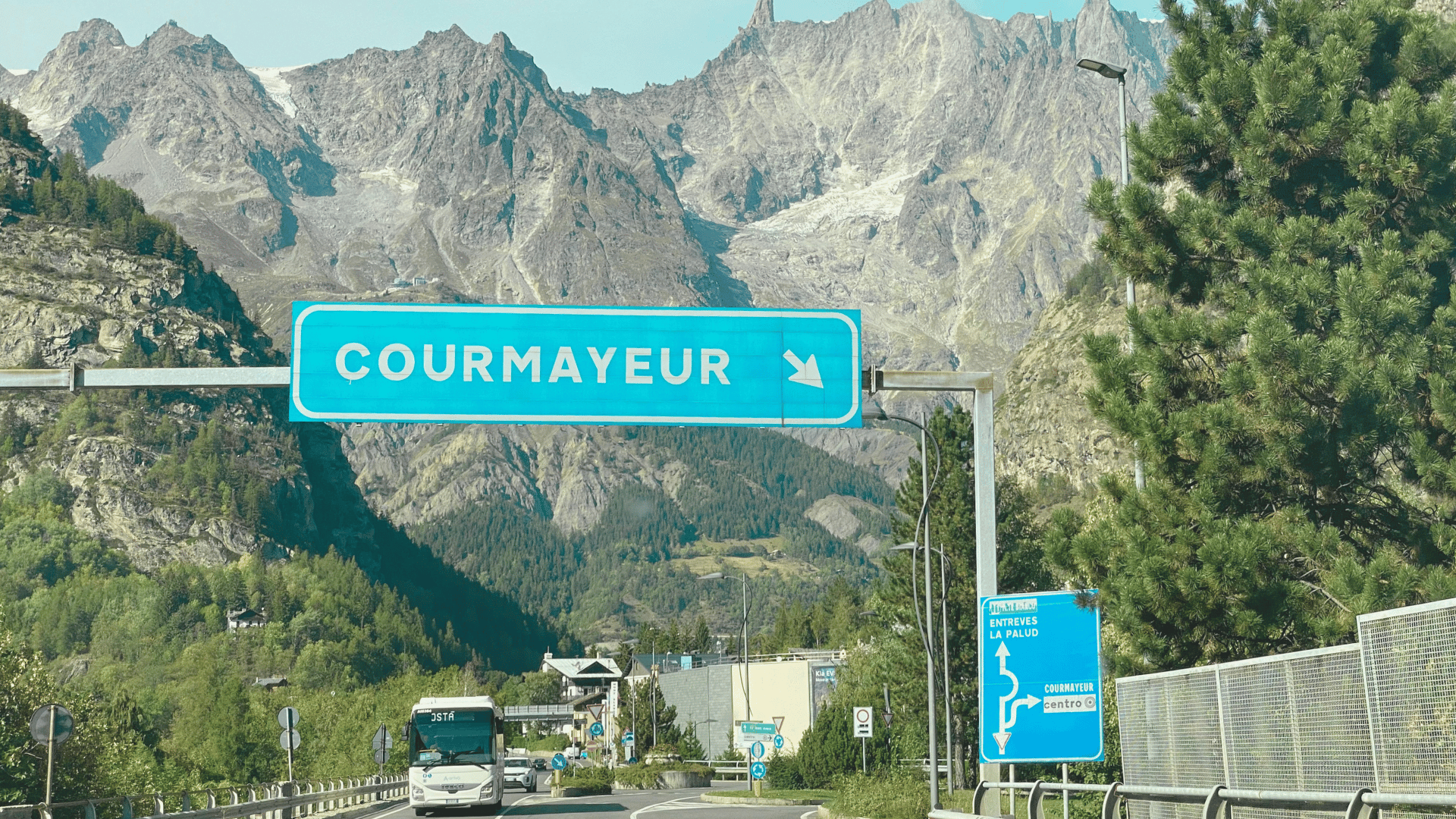
The Road to Courmayeur | Photo by Jay Gentile
Courmayeur: The Italian Side of Mont Blanc
Getting to Courmayeur from the Geneva, Switzerland, airport takes roughly 90 minutes, passing through France before disappearing beneath Mont Blanc through an enormous tunnel and emerging in Italy.
In case you’re counting, that’s three countries in less than two hours. Plus plenty of alarmingly clean European gas station restrooms along the way.
Courmayeur sits deep in the Aosta Valley, with steep gargantuan mountains rising almost vertically around the town. You don’t really look out at the Alps here. You feel like you’re inside them.
And despite being practically surrounded by France and Switzerland, the place feels unmistakably Italian.
I’d expected some sort of Alpine cultural mashup. A little French influence, a little Swiss efficiency, maybe some pasta thrown in for good measure. Instead, Courmayeur feels like a proper Italian town that happens to have some of Europe’s tallest mountains looming over it.
Via Roma, the main pedestrian street, is lined with unmistakably Italian boutiques, restaurants, cafés, and outdoor tables that seem designed specifically to distract you from whatever productive activity the itinerary had called for that afternoon.
It’s lively, stylish, and just fancy enough without making you feel like you need to check your bank balance before ordering a second bottle of wine.
You could easily spend an afternoon drinking espresso, browsing shops, and trying to decide where to eat next.
Which, quite frankly, sounded like a perfectly reasonable way to spend three days to me.
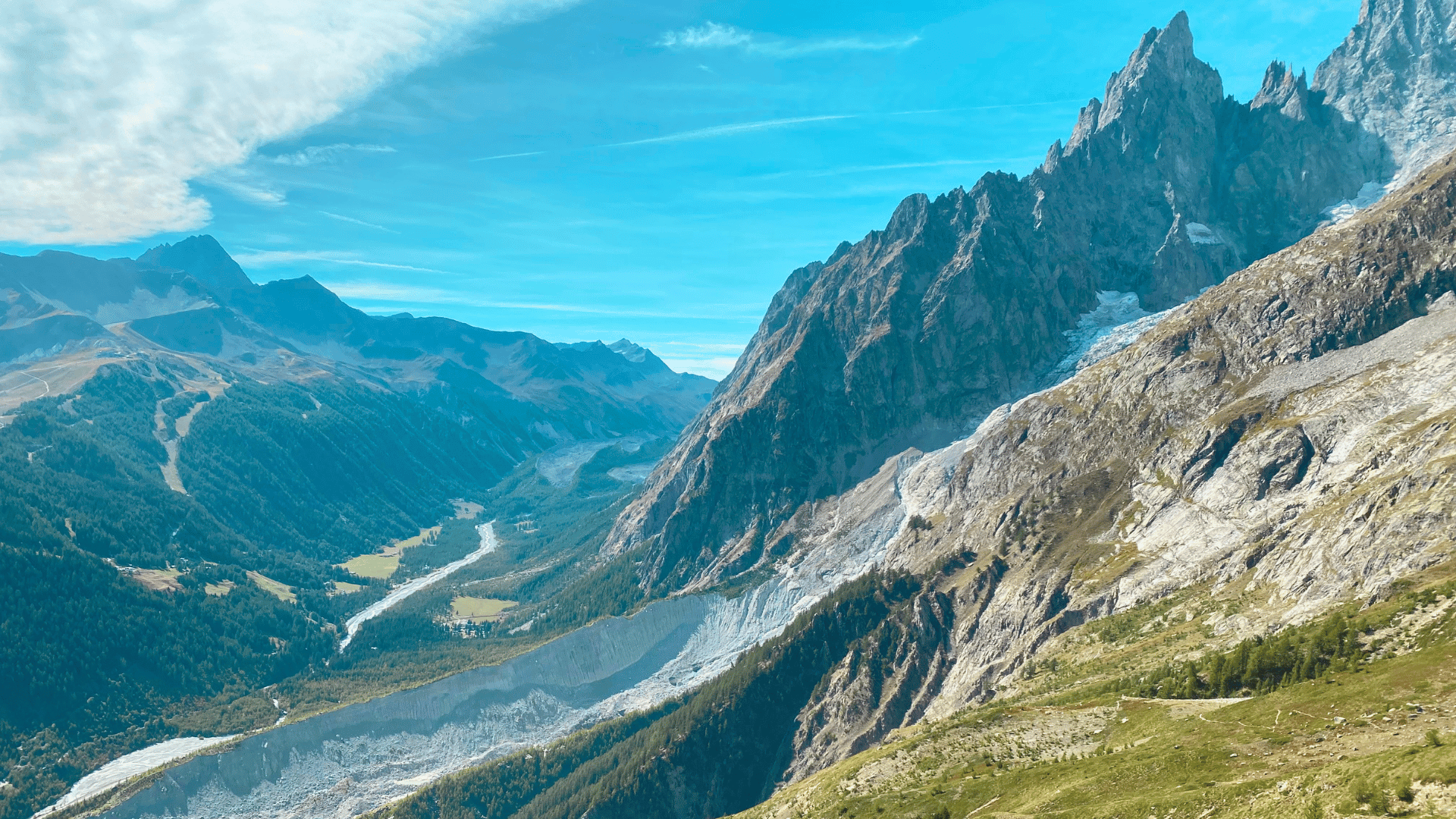
View from Skyway Monte Bianco | Photo by Jay Gentile
A Cable Car Ride Into Another Planet
Then again, there’s the small matter of Mont Blanc.
At 15,774 feet, it’s the highest mountain in the Alps. And thanks to the otherworldly Skyway Monte Bianco, you can get shockingly close to the top without any mountaineering experience, specialized equipment, or questionable life decisions.
The futuristic cable-car system takes visitors to Punta Helbronner, more than 11,000 feet above sea level, in immaculate cabins that rotate 360 degrees as they climb.
One minute you’re looking at green valleys. A few minutes later, you’re surrounded by glaciers and enormous slabs of rock that look like they belong on another planet.
It’s one of those rare tourist attractions that’s every bit as impressive as advertised. Naturally, I took about 200 photos, most of which turned out to be nearly identical.
Even the cable car has a luxury angle, with Range Rover branding prominently displayed around the attraction. Because apparently being transported 11,000 feet into the Alps isn’t quite aspirational enough unless there’s an expensive SUV involved.
That pretty much sums up Courmayeur. It’s a sophisticated resort town, but one that doesn’t seem particularly interested in constantly reminding you how sophisticated it is.
A short drive away, the mountain-lined valley known as Val Ferret offers a completely different experience. Think green pastures, streams, traditional mountain buildings, and gorgeous alpine scenery that looks suspiciously like digital wallpaper.
It’s the kind of place where you can stop and drink wine with locals at a random bar or crash a family party in the fields. We did both.
Nobody seemed especially concerned about either.
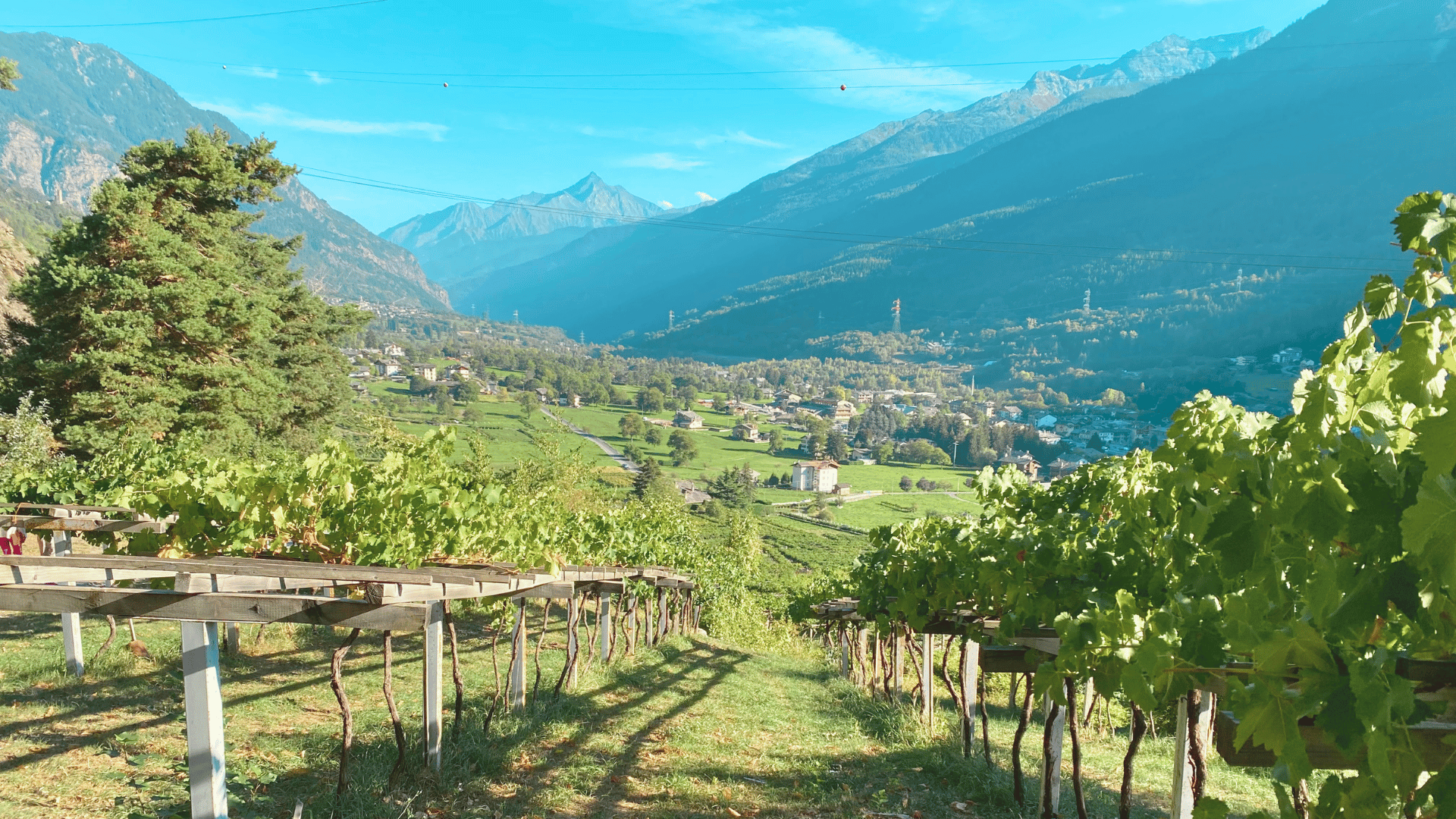
Cave Mont Blanc Winery | Photo by Jay Gentile
The Italian Approach to Mountain Life
Courmayeur also understands that not every vacation activity needs to involve extreme physical exertion.
Nearby QC Terme Pré-Saint-Didier is a sprawling thermal spa complex where you can soak in outdoor pools while staring up at Mont Blanc. It’s hard to feel stressed when you’re sprawled out on a lawn chair following a hefty intake of local Italian beer and lasagna, looking at one of the world’s most famous mountains. Although I suppose one could try.
Back in town, the 4-star Gran Baita Hotel & Wellness offers a comfortable base, with traditional Alpine styling, a spa, and an outdoor pool. Shout out to the bartender and piano player as well.
But what really makes Courmayeur work lies beyond its obvious mountain attractions. This is Italy, after all. Food, wine, and Italian culture are not exactly afterthoughts.
The Aosta Valley has its own culinary traditions, with hearty mountain dishes, excellent cheeses, cured meats, and wines that don’t get nearly as much attention as those from Tuscany or Piedmont.
At Cave Mont Blanc, near Morgex, Europe’s highest elevation vineyards sit beneath the massive peaks of the Mont Blanc range. The winery specializes in white wines made from Prié Blanc, a local grape that grows at elevations where you’d think grapes would have more pressing concerns. Harvesting grapes here is far from easy. But they do it anyway, with smiles on their faces.
Yes, there’s world-class skiing and incredible scenery. But there’s also an actual Italian town here, with its own food, wine, history, and cultural identity that’s easy to fall in love with.
You don’t have to spend every waking moment conquering mountains to appreciate the place.
In fact, I’d strongly recommend against it.
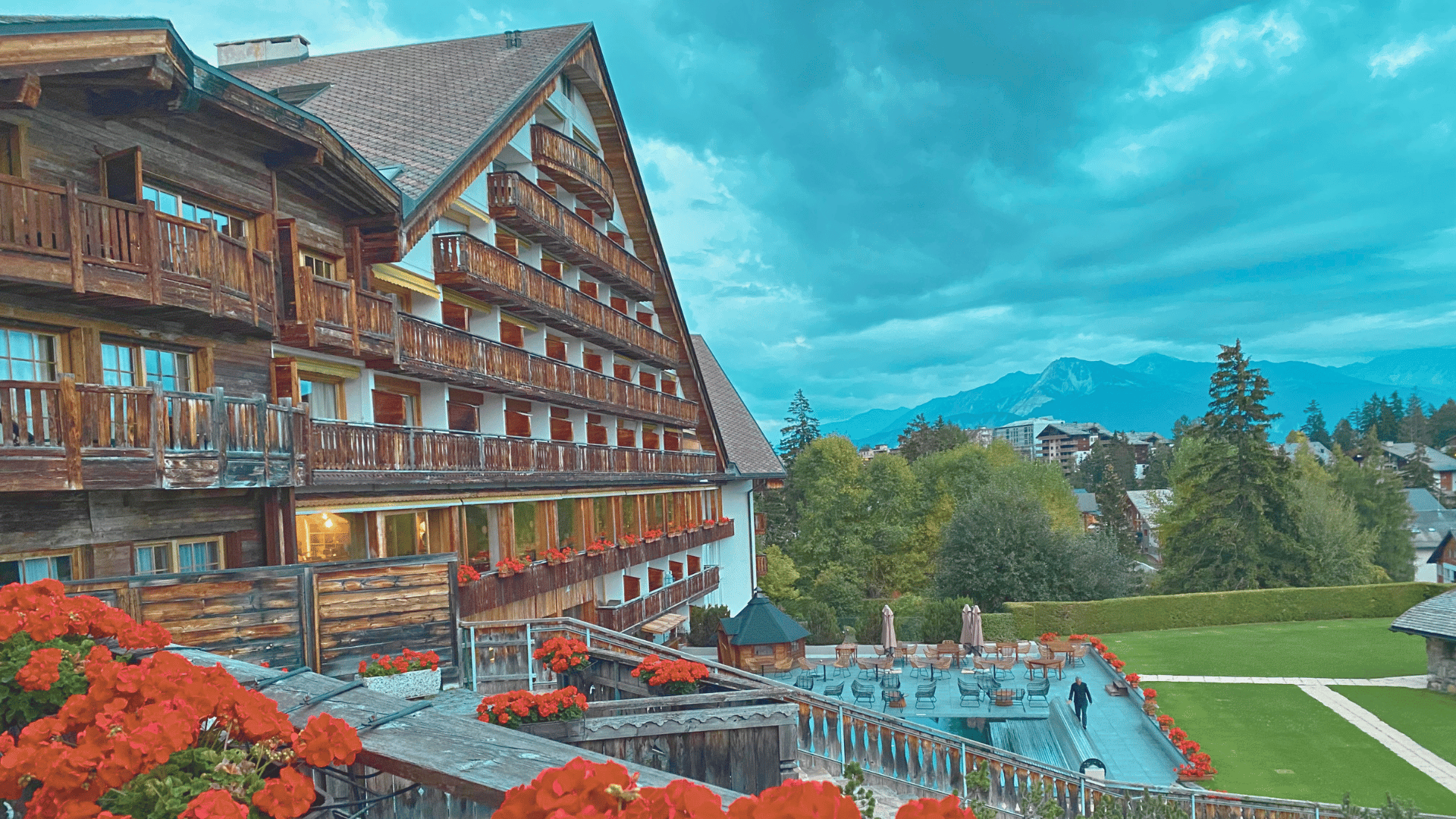
Hostellerie du Pas de l'Ours | Photo by Jay Gentile
Crans-Montana: Switzerland's Sunny Side
One of the nice things about combining Courmayeur and Crans-Montana into one trip is that they’re only about a two-and-a-half-hour drive apart. The route takes you through the mountains and across the Italian-Swiss border, making it easy to experience two countries without spending an entire day in the car with your nose pressed against the window.
And while the distance between the two resorts isn’t dramatic, the cultural difference is.
If Courmayeur is the charming Italian mountain town where everyone seems to be enjoying a leisurely lunch, Crans-Montana is its Swiss cousin who owns an expensive watch, drives a Mercedes, and probably has a very impressive investment portfolio.
Perched on a sunny plateau above the Rhône Valley, Crans-Montana is one of Switzerland’s premier mountain resorts. And unlike Courmayeur, it makes absolutely no attempt to downplay its money.
There are designer boutiques, luxury watch advertisements, expensive restaurants, and enough conspicuous wealth to make you wonder whether you’ve wandered into a Swiss bank’s annual retreat. It’s a bit like wandering through a luxury lifestyle magazine, except the mountains are real and nobody is trying to sell you a subscription.
Golf is a major part of the local identity. The Crans-sur-Sierre Golf Club features a stunning nine-hole course designed by Jack Nicklaus and an 18-hole championship course named for Seve Ballesteros, which just so happens to host the annual Omega European Masters.
And skiing is about to get an even bigger spotlight here. In February 2027, Crans-Montana will host the FIS Alpine World Ski Championships for the first time in 40 years, bringing the world’s best racers to town for two weeks of serious competition and alpine adventure.
But perhaps the biggest difference from Courmayeur is the geography.
In Courmayeur, the mountains practically surround you. In Crans-Montana, you’re perched high on a sunny hillside above the Rhône Valley, looking out across an enormous panorama of distant peaks.
It’s like somebody lined up the Swiss Alps for a group photo.
The resort itself is also more spread out, encompassing the neighboring communities of Crans and Montana rather than one compact historic center.
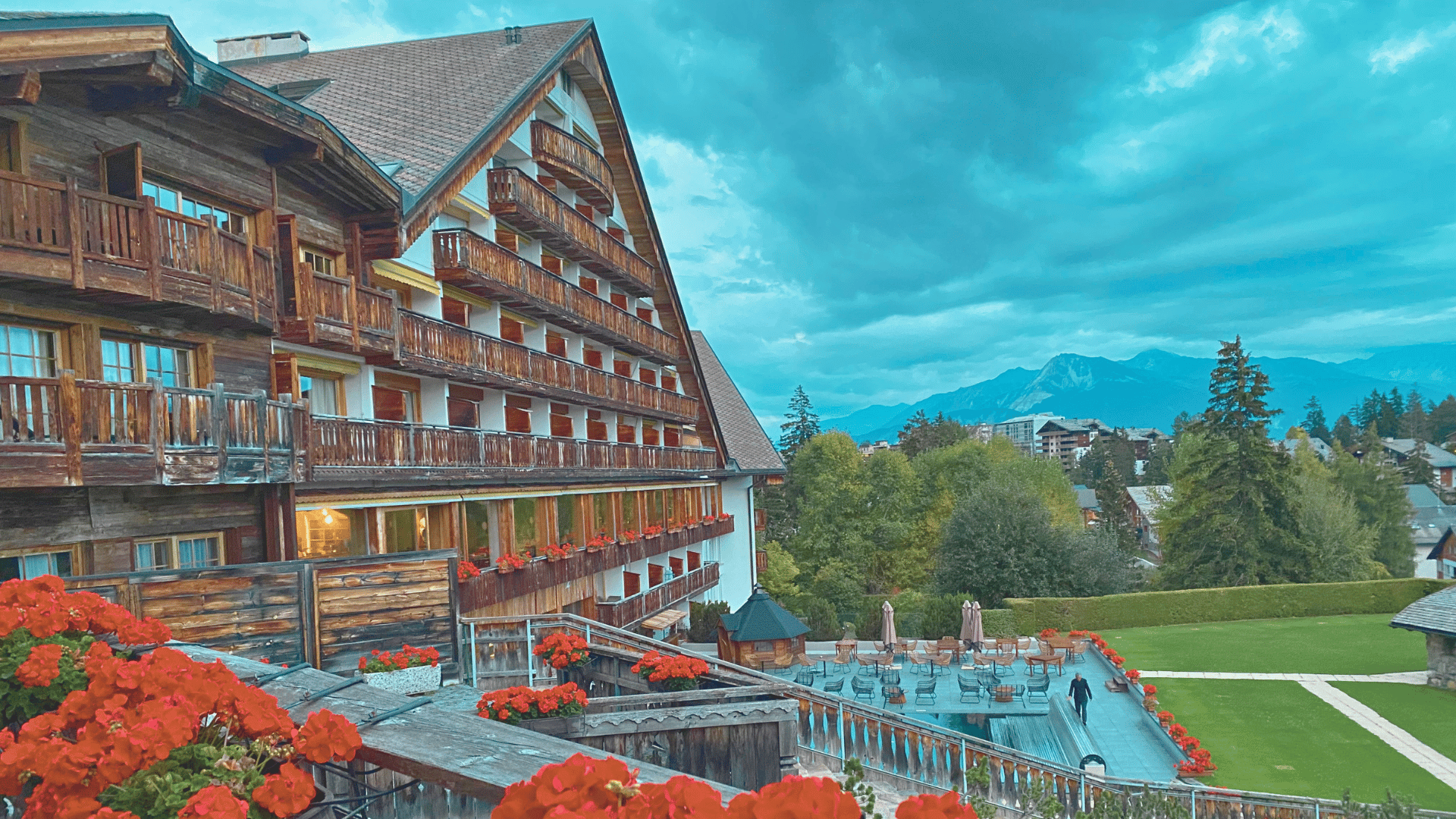
We stayed at Hostellerie du Pas de l’Ours, a five-star Relais & Châteaux property with relentlessly charming chalet-style rooms, a spa, and dining from chef Franck Reynaud.
The staff was exceptionally friendly, the amenities were first-rate, and I somehow managed to adjust to the luxurious accommodations without much difficulty.
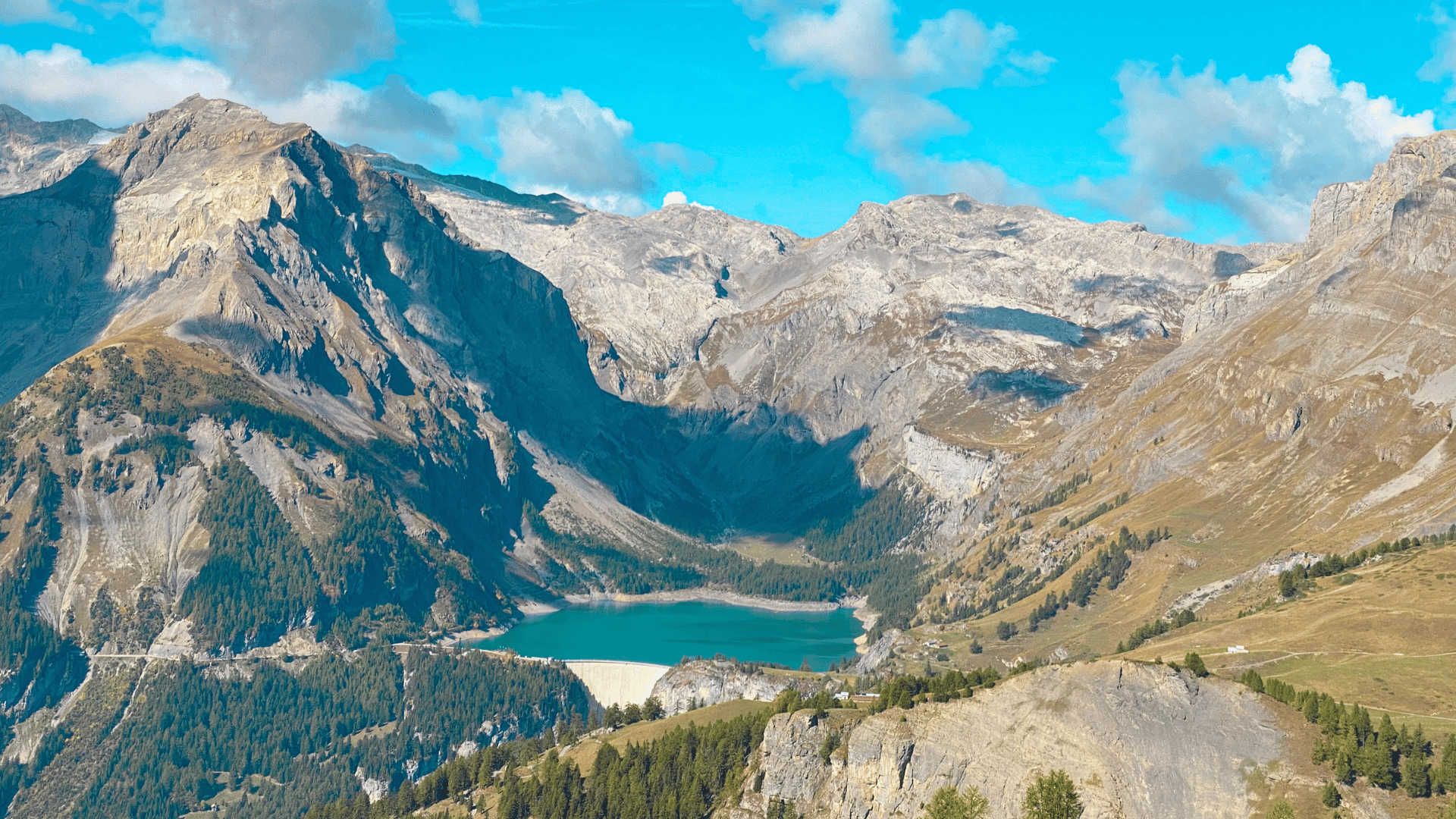
Cable Car View | Photo by Jay Gentile
Lunch With a View (And Then Some)
One of the coolest places in Crans-Montana is Chetzeron, a former cable-car station that’s been converted into a boutique hotel and restaurant high above the resort.
Getting there involves taking a cable car to the gondola station Cry d’Er, more than 7,200 feet above sea level, followed by a surprisingly steep walk down the mountain. And while I generally prefer restaurants where the most physically demanding part of lunch involves lifting a fork, Chetzeron is worth the few extra huffs and puffs.
The building is a striking piece of modern architecture, with enormous windows, minimalist interiors, and an eye-popping outdoor pool overlooking the mountains. It looks like the kind of place specifically designed to make your Instagram followers question their life choices.
And while the architecture is impressive, the real attraction is sitting outside with freshly grilled lunch and a glass of wine, looking out across the Alps as if you are surveying your kingdom.
Suddenly, the hike doesn’t seem so unreasonable.
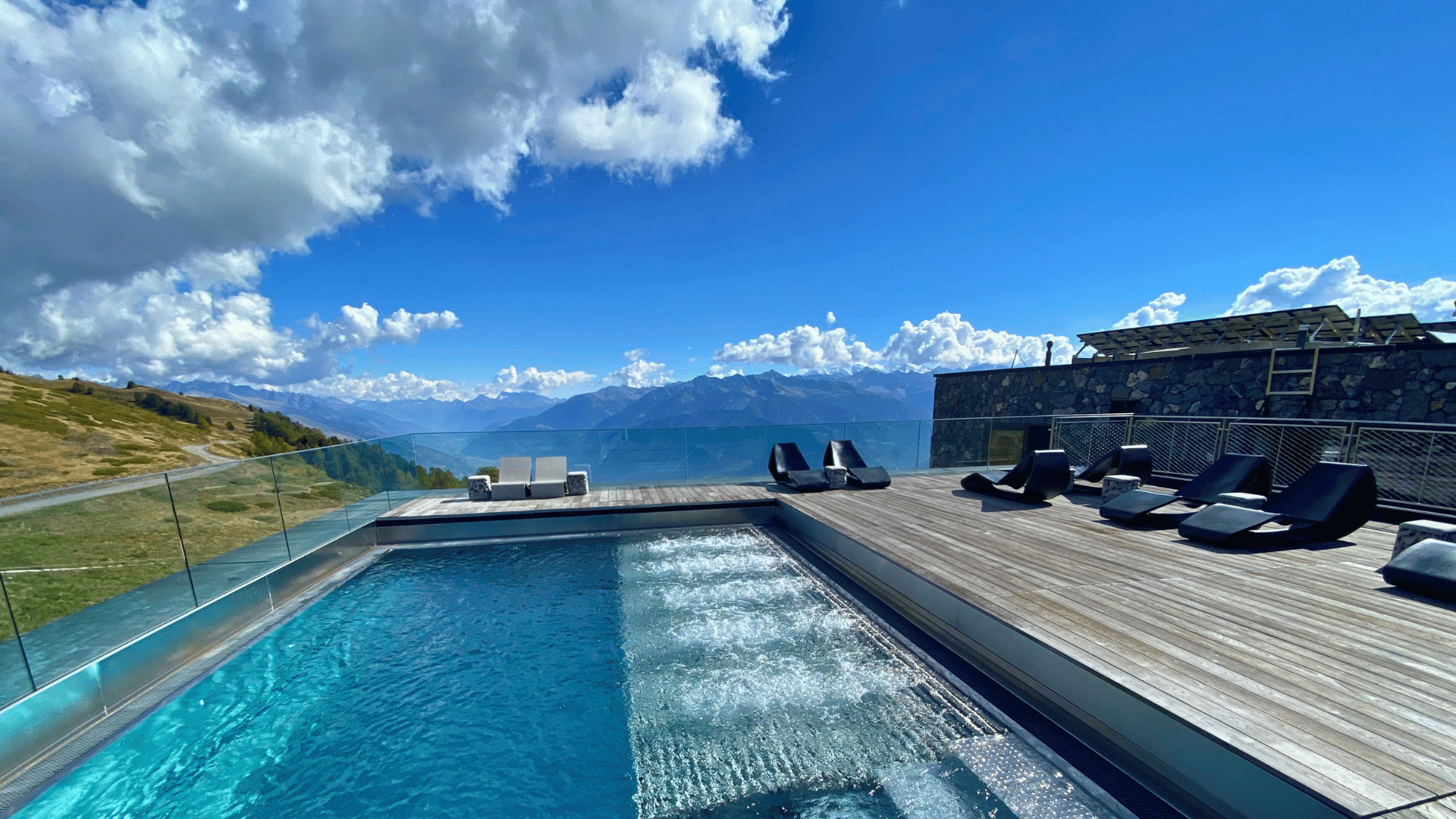
Chetzeron | Photo by Jay Gentile
Old Switzerland, New Switzerland
Fortunately, Crans-Montana isn’t all fancy hotels and expensive cars.
A short drive into the surrounding mountains brings you to Hameau de Colombire, a collection of traditional Alpine buildings surrounded by pastures, hiking trails, and lively outdoor restaurants with A+ views.
There’s a small museum dedicated to traditional mountain life, and nearby the Bisse du Tsittoret hiking trail follows one of the historic irrigation channels that helped sustain agriculture in the Valais for centuries.
It’s a nice reminder that people were somehow living and farming in these mountains long before anyone thought to build a five-star spa. Not that we’re complaining.
And then there’s something I hadn’t really associated with Switzerland before this trip.
Wine. Lots of it.
The predominantly French-speaking Valais is the country’s largest wine-producing region, with multiple vineyards climbing the hillsides above the Rhône Valley. It’s a beautiful landscape, and one that feels a little unexpected in a country better known internationally for chocolate, watches, and discreet banking arrangements.
At Cave Le Tambourin, a highly regarded but refreshingly laid-back family-run winery in nearby Corin, we sampled award-winning local wines that rarely make their way to American shops.
Switzerland exports relatively little of its wine, preferring to keep most of it for domestic consumption. After trying some, I can’t say I blame them.
The food is similarly rooted in local traditions, with mountain cheeses, cured meats, potatoes, and hearty dishes that seem specifically designed for people who have spent the day outdoors.
Le Mayen is a good place to explore classic Valais cuisine, while Bistrot des Ours offers a more refined take on mountain cooking.
It’s a different experience from Courmayeur, but one that’s equally enjoyable. Especially for fans of fondue, which is available basically everywhere you look.
And in the midst of designer shops like Hermès and Louis Vuitton, there’s even a casino and late-night local dive bar named Harry’s for when you feel like staying up all night to catch your red-eye flight home from Geneva.
Two Countries, Two Very Different Alps
What makes Courmayeur and Crans-Montana such a good pairing isn’t just their proximity. It’s that they offer two completely different versions of Alpine life.
Both are worth visiting outside the winter season, when you can spend your days exploring vineyards, hiking trails, mountain restaurants, and spas without ever strapping on a pair of skis.
And while the scenery is spectacular in both destinations, what stayed with me most was how quickly everything else could change within the same mountain range.
One day you’re wandering through an Italian village, drinking local wine, and accidentally joining a family party in the mountains. A few days later, you’re feasting on Swiss fondue at a luxury resort overlooking what feels like half of Europe.
Same Alps. Two different worlds. One trip of a lifetime.
More Travel
Cool Destination: The Ultimate Puerto Vallarta Guide
Our favorite places to stay, eat, drink, explore, and linger in one of Mexico's most captivating beach towns.
There’s a Lot More to Walmart’s Hometown Than Walmart
From Frank Lloyd Wright architecture to world-class mountain biking, Bentonville, Arkansas, is full of surprises.
The Canadian City You’re Probably Overlooking
A Little Wild. A Little Luxurious. Entirely Underrated.
-
Travel
Cool Destination: The Ultimate Puerto Vallarta Guide
Our favorite places to stay, eat, drink, explore, and linger in one of Mexico's most captivating beach towns.
-
Travel
There’s a Lot More to Walmart’s Hometown Than Walmart
From Frank Lloyd Wright architecture to world-class mountain biking, Bentonville, Arkansas, is full of surprises.
-
Travel
The Canadian City You’re Probably Overlooking
A Little Wild. A Little Luxurious. Entirely Underrated.