Today it’s known as Frank’s Diner, but it was once unceremoniously named Car No. 1787. It was built in 1906 and served as an observation car owned by Northern Pacific Railroad until it was replaced in 1931. It then became what many repurposed train cars have become. A diner. A Spokane institution, Frank’s is a good diner too, and my fortifying breakfast there began my journey west for an epic bike trip on Washington’s rail-trails.
The irony of starting my trip with a former rail car turned diner was not lost on me. Rail trails are former railways, and my first night stay was in a room that was formerly a caboose. It was a theme. After a drive, I joined several journalists and local community leaders for a few days of cycling on these former railways turned into recreational trails. The bike trip started at Cle Elum and ended in Seattle.
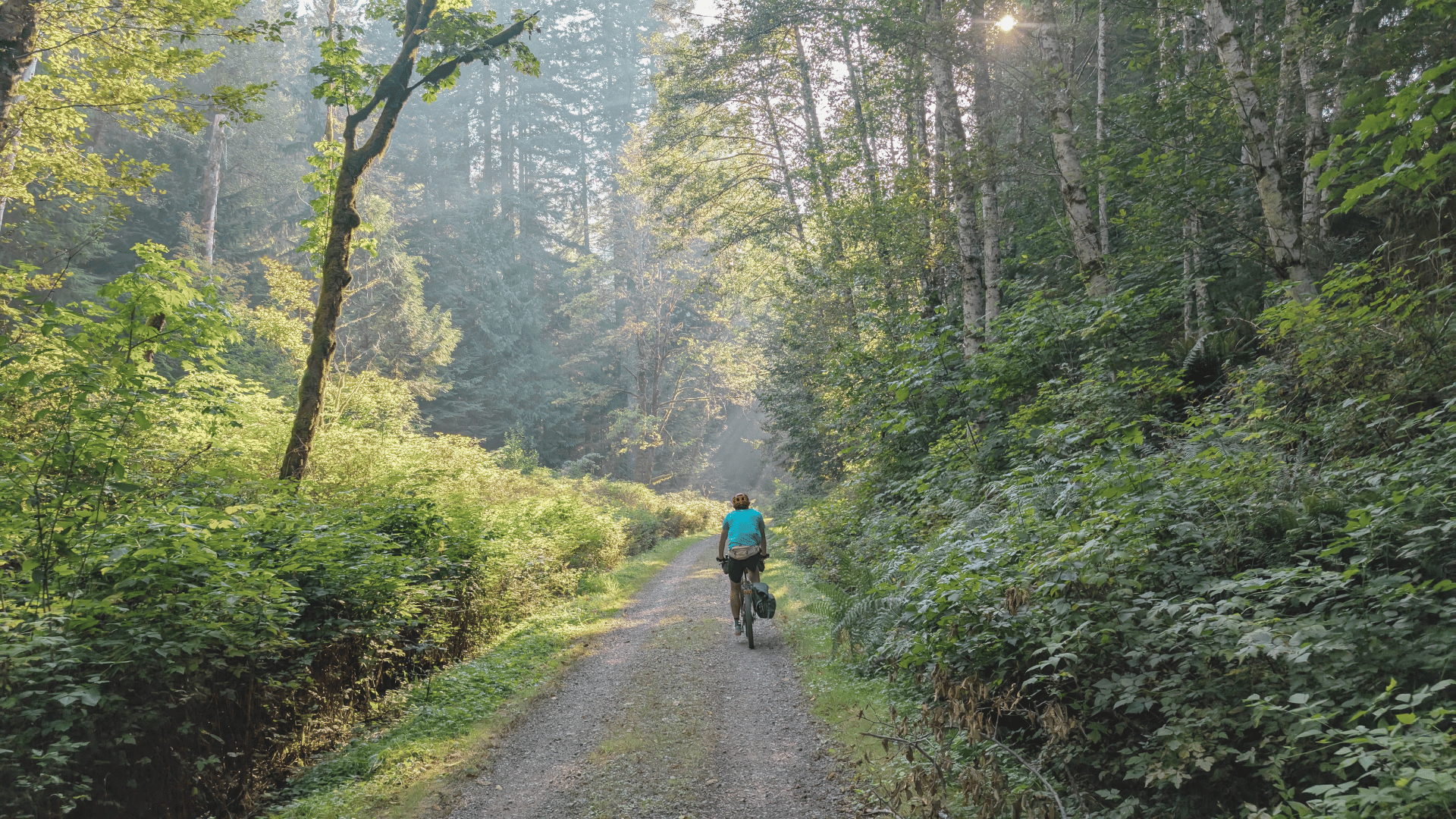
Dry and dusty, forested and mountainous, suburban, urban, and city, this journey in Washington not only reminded me why I love rail trails as a way to travel, but it also showed me a beautiful bike route in Washington and a side of the state you can’t get to by car. That Washington has a stunning outdoors scene is not news, but the rail trails don’t get enough love in my book, so here’s three ways to explore the state by bike, beginning with my 114 mile trip.
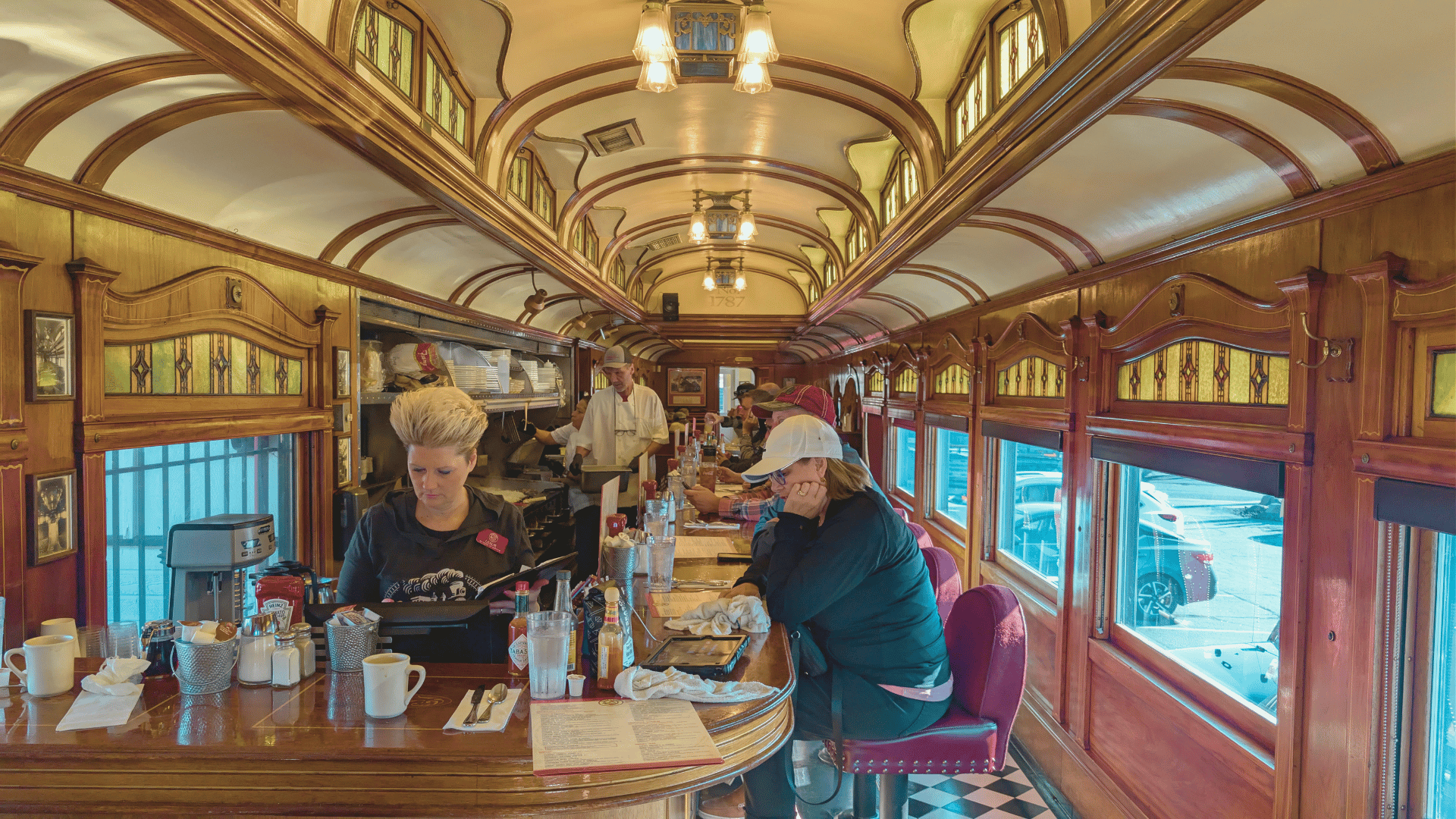
Frank's Diner | Photo Courtesy of Brandon Withrow
The Route
Our route focused on Palouse to Cascades State Park Trail and the Leafline trail network, which began in Cle Elum, headed west, and ended in Seattle. These networks of smaller trails are also sections of the Great American Rail Trail, which is over 50 percent complete, and will provide cyclists a bike-safe route from Washington, D.C., through 12 states. With side jaunts during the day, our roughly 100-mile trek came to 114 miles total.
Things to Know
First, you can travel in the reverse direction for this route. It doesn’t have to be east to west. Below is the route we took, and while part of it is closed in places for repairs currently due to weather that wiped out parts of the paved trail, starting from day two’s itinerary is possible. Check in to see what the current status is before riding.
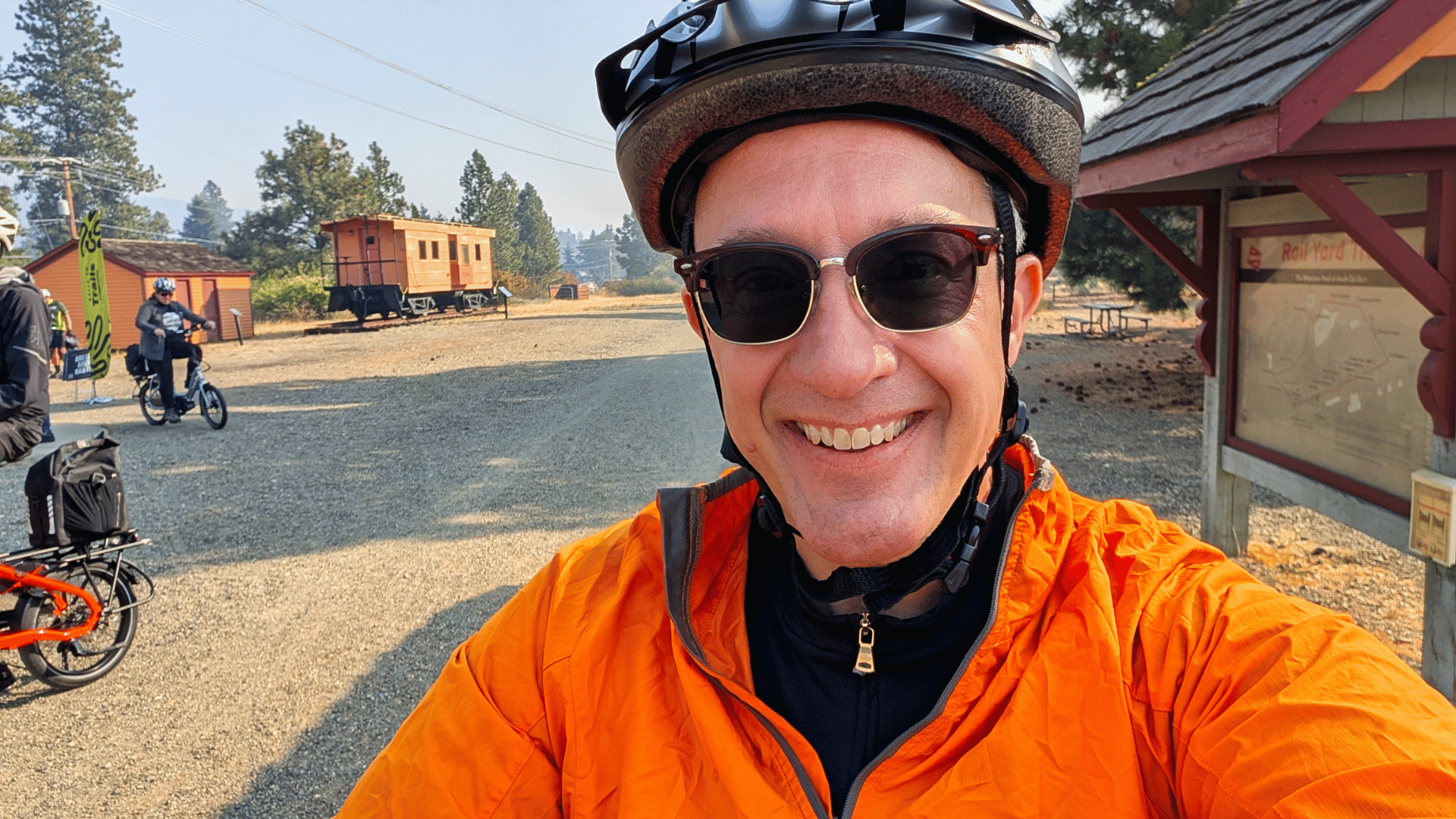
Brandon Cycling the Great American Rail Trail | Photo Courtesy of Brandon Withrow
Make Everything You Pack Count
The route will take you through the mountains to connecting towns, but you will still want to prepare appropriately. Consider getting bike packs for food, emergency and repair kits, clothing, or a bikepack tent (if you decide to camp), like these Ortlieb seat packs, frame packs, handlebar packs, and panniers. Cycling jerseys and shorts (like these PEARL iZUMi, or my daily favorites, Sponeed gel shorts) go further than regular cotton clothes. Lightweight self-packing jackets, like REI’s XeroCloud 3L, will take up less space. A hydration backpack can help with increasing your water supply. For darker skies moments, have a headlamp or headlight.
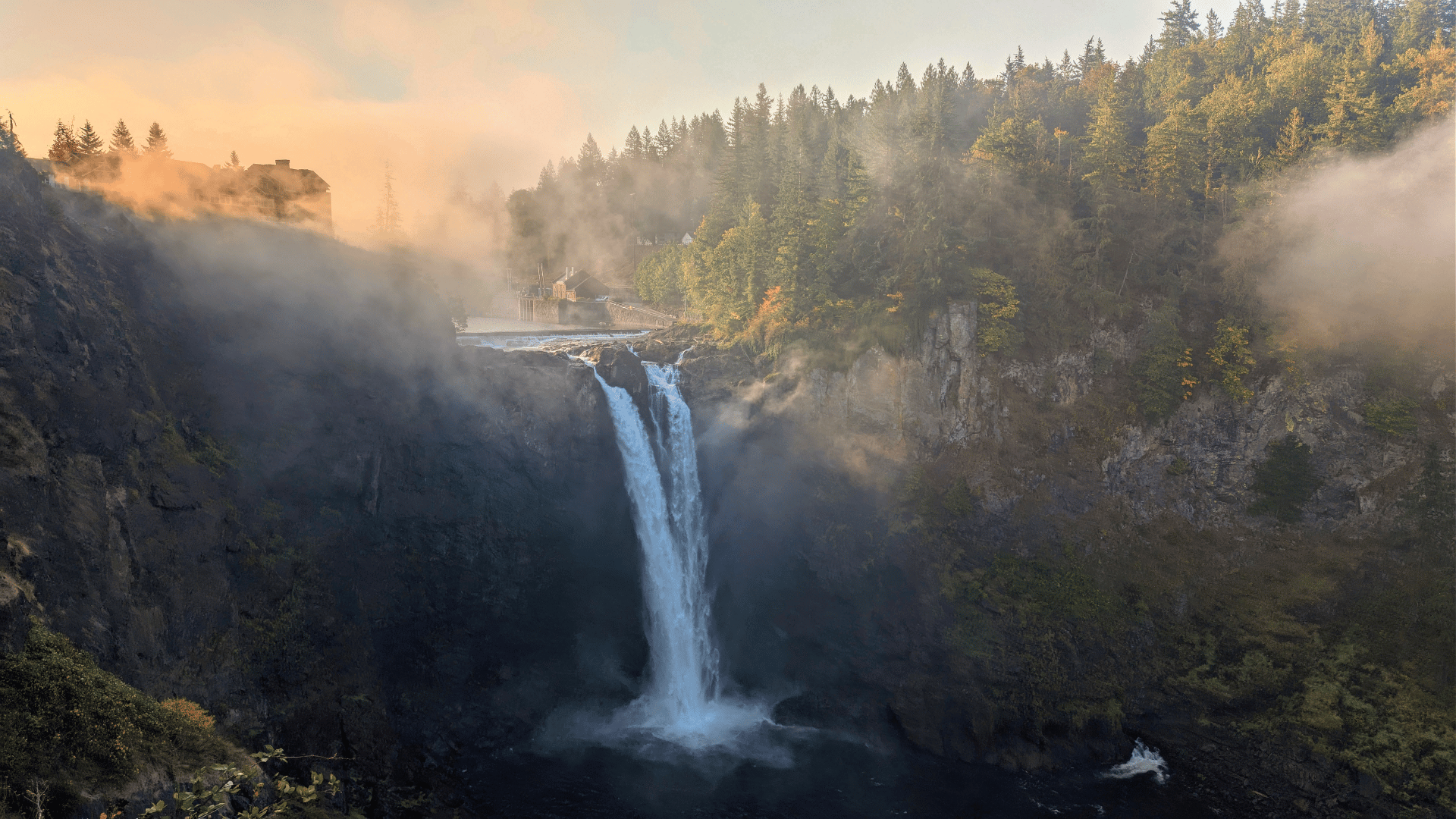
Snoqualmie Falls | Photo Courtesy of Brandon Withrow
Day 1: Cle Elum to Rattlesnake Lake Recreation Area
The night before our adventure, we stayed in cabooses that were turned into rooms at the Iron Horse Inn Bed and Breakfast in Cle Elum. Cabooses have all the usual bed and breakfast amenities, but with the obvious benefit of being unique. Depending on how many cycling companions you have, you can book a caboose for 2 or for 5. The trailhead begins at the South Cle Elum Depot, about a quarter of a mile down the road.
From there, you’ll ride 52 miles along the Palouse to Cascades State Park Trail to Rattlesnake Lake Recreation Area. It’s here that you’ll run into the first gap in the trail, but also a great place to call it a night. Before you leave the recreational area, check out Rattlesnake Lake, where massive tree stumps of old Western red cedar and Douglas fir that are left over from early logging in the area are normally submerged underwater. During drought years, they can be exposed and it’s worth checking out. Along this route is the Snoqualmie Tunnel, which is rocky, dark, easily 10 degrees colder, and damp, so bring a rain jacket and headlamp.
If you haven’t arranged for a pick-up at the trail gap, an 8-mile ride to Snoqualmie Falls Brewery is worth the trip. Book a night at the nearby Snoqualmie Inn for the night in town.
Pro Tip: Before resuming your early morning ride the next day, ride 2.5 miles to Snoqualmie Falls, a stunning 270-foot waterfall that looks amazing in a sunrise.
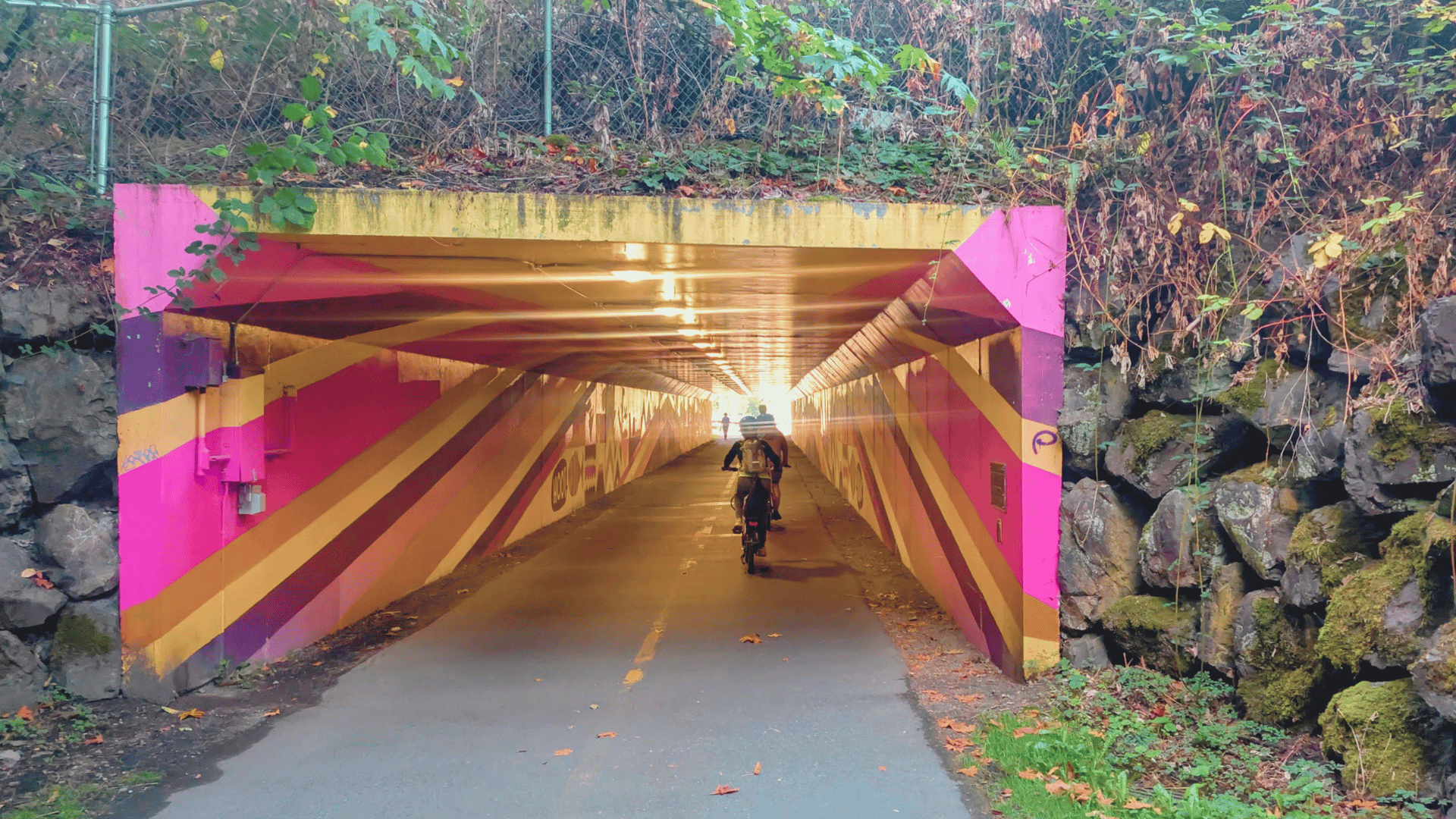
Tunnel near Bothell | Photo Courtesy of Brandon Withrow
Day 2: Preston to Bothell
Day two is shorter and starts at the Preston-Snoqualmie Trail Head, which connects to the Issaquah-Preston Trail, and then connects to the East Lake Sammamish Trail that takes you to the city of Redmond and the short Redmond Central Connector that will take you to the Sammamish River Trail, which leads to the Sammamish River Bridge at Bothell. This is a good place to call it a night and stay at the McMenamins Anderson School, a former 1930s school turned into a boutique stay whose campus includes dining options, pools, gardens, bars, and live music. McMenamins is a Pacific Northwest company that restores historic buildings and converts them into hotels. Follow the city bike and pedestrian path along Bothell Way NE from the Sammamish River Bridge to get there.
Pro Tip: Stop by Dellile Cellars’ winery tasting room near the Sammamish River Trail for a rewarding break.
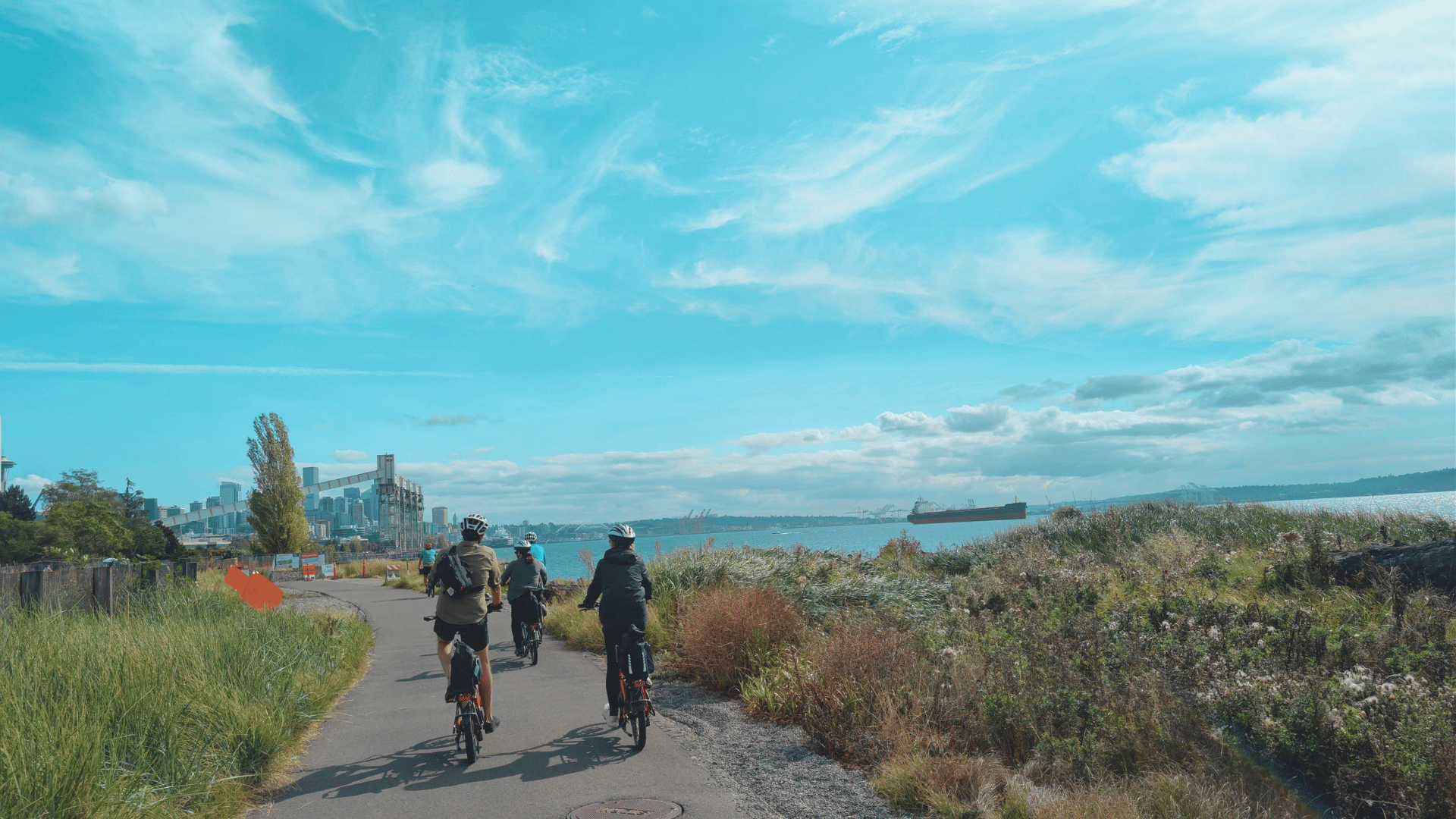
Approaching Seattle | Photo Courtesy of Brandon Withrow
Day 3: Bothell to Seattle
Day three is even shorter, more relaxed. Hop back on the Sammamish River Trail and connect to the Burke-Gilman Trail for almost 20 miles, and then to a series of short connections, beginning with the 34th Street Protected Bike Lane, crossing the Fremont Bridge, and on to the Ship Canal Trail, followed by the Interbay Protected Bike Lane, the Elliot Bay Trail, and the Seattle Waterfront Pathway, ending in Seattle.
It’s a fantastic ride that gives you a chance to see the bike side of Seattle and stay in the city.
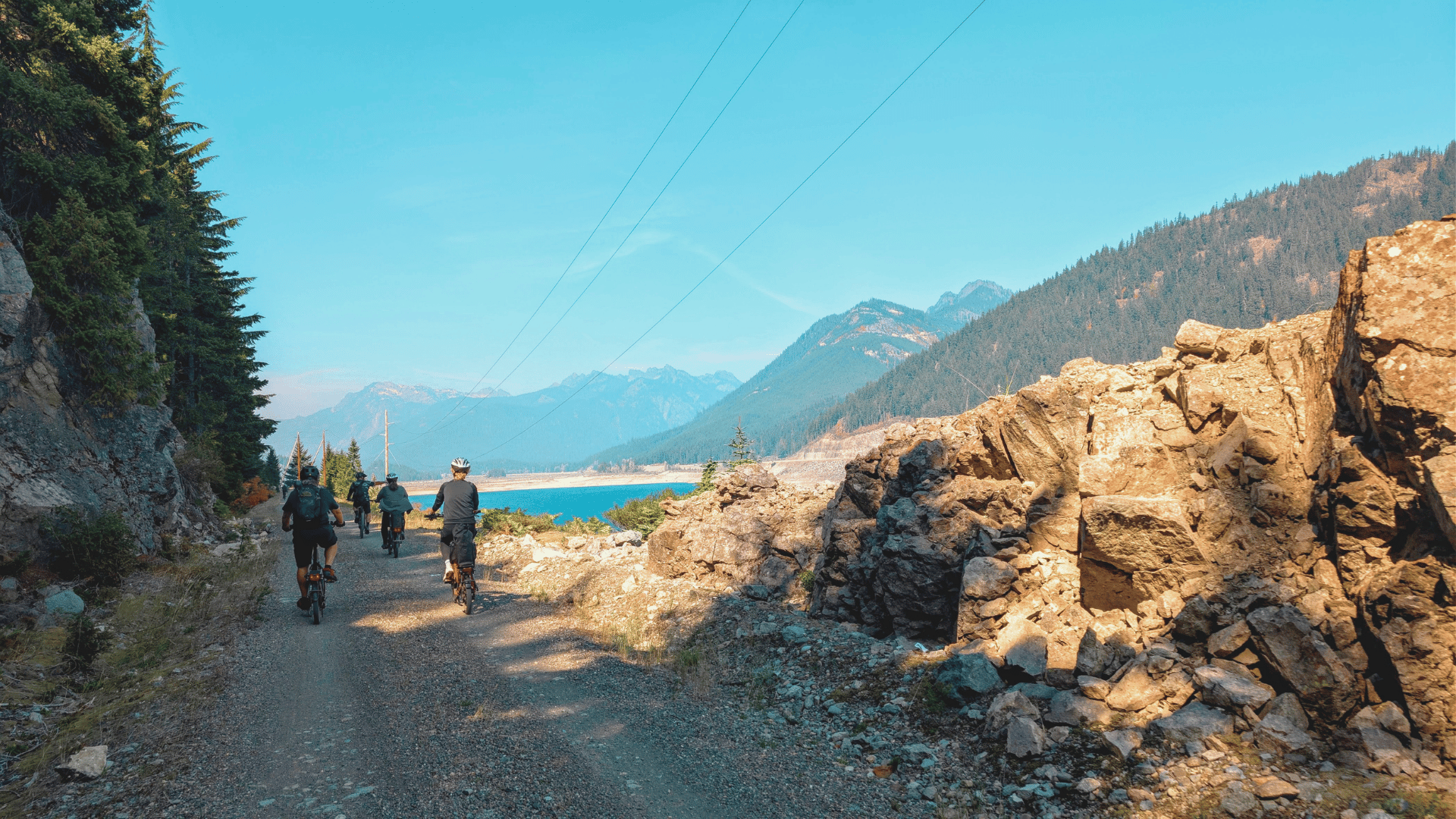
Along Keechelus Lake on the Palouse to Cascade Trail | Photo Courtesy of Brandon Withrow
Route Alternatives
From Cle Elum to the East
It is possible to start the trail at Cle Elum and ride East through the rest of the Palouse to Cascades State Park Trail. Once you get to the Beverly Bridge, the trail will require registration, which will include the combinations you need to unlock gates along the way. Eastern Washington has its own set of underrated beautiful views.
The Olympic Discovery Trail
Another route worth considering is The Olympic Discovery Trail on Washington’s Olympic Peninsula west of Seattle. It’s a 138-mile trail with roughly 90 miles of fully developed runs from Puget Sound to the Pacific Ocean. There are perfect views of forests and mountains.
Spokane River Centennial State Park Trail
Finally, if you want to cap off your Washington bike ride with Spokane, then it’s worth it. Even though the recent fires have shut down a quarter of the Spokane River Centennial State Park Trail, cycling from the city to the East will take you to Idaho. Spokane is also a fantastic place for hiking, paddling, and definitely for cocktails (you heard me).
Regardless of the bike route, Washington is beautiful and worth making a regular destination.
More Travel
There’s a Lot More to Walmart’s Hometown Than Walmart
From Frank Lloyd Wright architecture to world-class mountain biking, Bentonville, Arkansas, is full of surprises.
The Canadian City You’re Probably Overlooking
A Little Wild. A Little Luxurious. Entirely Underrated.
Finding Nature and Nurture in Puerto Vallarta
Come for the mountains, ocean, and adventure. Stay for the martinis, massages, and freshly cleaned sunglasses.
-
Travel
There’s a Lot More to Walmart’s Hometown Than Walmart
From Frank Lloyd Wright architecture to world-class mountain biking, Bentonville, Arkansas, is full of surprises.
-
Travel
The Canadian City You’re Probably Overlooking
A Little Wild. A Little Luxurious. Entirely Underrated.
-
Travel
Finding Nature and Nurture in Puerto Vallarta
Come for the mountains, ocean, and adventure. Stay for the martinis, massages, and freshly cleaned sunglasses.