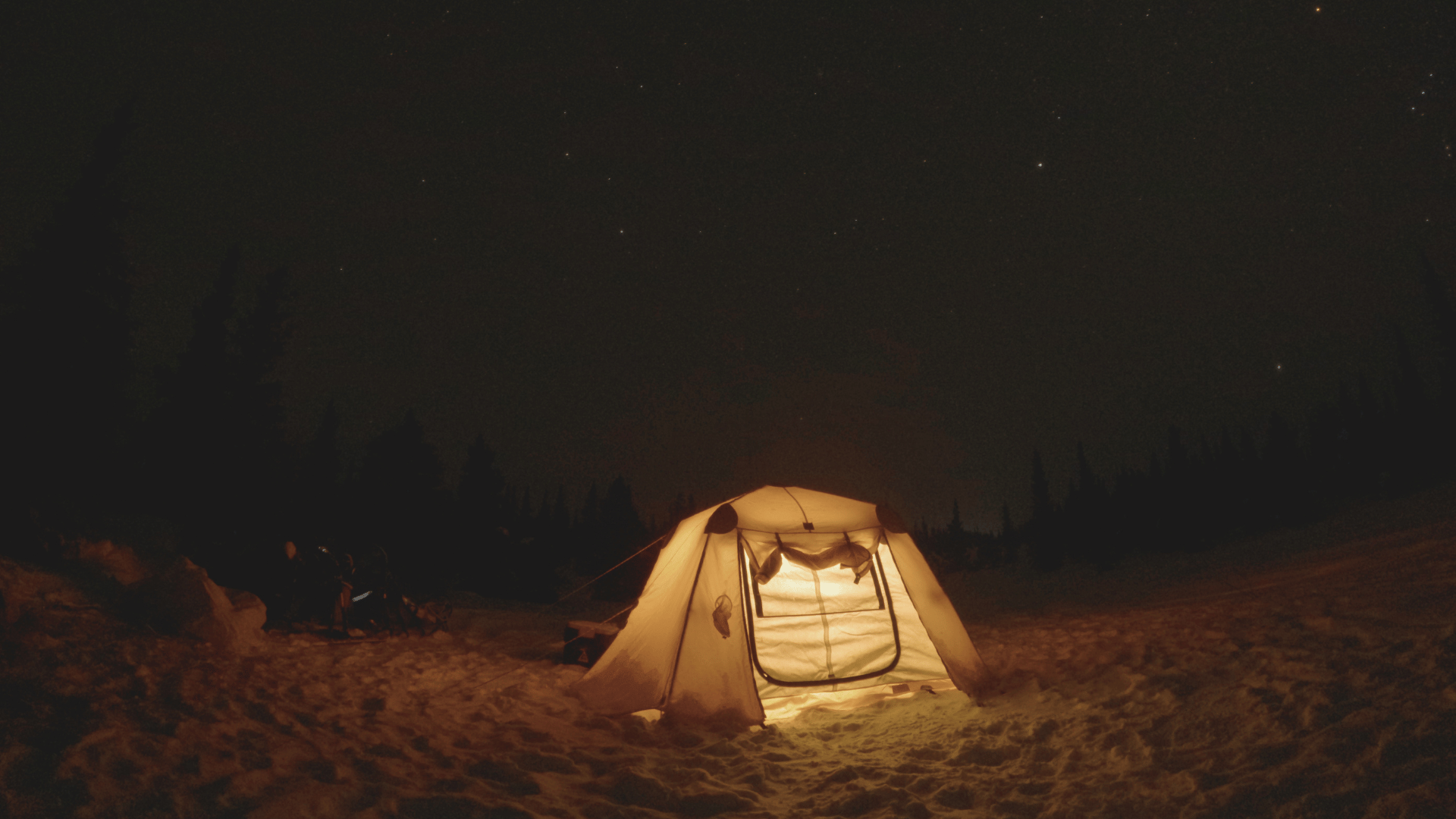
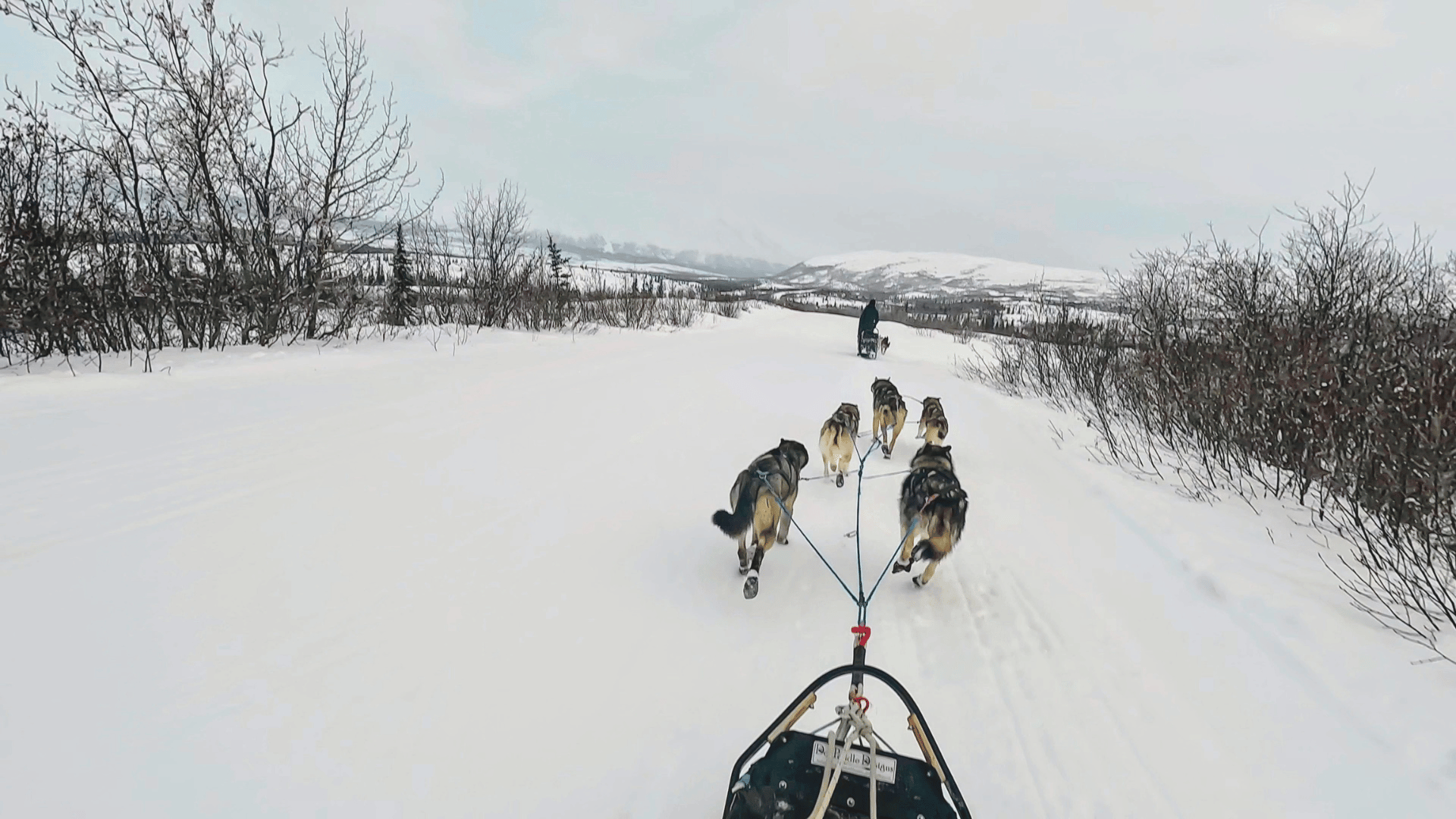
My tent glowed orange against a starry Alaskan sky, while our dog teams slept soundly. We finished the first 25 miles of our 55-mile run into the backcountry. I helped lay out straw beds for them to rest and spooned warm food into their bowls. We slept soundly before we continued the next morning.
It’s one thing to watch champion mushers from the sidelines; it’s an entirely different thing to mush your own team.
Before this, the closest I’ve come to a dog sled was a short one-mile tourist track in Churchill, Manitoba called the “I Did a Mile,” a pun on the annual Alaskan race, The Iditarod. The roughly 1000-mile race that runs from Anchorage to Nome was founded by Joe Redington in 1973 as a way to preserve the trail and Native mushing traditions that he saw being replaced by snowmachines.
This time, I was in Alaska being trained for my own overnight mushing adventure by the guide team behind the Iditarod racer, Paige Drobny.
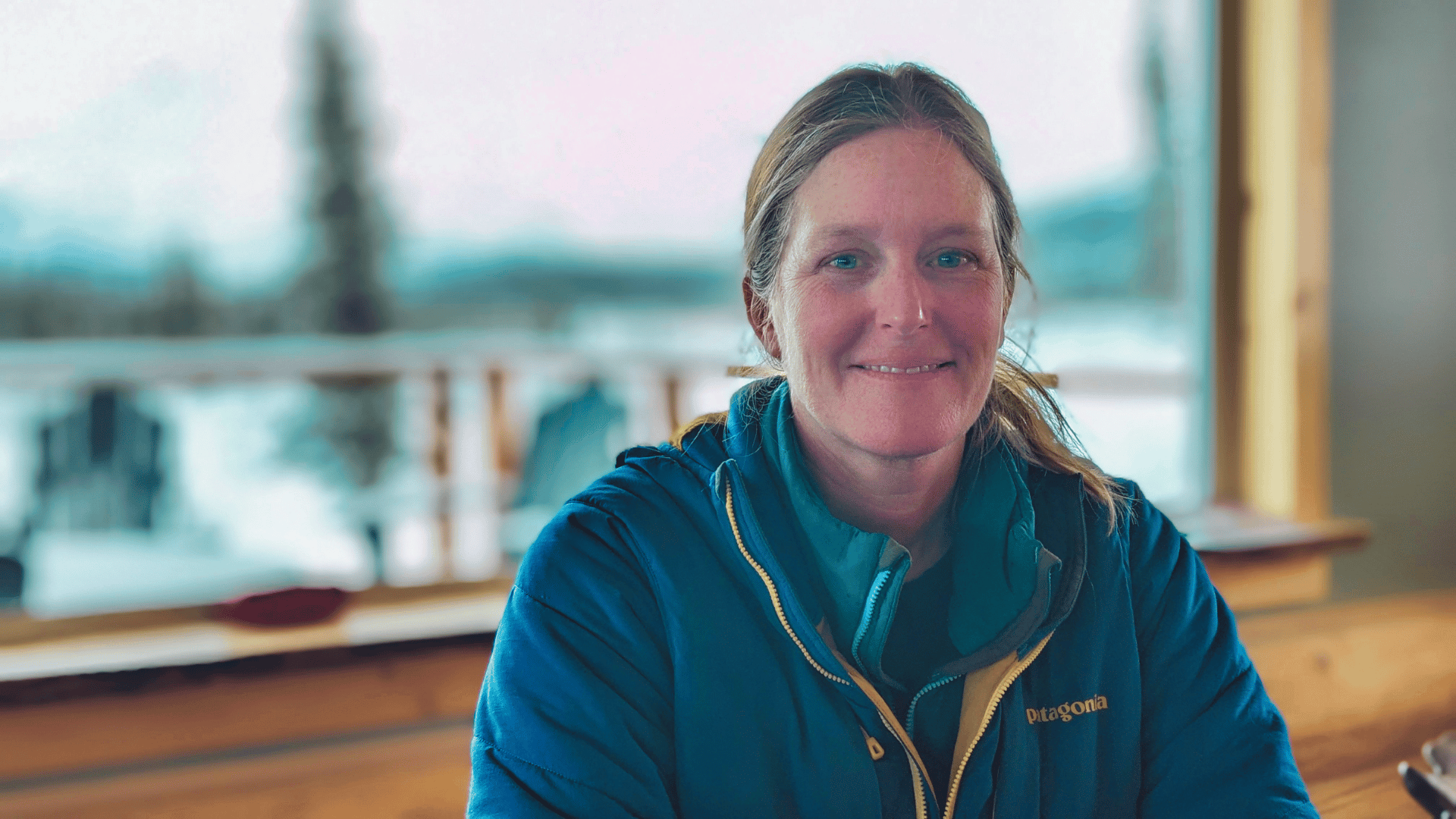
Paige Drobny at Susitna Adventure Lodge, Photo via Brandon Withrow
The Path to Becoming a Racer
Drobny and her husband, Cody Strathe (also a racer), run the off-the-grid Susitna Adventure Lodge and Squid Acres Kennel in Cantwell. They met in Seward before moving to Fairbanks to earn their graduate degrees. She’s a fisheries biologist and Strathe is an archaeologist who has a background in building. Drobny fell in love with mushing after Strathe made her a sled. They already had a couple of dogs. Strathe “went home to visit his dad for Christmas break,” said Drobny, “and he came back and I had three more dogs.” By April they had 13, and someone suggested they should try racing.
“And I was like, oh, I think I’m gonna hate it,” Drobny said. So she decided to sign up for the Yukon Quest 300—the hardest 300 mile race possible. She thought this would be her only race, but seeing her dogs come together as a team, she said, “was just magical.” They were hooked, racing in the Kuskokwim 300 and Yukon Quest 550.
They focus on the care and safety of their dogs in a race. (Every year there are teams that lose a dog.) Drobny won the Leonhard Seppala Humanitarian Award for the care of her dogs in 2025 in the Iditarod, when she placed third. In 2026, she won the Hilcorp Alaska Most Inspirational Musher Award, when she came in fourth.
The couple bring this background to Susitna, where Guests can learn how to mush (a summer version is also available) on trails near the lodge, or they can take an overnight or multi-day mushing expedition. Mushing overnight has always been on my bucket-list, and even though my year started off rough, including a then unhealed knee injury, I slapped on my brace and grinned through the pain.
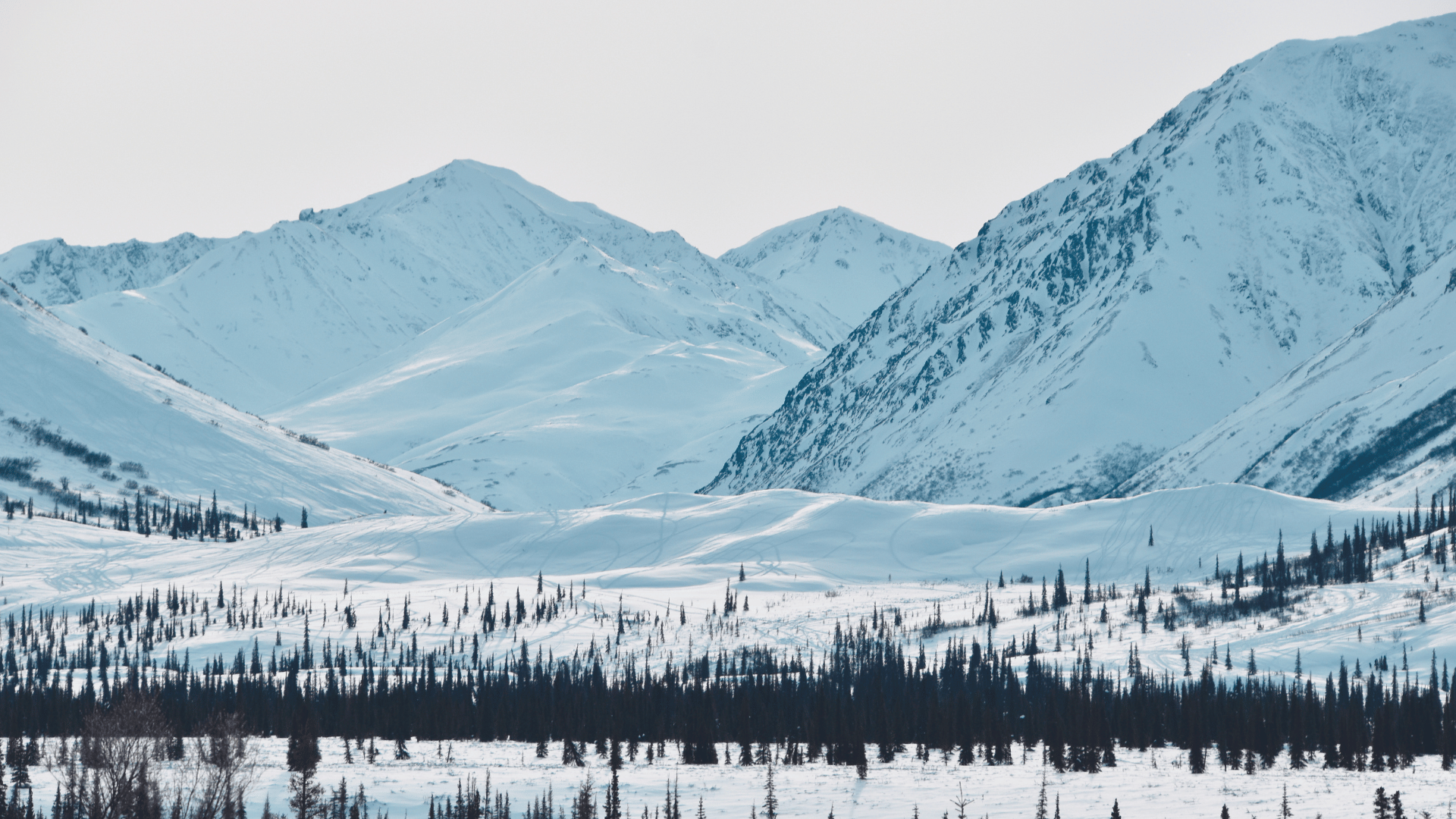
Mountains Along Denali Highway, Photo via Brandon Withrow
The Experience
It’s a snowy four-mile drive from Anchorage to Squid Acres Kennel in Cantwell. There I met Anne E. Corrigan and Jeff Seward and was introduced to my dog team, and supplied any gear that I didn’t have with me already. We loaded the dogs into a trailer and went to our starting point at a pull-off on the Denali Highway, a dirt and gravel road that is shut down under piles of snow in the winter.
We practiced different calls for the dogs—left (haw!), right (gee!), stop (woah!)—and how to steer with handlebars. Feet are placed on the left and right floor-boards until a musher needs to stop or slow down, where one or both feet step into the middle on a drag mat. When a musher needs to walk away from the dogs, each side of the sled has heavy, steel hooks connected which can anchor it to the ground below.
“Don’t let go of the sled,” they told me. The dogs love to run, so if you flip, they will just keep going. “And there will be a sharp left turn on a trail to the camp site. If you turn left too soon, they’ll take you over the snow berm and you’ll flip.” And with that, we set off for the first 25 miles.
The pathway occasionally gets compacted for those taking the route by snowmachine or sled. Mushing is surprisingly decompressing and it’s easy to drift away mentally while passing through the stunning white mountainscapes and boreal evergreens. As Corrigan told me, while mushing she’s “naturally found a space where the quiet settles” onto her brain. That state of mind can get to another level when a musher is racing an endurance race like the Iditarod. There are mandatory breaks in the race, but much of that time is spent caring for the dogs, meaning mushers get less rest. Drobny told me about mushing by muscle memory and experiencing what some mushers call hallucinations, a combination of wake and dream states.
My distracted self didn’t realize one of the dogs was also distracted, and the sled pulled too far to the side of the route where the right runner sank and we flipped. I held on and reached over for the drag mat. And then came that left turn, and (you guessed it), I called for a turn too soon, went over a snow pile and flipped.
User error aside, the trail off the Denali Highway was stunning and full of twisting turns until we reached the campsite. Overnights are set up by the team ahead, so tents are ready when guests arrive. Tents are heated with a stove. The guides dug out snow for a fire. I helped take care of the dogs, and we ate dinner watching the stars make their entrance. A bucket was set up just down hill and under trees for the best (and coldest) view a bathroom break could offer.
The next morning, we packed up the tents, the dogs, the bucket, and my desperately sore leg, and set out on our last 35 miles to Susitna Adventure Lodge. A few adjustments with my dog team and everything was smooth sailing.
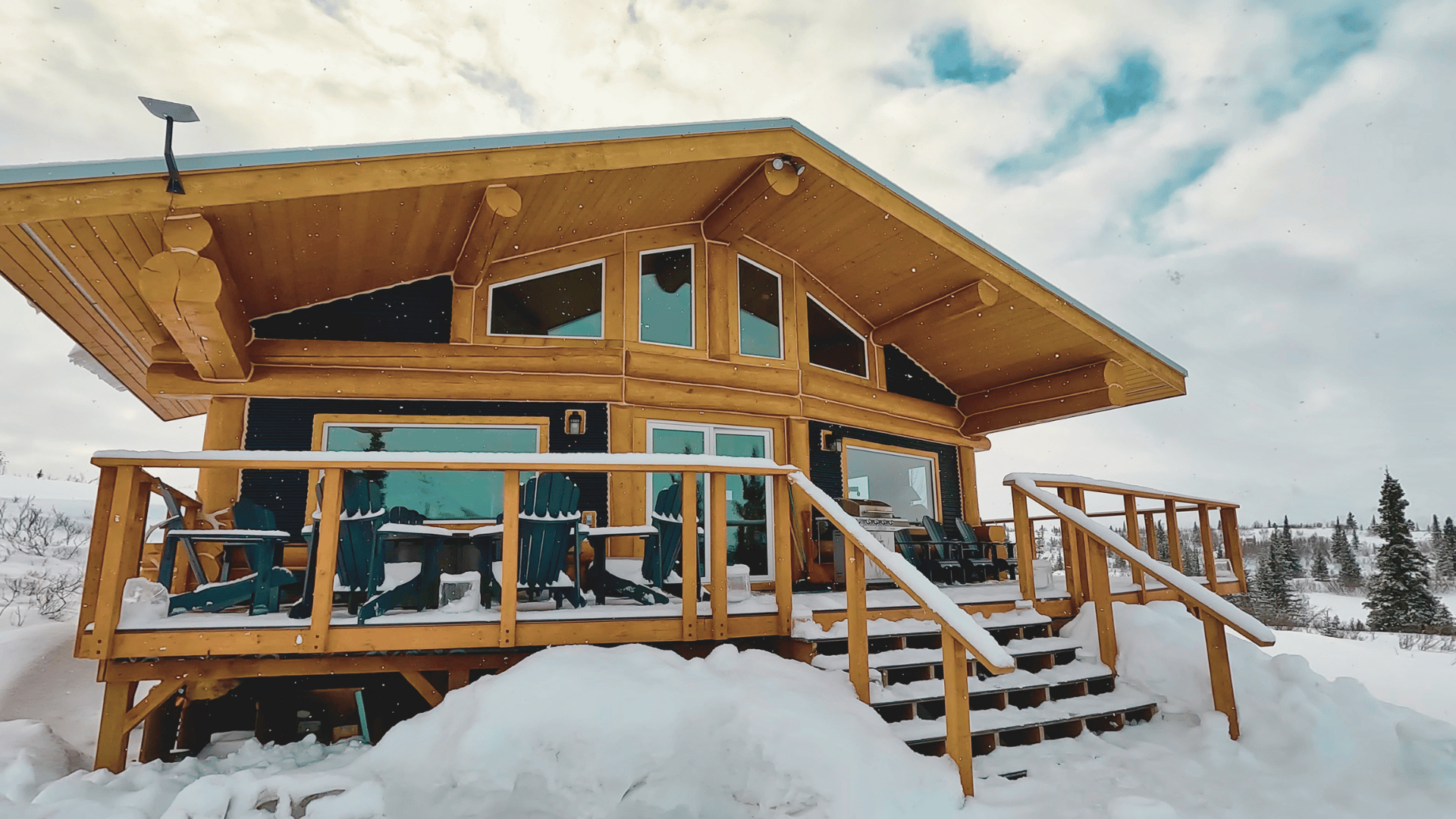
Susitna Adventure Lodge (Main Building), Photo via Brandon Withrow
The Lodge
The original lodge was a seasonal roadhouse, hunting lodge, and floatplane base along the only way to Denali National Park. It had been abandoned and in disrepair, so Drobny and Strathe started a new build project that was featured on Season 11 of the show Building Alaska.
The main lodge, which has three bedrooms and two baths, sleeps up to 10 people. Everything is solar powered. The lodge has a vaulted great room, with 180-degree picture window views, spotting scopes, and deck facing the lake and the mountains. The open-kitchen space includes a table that can seat 14 guests. Larger groups can buy out the lodge and an additional three bedroom and two bath log home.
There is more to Susitna than mushing, like Northern Lights watching, cross-country skiing, snowshoeing, snowmachine tours, ATV sight seeing, guided hiking, paddling, fishing, pack rafting, birding, glacial hikes, flight-seeing. Experiences and meals are customized for the guests.
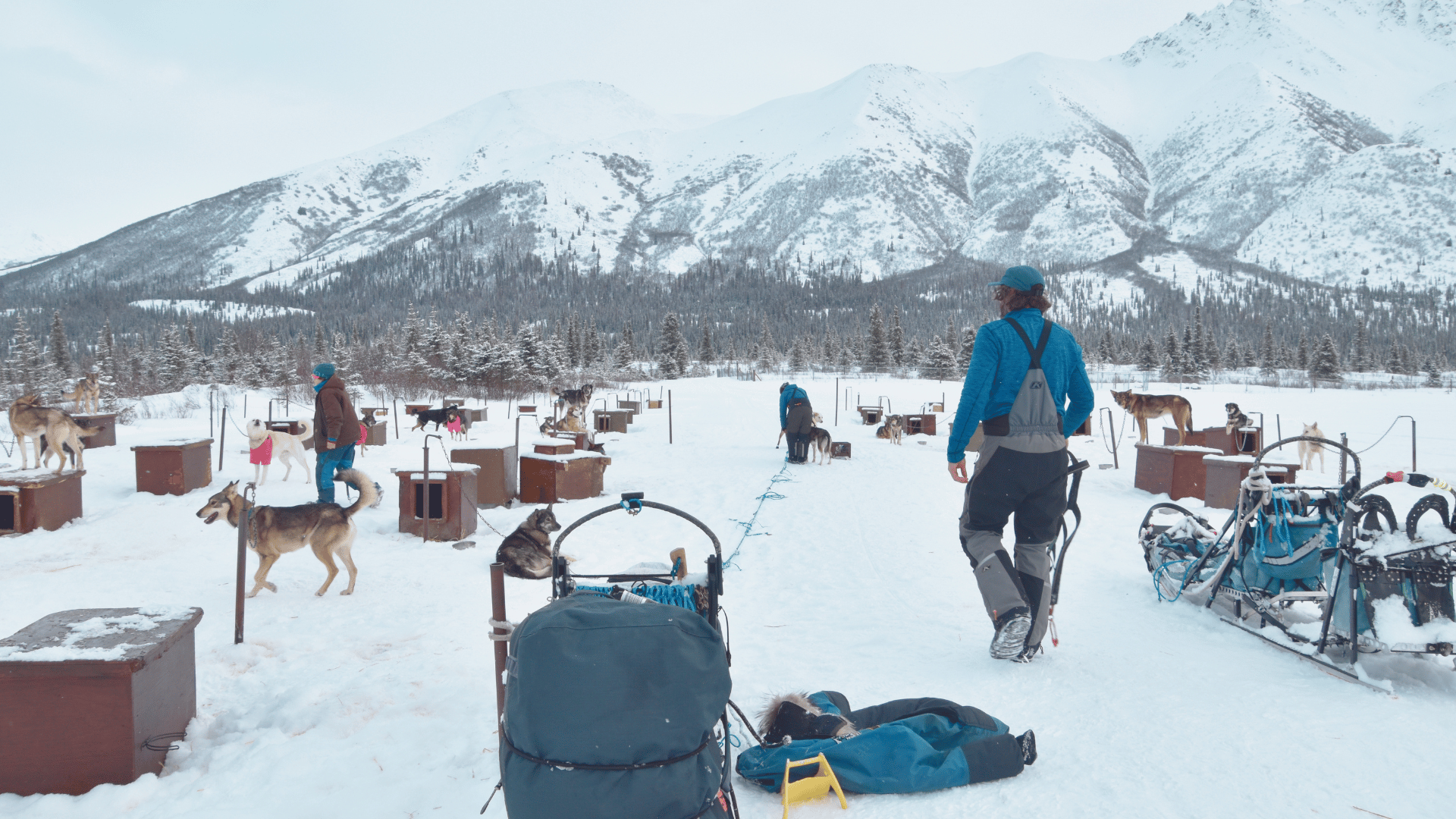
Getting Ready at Susitna Adventure Lodge, Photo via Brandon Withrow
The Iditarod
The next day, Drobny got her team together to leave for the Iditarod. The dogs were clearly excited to run, with calls and howls that sound like they are saying, “pick me.” That the dogs live to run as a team was clear from even my baby-sized 55-mile run with five dogs. Before she left, I had a chance to get behind Drobny’s team of 15 dogs for a short distance. I can confirm that their powerful synchronized teamwork is magical.
A few days later, I saw her team off in Anchorage at the commencement. Part of me was jealous of the adventure; part of me knew that it takes someone special, like Drobny or Strathe who were made for the Alaskan outdoors to pull off something as rigorous as the Iditarod. I hobbled my way back home, with my knee worse for the wear, but my lungs still full of that crisp Alaskan air. I’ll be back to do it again someday. Just add more miles.