
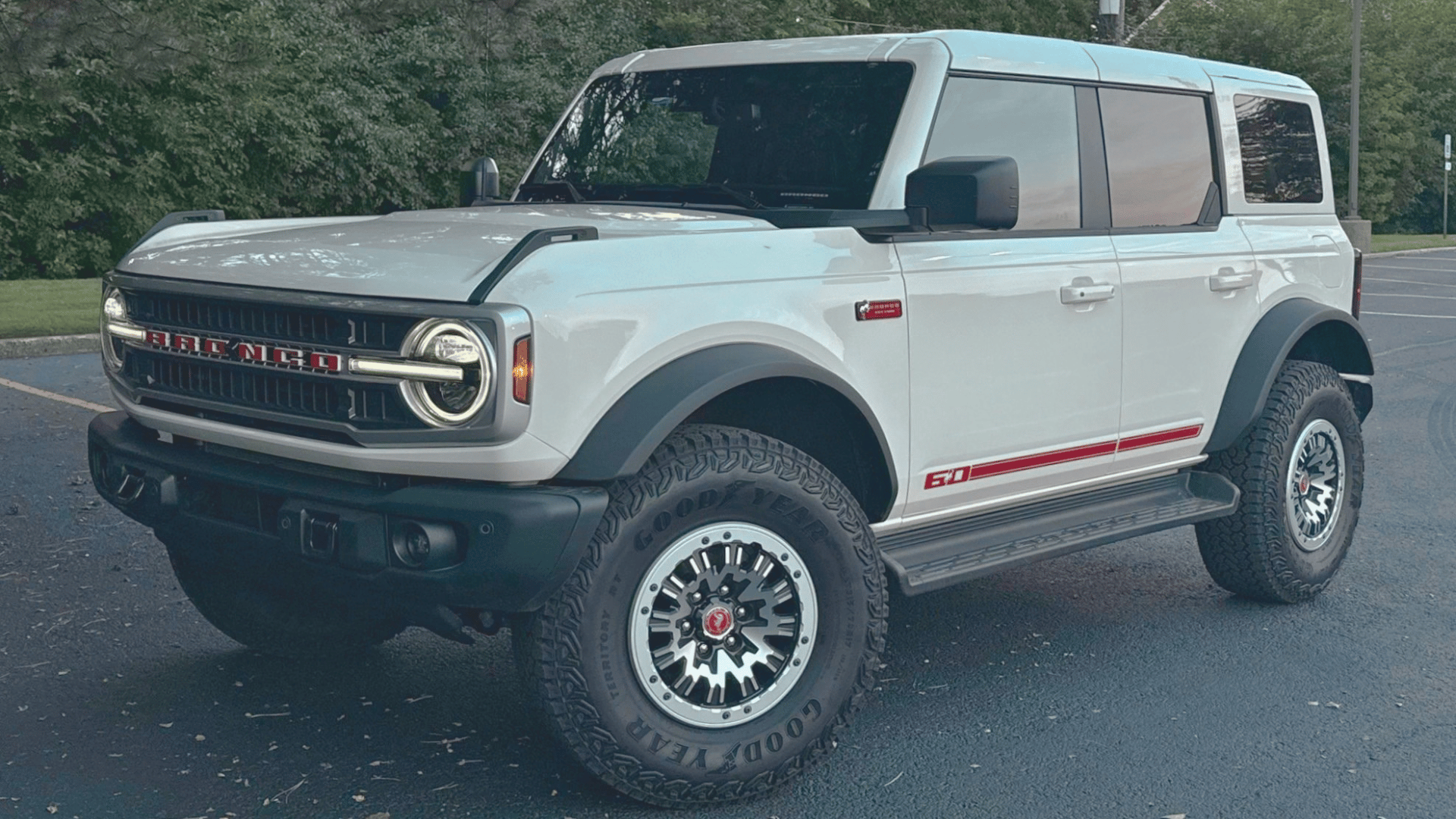
The 2026 Ford Bronco Outer Banks is the version for buyers who want the Bronco’s trail-ready attitude without treating every commute like an expedition. It softens the rougher edges with better cabin materials, more polished tech and a quieter hard top, yet (with the Sasquatch Package) it retains the hardware to tackle terrain that would stop most “regular” SUVs. Only the venerable Jeep Wrangler can do the same off-pavement antics. Albeit with less cabin comfort and user-friendliness.
The Ford Bronco has never pretended to be a conventional SUV. Its boxy body, removable roof panels, upright windshield and trail-oriented engineering all make that clear before you even start the powerful V6 engine. But the Outer Banks trim proves that the Bronco doesn’t have to be stripped-down or punishing to prove itself on the trail. The Outer Banks is more refined than the harder-edged Bronco trims, especially with the 60th Anniversary Package and hard top, but it gives up little of the capability that defines the nameplate.
My test vehicle paired the Outer Banks with Ford’s Sasquatch Package, a combination that may seem like a contradiction. One emphasizes comfort, appearance and everyday livability; the other adds the big all-terrain tires, upgraded off-road equipment and visual muscle associated with the most adventurous Broncos. The combo works surprisingly well together. The result is a Bronco that can do the rough stuff on the weekend and asks fewer compromises of its driver during the workweek.
The tested Bronco carried a $48,090 starting price, then climbed to $69,065 including the $4,995 60th Anniversary Package (required when you select Wimbledon White paint), the $6,465 Sasquatch Package, the available 2.7-liter EcoBoost V6, and $1,995 destination charge.
A Bronco With Better Manners
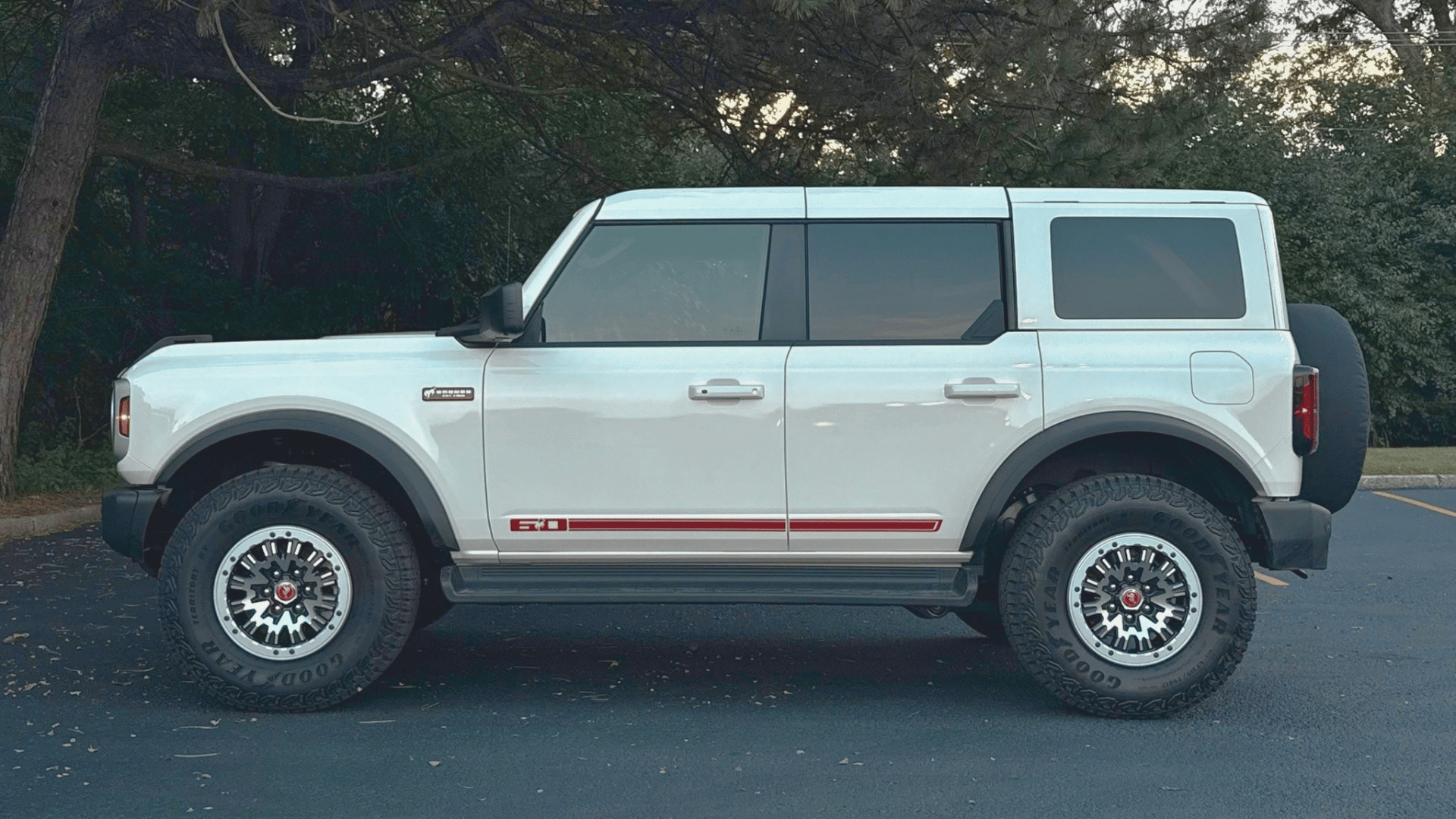
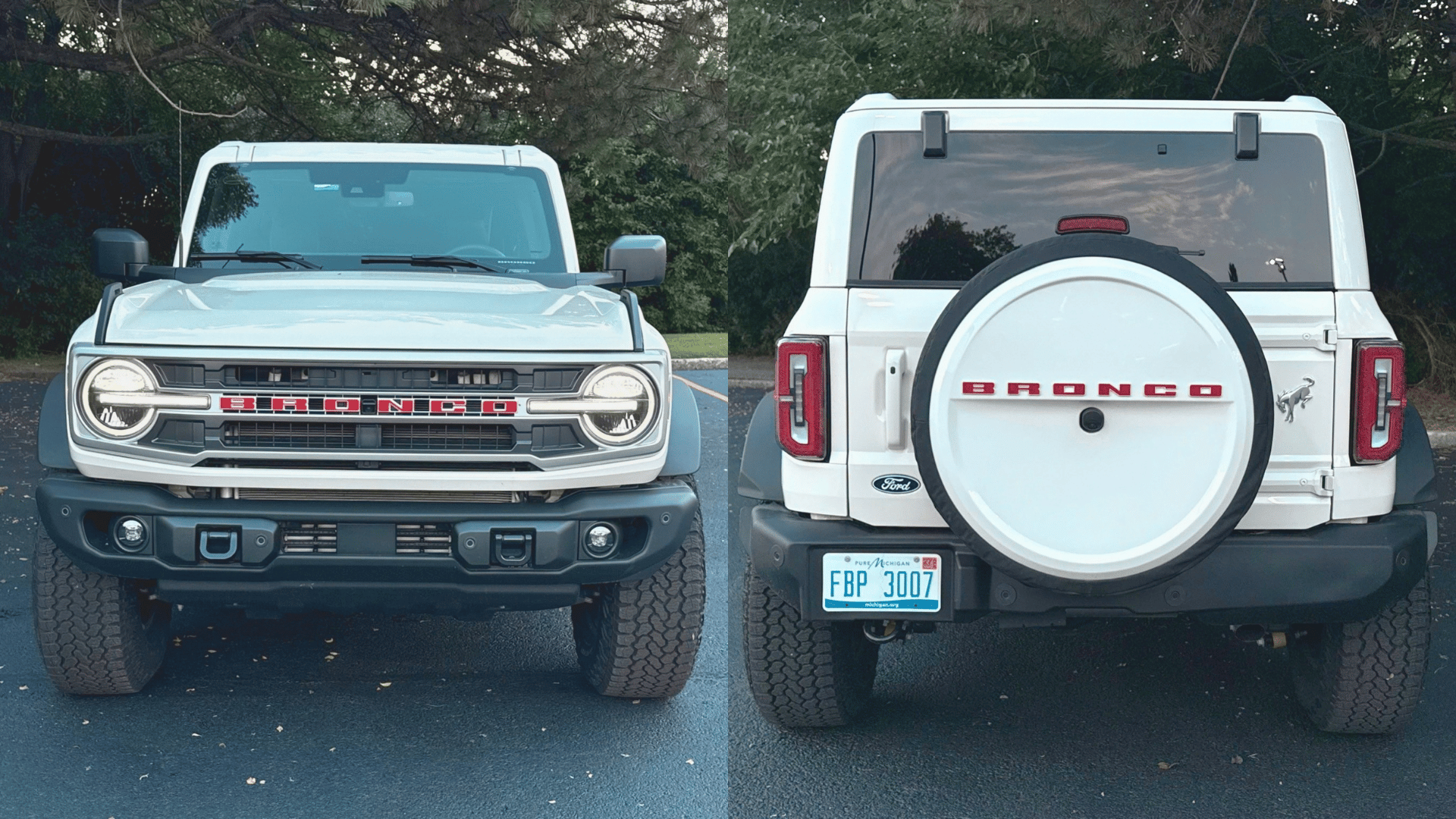
The Outer Banks might be more “upscale” for a Bronco, but it can’t be mistaken for anything else. The upright proportions, round LED daytime-running-light rings, broad fenders, vintage exposed spare tire and squared-off body deliver the familiar retro-modern look. Yet the 60th Anniversary Package gives it a more tailored look than the average trail-focused Bronco.
The white hard top, gray 17-inch wheels, silver grille surround, red exterior accents and 60th Anniversary detailing lend the truck a vintage flavor without going all the way into Heritage Edition territory. More importantly, the visual polish does not erase the functional parts: the test vehicle retained a steel bumper, recovery points and the wide stance that denotes its serious off-road intent.
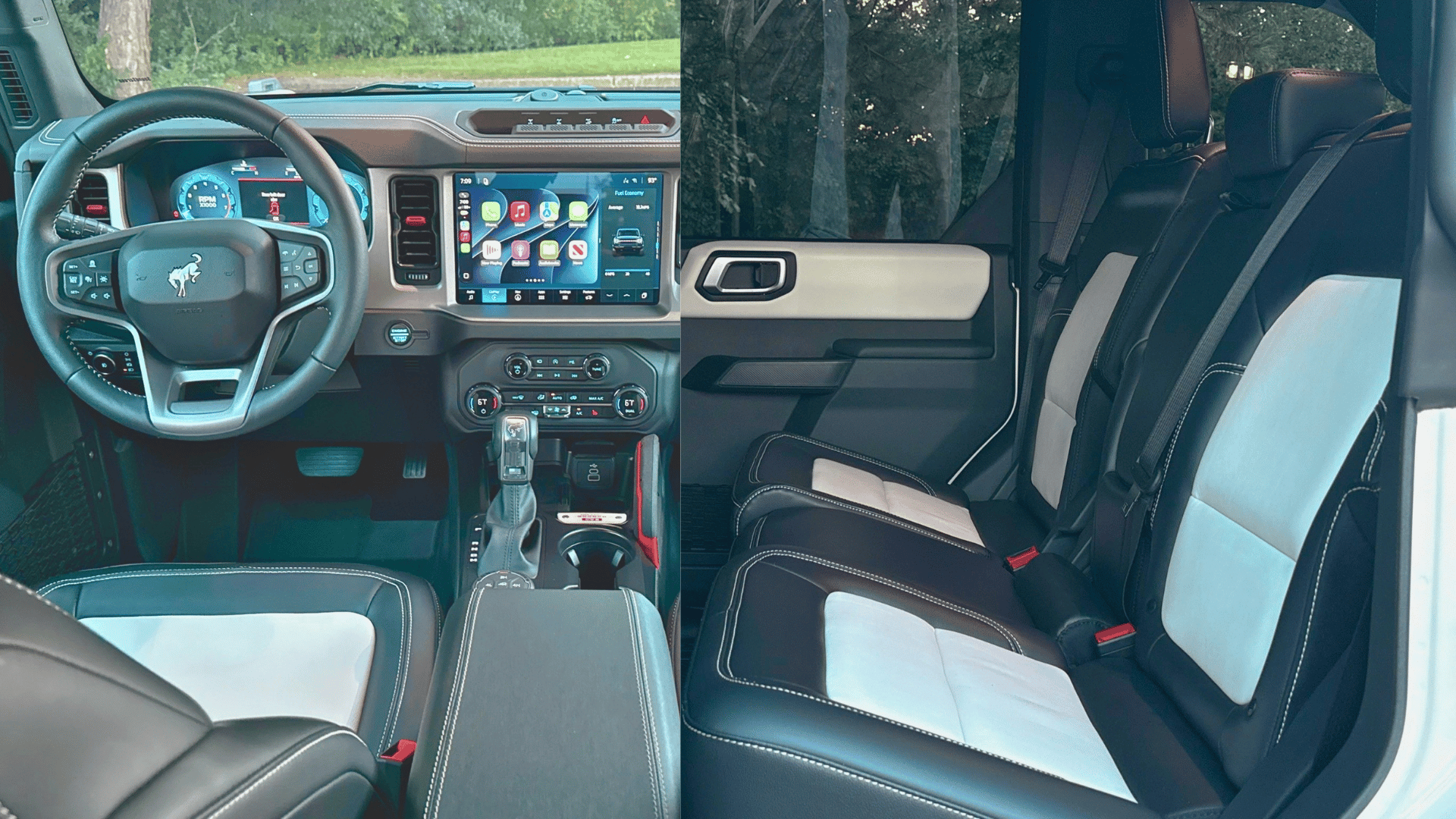
That same theme carries inside. The Bronco’s cabin remains properly chunky and utilitarian, with a thick sandwich-style dashboard, sturdy grab handles and materials selected to tolerate real use. But the Outer Banks introduces enough color, trim and upholstery detail to level up the cabin without overdoing things.
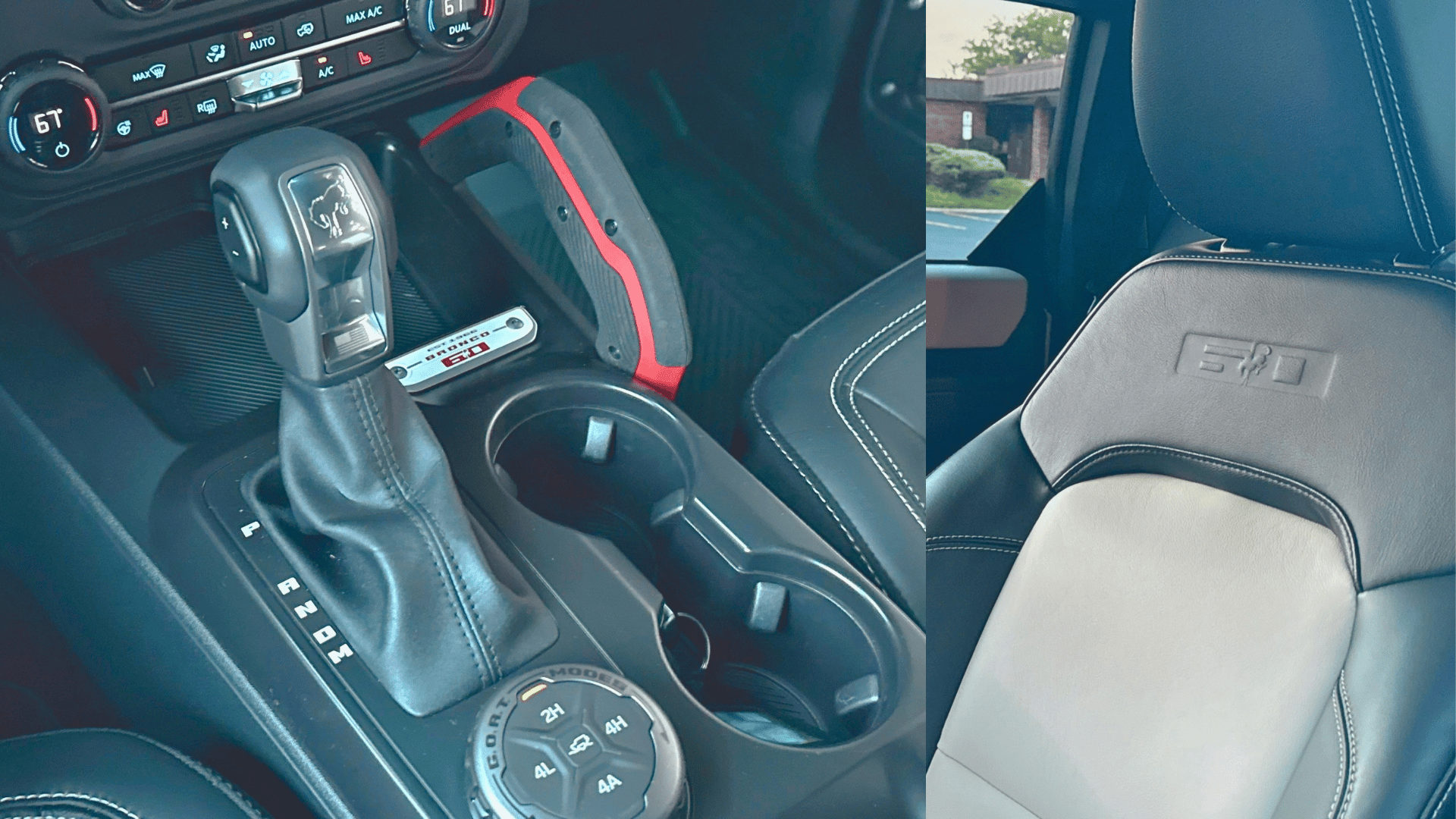
Red accents at the vents, dashboard, center-console grab handle and badging bring welcome personality. The two-tone leather seats, contrast stitching, silver dash trim and anniversary embossing make the cabin feel more considered than the basic-spec Bronco interior. The plastics are still plainly rugged-SUV plastics, but they are used wisely and fit the vehicle’s mission.
Everyday Usability Wins
The Outer Banks earns its place in the Bronco lineup on the road. It is not quiet in the way a unibody crossover is quiet, and no removable-roof, 35-inch-tire off-roader should be judged by that standard. But compared with a Jeep Wrangler Unlimited, the Ford feels like a much more relaxed daily companion.
The front seats are soft, supportive and more accommodating than the Wrangler’s, while the driving position is easier to dial in. The Bronco’s cabin layout also makes more sense in routine use. Physical climate controls are clear and intuitive, the temperature knobs have digital readouts, and the window switches live on the center console rather than high on the dashboard like the Wrangler’s. Even the front passenger grab handle is thoughtfully placed and firmly anchored rather than merely decorative.
The rear seat is less successful. Its cushion angle can leave passengers sitting with their knees raised, and 36.3 inches of rear legroom is adequate rather than generous. Adults can fit, but this is not the Bronco configuration to buy primarily for frequent long-distance rear-seat duty. The Wrangler Unlimited remains similarly compromised, though, and the Bronco is generally easier to enter and exit.
The hard top is impressive but a tad compromised. The removable panels take more effort to remove and reinstall than the Wrangler’s, but their solidity pays off in daily driving. Combined with the additional sound deadening, they make the Bronco Outer Banks more suitable for year-round ownership—particularly in a four-season market such as Chicago. Wind and road noise still make themselves known at highway speed, but the vehicle is less fatiguing than a soft-top or more basic Bronco configuration.
Still Built for the Trail
Calling the Outer Banks civilized by no means makes it soft. Add Sasquatch equipment and it becomes a beast of an off-roader that matches its reputation. Ford’s terrain-management system, branded G.O.A.T. (“Goes Over Any Type of Terrain”) adjusts vehicle behavior for varying conditions. The Bronco also puts the essential off-road functions close at hand through its upper-dash “Hero switches,” including controls for the locking differentials, sway-bar disconnect, Trail Turn Assist and traction control. Combined with the suspension, underbody protection and differential hardware, this is not an appearance package masquerading as adventure equipment.
The Sasquatch-equipped Outer Banks can handle the kind of loose, uneven, muddy and rutted terrain that would quickly expose the limitations of most fashionable SUVs. Its value is that it does so without requiring the owner to live full-time with the compromises of the most aggressively trail-focused Bronco specification. That is the difference between capability and usability. The Outer Banks doesn’t dilute the Bronco formula; it makes the vehicle easier to live with.
The Driving Experience
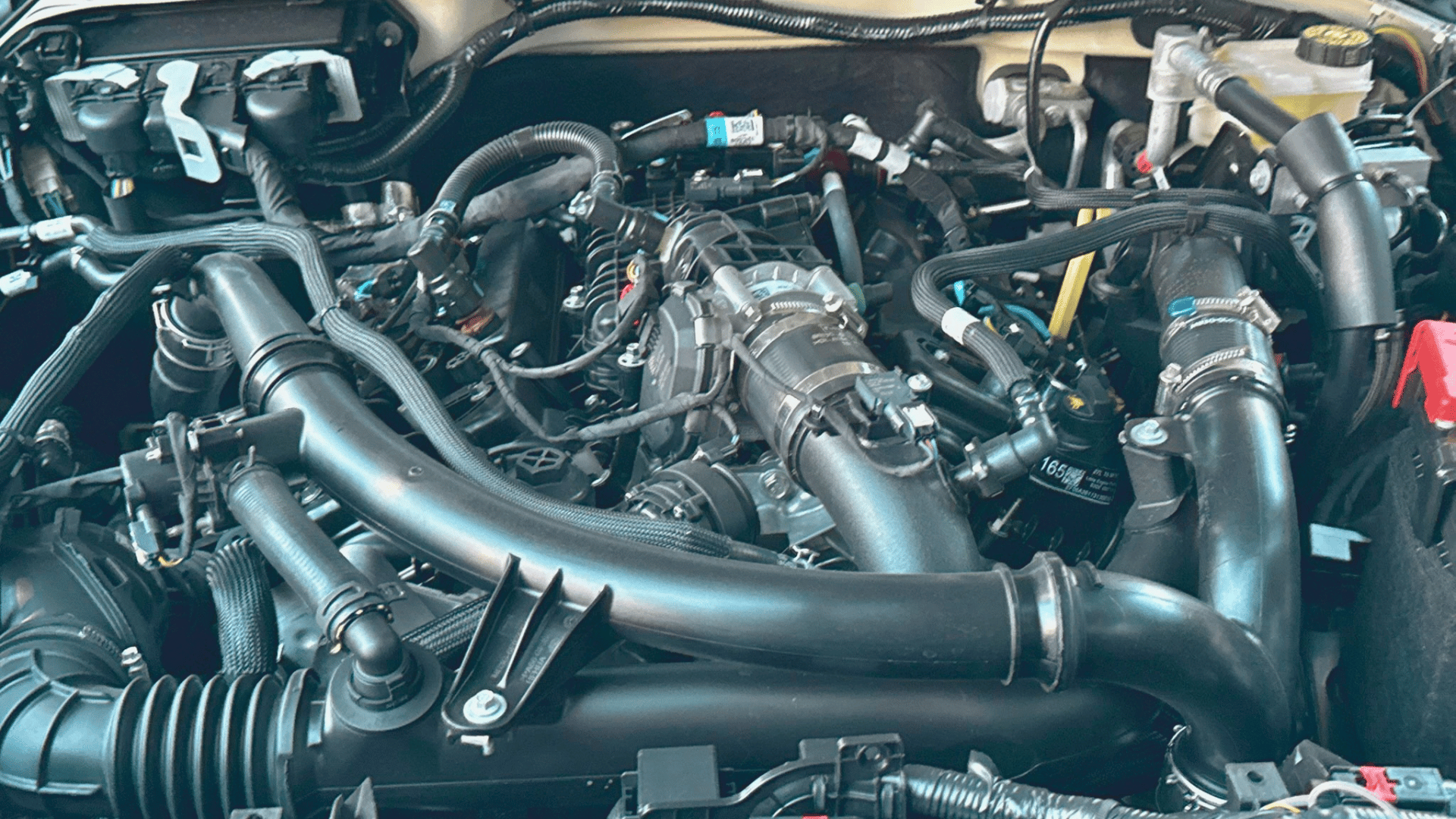
My tester’s optional twin-turbocharged 2.7-liter V6 makes 330 horsepower and 415 lb-ft of torque, paired with a 10-speed automatic transmission. The powertrain gives the Bronco the acceleration and passing response needed to keep this nearly 5,000-pound, off-road-oriented SUV from feeling sluggish in regular traffic. 0 to 60 mph arrives in the low-six-second range, which is pretty quick for something shaped like an expedition vehicle. It never feels jerky despite its responsiveness and substantial power output.
Road manners are another reason the Bronco is more livable than its closest rival. Its independent front suspension and carefully tuned steering give it greater precision than the solid-axle Wrangler. The Ford tracks more confidently at highway speed, stays more settled through bends, and requires fewer constant steering corrections. The all-terrain tires and 17” wheels combine for good ride quality despite the Bronco’s body-on-frame construction. The tread pattern isn’t overly aggressive or noisy, either.
Fuel economy is predictably poor. The V6 Outer Banks is EPA-rated at 19 mpg city and 21 mpg highway before the Sasquatch Package; the bigger tires and additional off-road equipment push real-world consumption into the teens. Buyers should view that as part of the cost of choosing this level of capability. It’s neither miserly nor shocking.
The 2026 Ford Bronco Outer Banks is very compelling because it balances off-road prowess, retro style, and real comfort. It retains the removable-roof experience, trail hardware, broad stance and unmistakable design that make the Bronco appealing in the first place. But it wraps those qualities in a friendlier daily-driving package, with a more accommodating front cabin, better ergonomics, solid technology and improved highway composure.
The Sasquatch Package reinforces its real DNA. Even in this more polished trim, the Outer Banks has the hardware to do more than most owners will even try. For shoppers who want a Bronco that can play hard without delivering a punishing daily ride, the Outer Banks may be the lineup’s sweet spot: more civilized, but no less capable.
More Transportation

A Pilgrimage to Italy’s Iconic Superbikes and Supercars in Emilia-Romagna
The museums, factory tours, racetracks, restaurants, and hotels that turn Emilia-Romagna into heaven for anyone who grew up obsessed with fast machines.
Our Favorite Finds From Bespoke Post’s Fourth of July Sale
Up to 50% off. These are the pieces we'd grab before they're gone.
Ferrari’s Most Underrated Racing Event Is Happening in Austin This Weekend
And you can go for free.
-
Transportation
A Pilgrimage to Italy’s Iconic Superbikes and Supercars in Emilia-Romagna
The museums, factory tours, racetracks, restaurants, and hotels that turn Emilia-Romagna into heaven for anyone who grew up obsessed with fast machines.
-
Transportation
Our Favorite Finds From Bespoke Post’s Fourth of July Sale
Up to 50% off. These are the pieces we'd grab before they're gone.
-
Transportation
Ferrari’s Most Underrated Racing Event Is Happening in Austin This Weekend
And you can go for free.