

Some combinations of people make immediate sense.
Martin Scorsese and Robert De Niro.
Wes Anderson and Bill Murray.
Sofia Coppola and Marc Jacobs.
Others surprise you at first but make perfect sense in the end.
Martha Stewart and Snoop Dogg.
Tony Bennett and Lady Gaga.
Rachel Cusk and Natalie Portman.
And then there’s Nathan Fielder and Elizabeth Holmes.
On September 6, a nearly three-hour documentary called You Can See Everything secretly premiered at the Telluride Film Festival. Attendees reportedly had their phones locked away before the screening, and everything about it is all hush-hush. Fine by me. I’m a viewer who enjoys knowing as little as possible going in.
Here’s what we know as of now and all I want to know going in.
“Thirty-four days before she’s sent to prison, notorious Silicon Valley founder Elizabeth Holmes invites a skeptical film crew to document her every move. What begins as an intimate portrait of an enigmatic felon becomes a mind-bending three-year journey into the abyss. From boundary-pushing directors Nathan Fielder and Lance Oppenheim comes You Can See Everything.”
The resulting film is reportedly 174 minutes long and arrives in theaters October 16.
All the aforementioned is enough to get me to buy a ticket.
But then the teaser dropped.
And the internet did what the internet does.
The meme machine has been cranking nonstop. First, people posting funny ones. Then, influencers posting desperate ones. Then, companies posting forced ones. And AI posting sloppy ones.
The meme cycle has been interesting because the pair behind the memes is so.
Holmes became one of the most infamous figures in Silicon Valley by selling people on a version of reality that turned out to be very different from reality itself. And Fielder has spent most of his career constructing elaborate artificial realities to see how real people behave inside them.
I have absolutely no idea what happens next. Which is precisely why I’m so excited to see it.
But the October 16 release gives us some time to study. Here’s your homework.
The Inventor: Out for Blood in Silicon Valley
Start here.
Alex Gibney’s documentary is probably the fastest way to understand the actual Theranos story.
The Inventor traces Holmes’ rise from college dropout to black-turtlenecked Steve Jobs wannabe.
The promises behind Theranos were supposedly revolutionary. A technology capable of running a 200+ number of medical tests using just a drop of blood.
You probably know how that went.
What makes The Inventor particularly useful preparation, though, isn’t just learning what Theranos did (or didn’t do in this case). It’s hearing from those Holmes duped along the way, including ex-employees, journalists, investors, federal agencies, and more. Then there’s Holmes herself. The clothes. The voice. The Steve Jobs worship. The relentless eye contact. The strange ability to make incredibly large claims sound like facts.
Plus, Alex Gibney is one of the best documentary filmmakers and has one coming out soon on Musk. This is good (re)watch ahead of that, too.
The Dropout
The Inventor gives you the reporting. The Dropout gives you the character study.
Amanda Seyfried won an Emmy for playing Holmes in Hulu’s 2022 limited series, and the performance is wonderfully uncomfortable. You watch Holmes experiment with the voice, the clothes, the posture, and ultimately the persona that would become inseparable from Theranos.
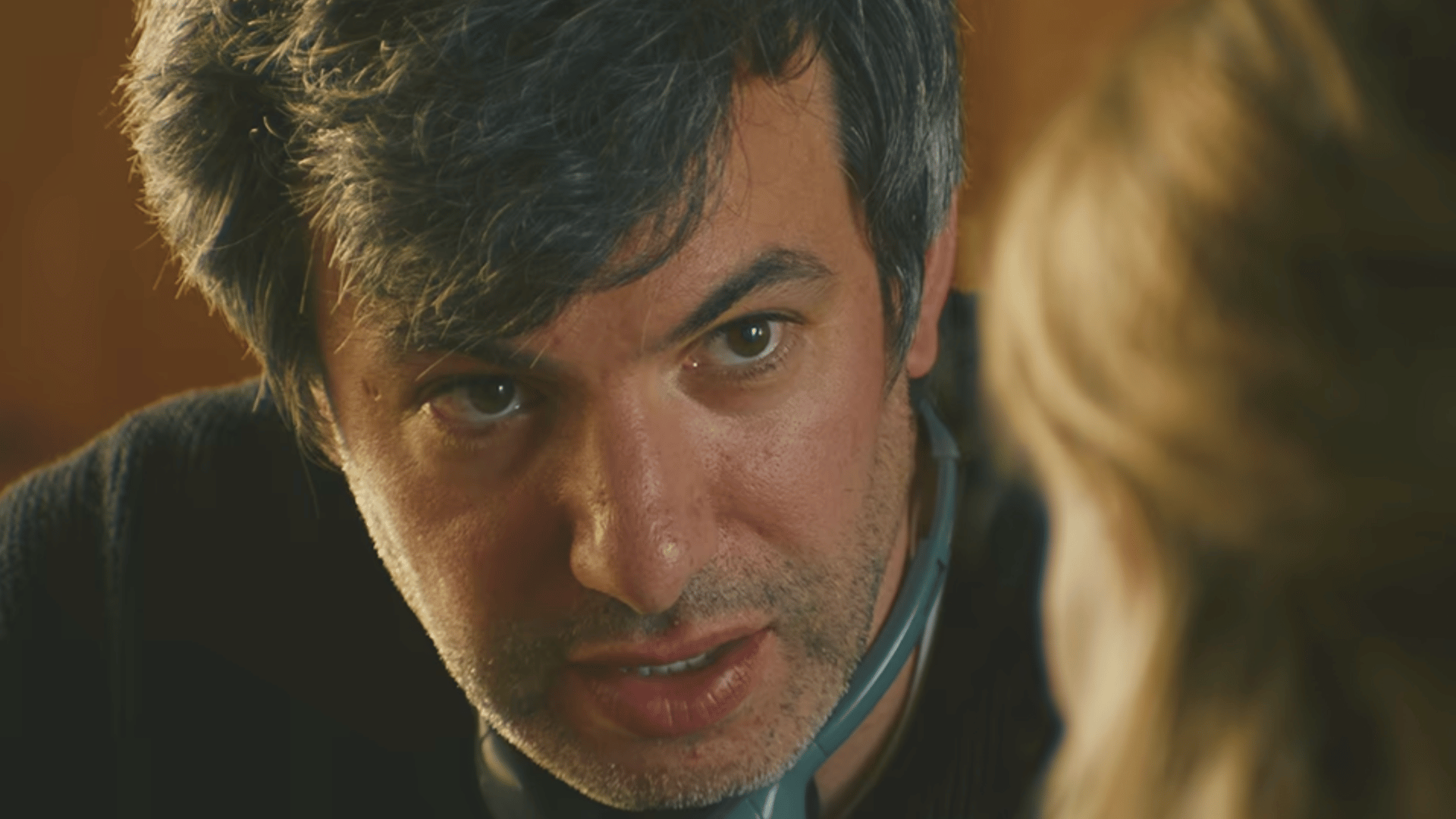
Screenshot via A24 Teaser
The Nathan Fielder Curriculum
Understanding Elizabeth Holmes is only half the homework.
The other half is understanding why Nathan Fielder is the person sitting across from her.
If you’ve never watched Fielder before, explaining his work makes you sound slightly insane. He makes reality television that knows it’s reality television, then builds increasingly elaborate realities inside of it until the participants, the audience, and perhaps even Fielder himself seem unsure what exactly they’re participating in.
Which feels especially relevant here.
Nathan For You
The premise is simple enough.
Fielder plays a socially awkward business consultant who uses his “business expertise” to help struggling companies.
The solutions are terrible. Or brilliant. Usually both.
If you only watch two episodes:
“Gas Station / Caricature Artist” — Season 1, Episode 4
This is the Nathan Fielder starter pack. A ridiculous business idea gradually becomes an endurance test, camping trip, and unexpectedly intimate conversation between strangers. You begin by laughing at everyone involved. Somewhere along the way, you start caring about them. That transition is the trick.
“Finding Frances” — Season 4, Episode 7
If Gas Station explains Nathan For You, Finding Frances explains Nathan Fielder.
The feature-length finale begins with Fielder helping a Bill Gates impersonator track down a woman he loved decades earlier. It slowly turns into something much stranger and more melancholy about memory, loneliness, performance, and whether an authentic human connection can still be authentic when there’s a camera pointed at it.
If you only watch one thing on this entire list before You Can See Everything, I might make it this.
The Rehearsal
In The Rehearsal, Fielder helps people prepare for difficult moments in their lives by recreating those situations beforehand.
And by “recreating,” I mean building an exact replica of a Brooklyn bar, hiring actors to impersonate the people someone might encounter, constructing branching decision trees for possible conversations, and repeatedly rehearsing interactions until every conceivable outcome has theoretically been accounted for.
Actors play real people. Real people rehearse fake conversations. Fake conversations produce real emotions.
Eventually the distinction between fake and real becomes almost useless.
If you only watch two episodes:
“Orange Juice, No Pulp” — Season 1, Episode 1
Start at the beginning. Fielder helps a man prepare to confess a lie to a friend by constructing a near-perfect replica of the bar where the conversation will happen.
It establishes Fielder’s worldview. Why leave a human interaction to chance when you can spend an obscene amount of money trying to control every variable? More importantly, it introduces the question that hangs over almost everything Fielder makes: If you rehearse something enough, does the real version become more authentic? Or less?
“The Fielder Method” — Season 1, Episode 4
This is where the snake starts eating its own tail.
Fielder creates a method for training actors to accurately portray real people, which requires them to immerse themselves in those people’s lives. Then Fielder begins using his own method to understand one of the actors.
The observer becomes the subject. The subject becomes the observer. Everyone is performing someone.
Keep that thought handy when Elizabeth Holmes enters the picture.
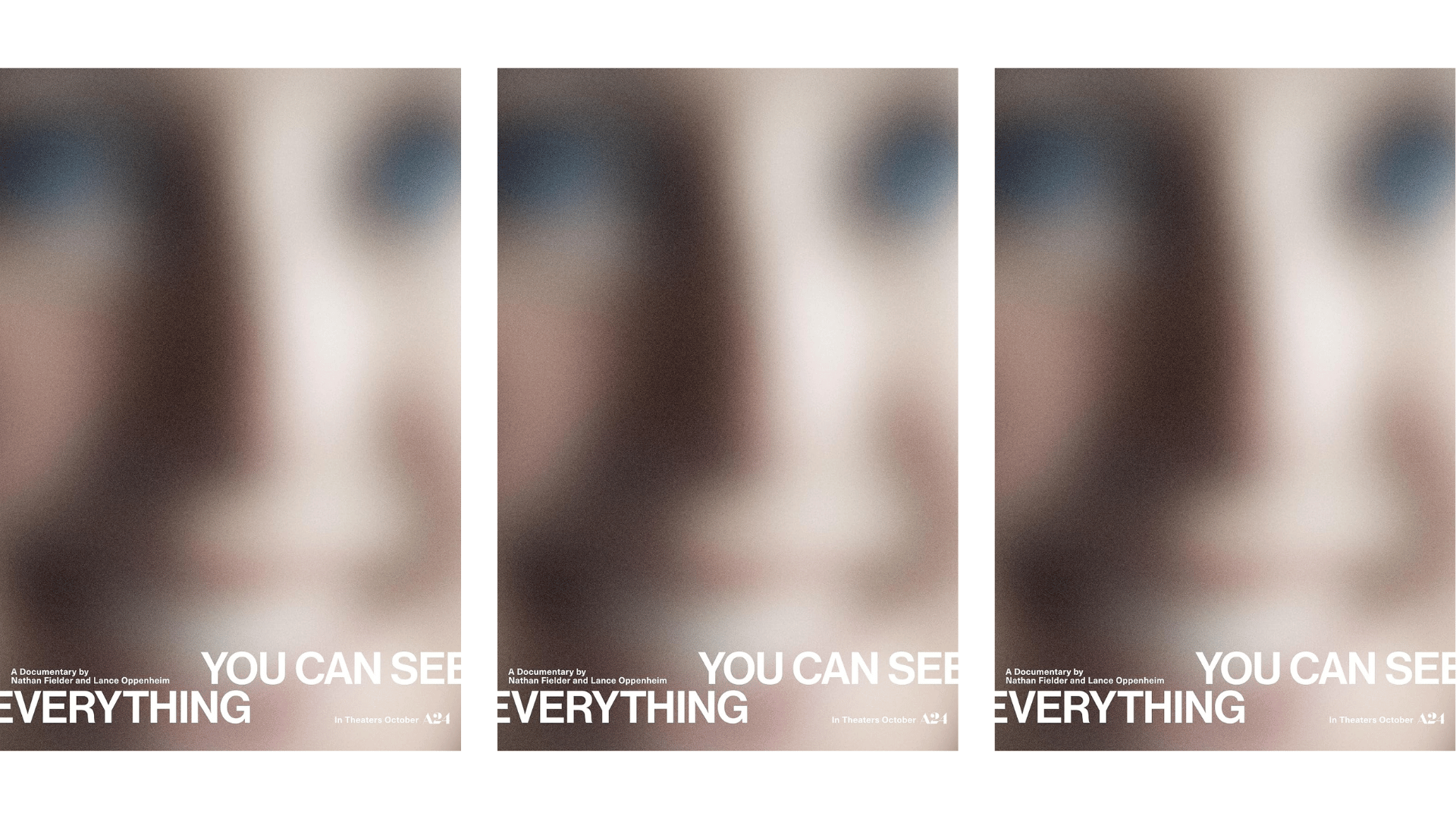
You Can See Everything Poster
Okay. Now We're Ready. But Are We Really?
If you feel like you need extra credit, fine.
There’s the original podcast about Holmes and Theranos called The Dropout.
And there’s The Curse. A drama series about a “newlywed couple struggling to make their vision for eco-living a reality in a small New Mexico town.” Featuring Nathan Fielder, Emma Stone, and Benny Safdie. Full disclosure, I haven’t watched it for the sole reason that it’s on Paramount+, and I refuse to sign up for another free trial I forget to cancel for years.
Now are we ready?
I’m not entirely sure you can prepare for You Can See Everything. Or anything Fielder does. Or anything Holmes does.
Elizabeth Holmes has spent years being documented, investigated, dramatized, and impersonated. Nathan Fielder has spent years making television about the increasingly slippery distinction between performance and reality.
Putting them together feels less like making a documentary and more like introducing two chemicals just to see what happens.
On October 16, we find out. Until then, the internet has memes. Lots and lots of memes.
More Videos

On Guillermo del Toro’s Pan’s Labyrinth, 20 Years Later
And how horror went from critically hated to the latest Cannes "it" genre.
Furiosa: A Mad Max Saga (Trailer)
In a thunderous return to the apocalyptic realm, visionary director George Miller unveils the long-awaited prequel to the adrenaline-fueled masterpiece, Mad Max: Fury Road. Brace yourselves for Furiosa, an intense journey into the roots of the titular character, now brought to life by the mesmerizing Anya Taylor-Joy. Set against a…
Ferrari Teaser Trailer
If there's one thing we can't resist, it's the allure of speed and style. And that's exactly what Ferrari delivers in this teaser trailer. Featuring none other than Adam Driver in the titular role of Enzo Ferrari, Ferrari, Michael Mann's latest film, is a dramatic biopic of Enzo Ferrari's life…
-
Videos
On Guillermo del Toro’s Pan’s Labyrinth, 20 Years Later
And how horror went from critically hated to the latest Cannes "it" genre.
-
Videos
Furiosa: A Mad Max Saga (Trailer)
In a thunderous return to the apocalyptic realm, visionary director George Miller unveils the long-awaited prequel to the adrenaline-fueled masterpiece, Mad Max: Fury Road. Brace yourselves for Furiosa, an intense journey into the roots of the titular character, now brought to life by the mesmerizing Anya Taylor-Joy. Set against a…
-
Videos
Ferrari Teaser Trailer
If there's one thing we can't resist, it's the allure of speed and style. And that's exactly what Ferrari delivers in this teaser trailer. Featuring none other than Adam Driver in the titular role of Enzo Ferrari, Ferrari, Michael Mann's latest film, is a dramatic biopic of Enzo Ferrari's life…