

The Harrington doesn’t really register as golf clothing. It has more of a menswear classic reputation. Steve McQueen wore one. Elvis wore one. Mods wore them. Punks wore them. We’ve all worn one without ever getting within 100 yards of a tee box.
But the Harrington jacket has golf history. Some serious golf history.
Which got us wondering, What else in our closets has spent time on the links?
Golf hasn’t always invented the clothes it adopted, but throughout the past century or so, the sport has had a surprisingly large hand in popularizing, refining, and exporting certain styles into the rest of menswear.
Here are five worth knowing. Golfer or not.
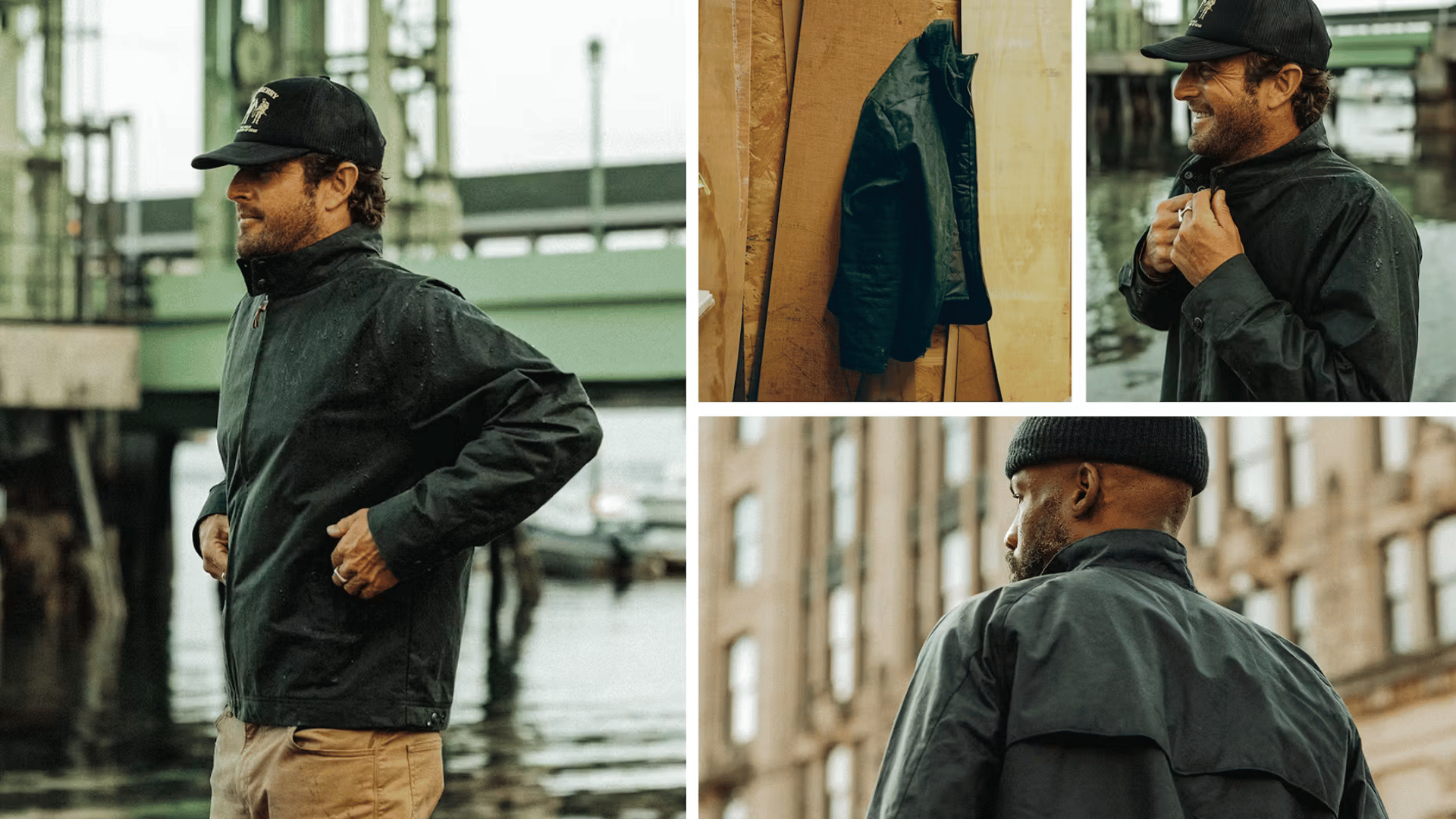
Photos via Huckberry
The Harrington Jacket
Let’s start with the jacket that sent us down this rabbit hole.
Brothers John and Isaac Miller founded Baracuta in Manchester, England, and introduced the “G9 jacket” in the 1930s. Unlike many garments that eventually found their way onto golf courses, this one was designed with golfers in mind from the beginning.
Look closely and you can still see it.
The short length kept the jacket out of the way during a swing. Elasticated cuffs and hem helped block the wind. Its boxy construction allowed freedom of movement, while the distinctive umbrella-shaped back yoke was designed to help rain roll away from the wearer. The slanted pockets were even well suited for holding golf balls.
Then there’s the name. According to Baracuta, the “G” stands for golf and the “9” references nine holes.
Of course, nobody calls it a G9 unless they’re shopping for the original Baracuta version today. The Harrington name came later.
In the 1960s, actor Ryan O’Neal wore the jacket while playing Rodney Harrington on the television series Peyton Place. British menswear retailer John Simons reportedly began referring to the style as the Harrington jacket, and the name stuck.
By then, the jacket had already begun escaping the golf course.
Elvis Presley wore a version in King Creole. Steve McQueen famously adopted the G9. Ivy League students embraced it. Then came Mods, musicians, punks, and several generations of guys who had absolutely no intention of playing 18 holes. Or 9 in this case.
Nearly 90 years after its introduction, the basic formula hasn’t changed much. Lightweight. Weather-resistant. It looks good over practically anything. And it gives you enough room to swing a golf club. Even if the closest you get to doing so is watching the Masters.

Plus Fours
There was a time when showing up to the golf course in shorts would have been scandalous. Instead, men played in something arguably stranger. Pants that ended just below their knees. Sort of like culottes.
Plus fours evolved from knickerbockers, the loose-fitting trousers gathered around the knee that became popular for outdoor pursuits in the late 19th and early 20th centuries. Golfers eventually favored a slightly longer version that extended roughly four inches below the knee. Hence, plus fours.
The extra fabric gave golfers more freedom to move than conventional trousers while still satisfying the era’s standards of how a properly dressed gentleman should look.
Unlike the Harrington, plus fours never really escaped their sporting origins. Today, wearing a pair to brunch would probably result in someone asking what community play you’re in.
But their influence is still worth considering.
Plus fours belonged to a larger shift in menswear toward clothing designed around movement and leisure. Men were beginning to expect clothes to accommodate what they actually did rather than simply dressing for decorum.
We’re not suggesting plus fours are due for a comeback (although menswear has done stranger things), but we celebrate the continuation of comfortable crotch seams. Here, here.
Argyle
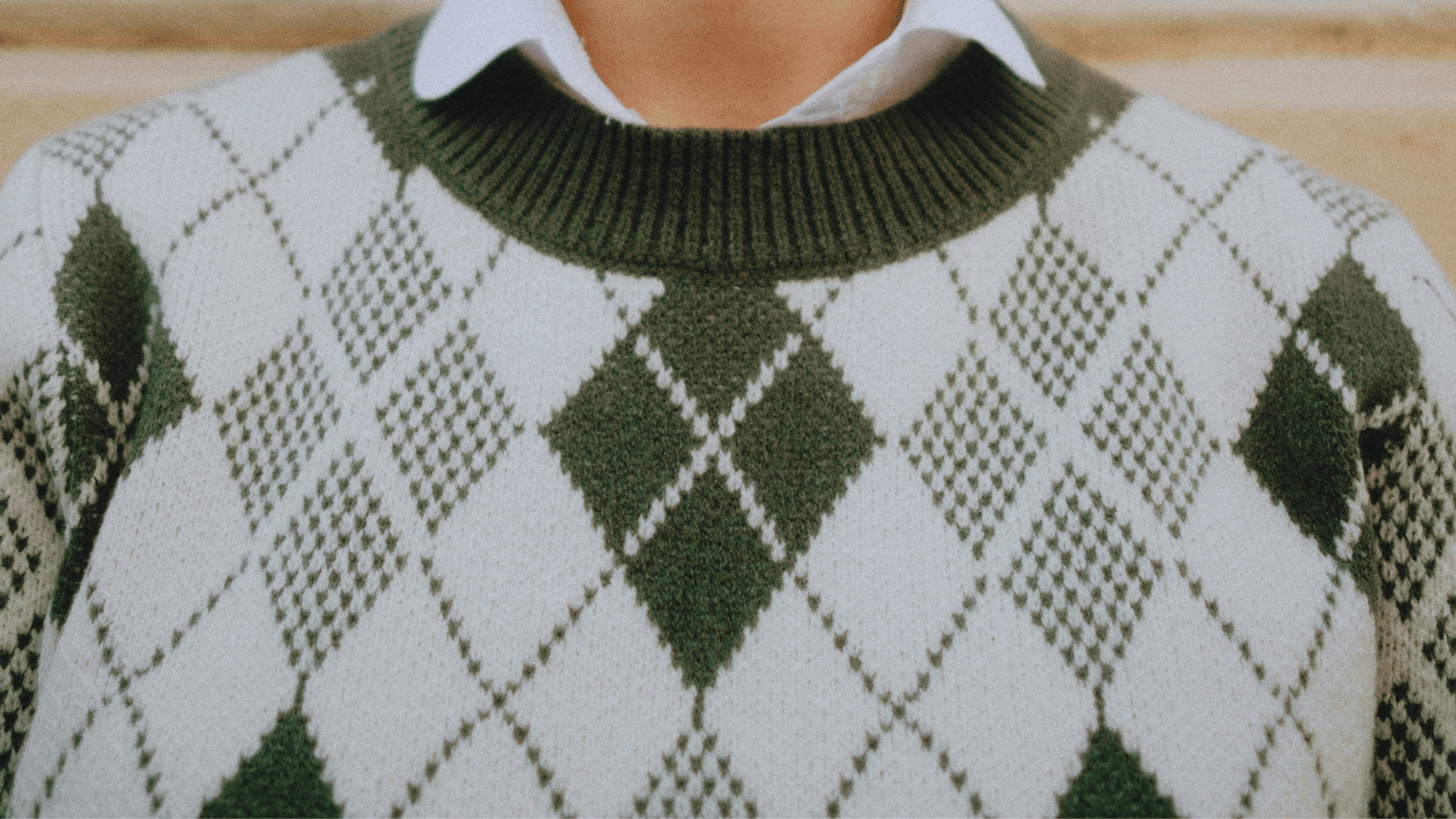
Few patterns scream “golf” quite like argyle. Which is funny because golf didn’t invent it.
The diamond pattern traces its roots to Scottish tartans, with the name commonly associated with the Clan Campbell of Argyll. But by the early 20th century, golf was helping transform those colorful diamonds into something much bigger than a Scottish textile tradition.
The Prince of Wales deserves some credit. During the 1920s, he became known for wearing boldly patterned knitwear and argyle socks on the golf course, pairing them with his plus fours. Photographs of the fashionable royal helped popularize the look, and argyle became increasingly intertwined with golf style.
It made sense visually. Golf clothing of the period wasn’t exactly subtle. Bright socks and patterned sweaters provided an opportunity to introduce personality into an otherwise traditional gentleman’s wardrobe.
The pattern stuck around long after plus fours disappeared.
Argyle sweaters, sweater vests, socks, interiors, etc. remained fixtures of golf wardrobes for decades. Eventually, the pattern migrated into Ivy League and preppy style. And today, argyle moves in and out of fashion like most bold patterns. But its association with golf remains remarkably intact.
Golf didn’t invent argyle. It just gave the pattern a marketing campaign.
The V-Neck Sweater and Cardigan
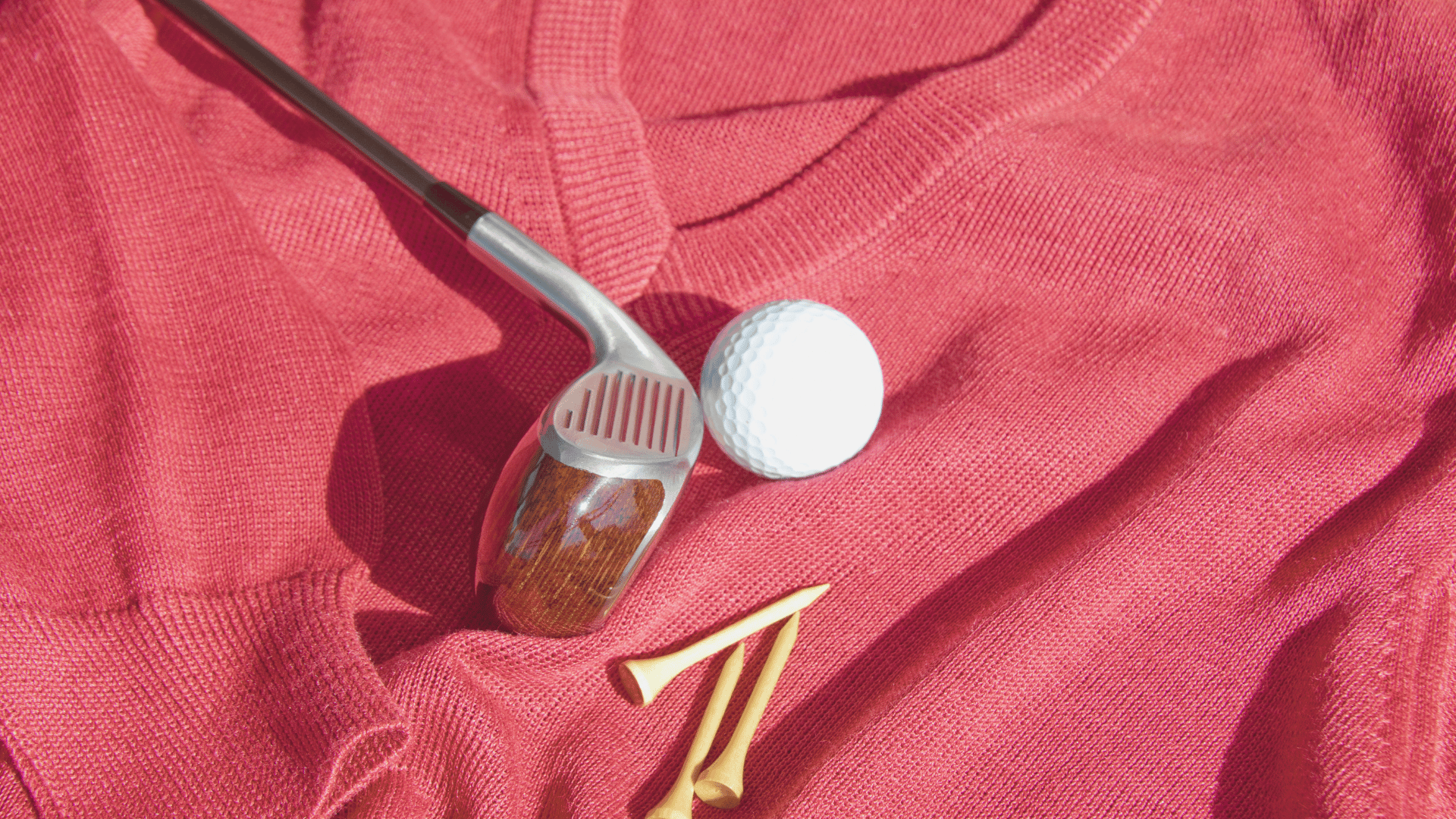
Look at archival photographs of golfers from the first half of the 20th century and you’ll quickly notice something. They loved knitwear.
Cardigans, V-neck sweaters, sweater vests. Golfers adopted all of them because they solved a fairly obvious problem. Golf is played outdoors, in unpredictable weather, but a heavy coat isn’t exactly conducive to making a smooth swing.
A sweater provided warmth without much restriction.
More importantly for our everyday purposes, golf helped establish one of the most enduring formulas in classic men’s style. A collared shirt underneath a piece of knitwear, paired with trousers.
Bobby Jones wore it. Arnold Palmer practically made the V-neck sweater part of his uniform. Jack Nicklaus carried the look into another generation.
The same basic combination became a cornerstone of Ivy League and preppy dressing. Swap the golf spikes for loafers and nobody would know whether you were headed to the clubhouse, the office, or dinner.
The clothes worked precisely because they occupied the space golf clothing has always navigated particularly well. Somewhere between dressed up and dressed down.

The Polo Shirt
Golf did not invent the polo shirt. Polo didn’t exactly invent the modern polo shirt, either.
The garment’s history runs through several sports, but one of the most important developments came from tennis player René Lacoste in the 1920s. Frustrated by the restrictive tennis whites of the era, Lacoste developed a softer, short-sleeved piqué cotton shirt with an open placket and a flexible collar. In other words, something remarkably close to the polo shirt hanging in your closet right now.
Golfers quickly saw the appeal.
At the time, men were still playing in relatively formal attire. Collared dress shirts weren’t unusual on the course. A soft knit shirt maintained the respectable collar while offering dramatically more comfort and freedom of movement.
Golf embraced the style so thoroughly that, eventually, “golf shirt” became practically synonymous with “polo shirt.”
And then the shirt went everywhere. Country clubs. Offices. Restaurants. School uniforms. Casual Fridays. Tech conferences. Your dad’s closet. Your closet.
You could make a reasonable argument that few pieces of menswear have traveled farther from their sporting origins.
Golf didn’t create the polo. But it helped prove something that would become increasingly important to men’s clothing throughout the 20th century. Comfort doesn’t have to be sloppy.

Golf Has Been Loosening Up Menswear for a Century
The common threads running through all of these clothes? Movement. Comfort. Style.
Golf forced clothes to relax.
Trousers became easier to move in. Knitwear provided warmth without heavy outerwear. Shirts got softer. Jackets became lighter and more weather-resistant.
But importantly, they still looked like clothes.
That’s probably why so much golf style has been able to migrate beyond the course. The best pieces weren’t technical uniforms that only made sense while playing a sport. They were simply better versions of clothes men already wanted to wear.
Which brings us right back to the Harrington.
Nearly 90 years after the G9 debuted, brands are still tinkering with the same basic proposition. Make a jacket that protects you from the weather, gives you enough room to move, and looks good enough that nobody assumes you’re dressed for an outdoor activity.
You don’t have to play golf to appreciate that. You just have golf to thank for it.
More Sports
We Did a Little Sole Searching for Pickup Season
Your basketball shoes might be ready for the court. But are your feet?

VESSEL Solved One of the Most Annoying Things About Your Golf Bag
The new Player VI Series gives every club its own space and rethinks the golf bag from top to bottom.
These $228 Vintage NFL Hoodies Aren’t for Fair-Weather Fans
Greyson's limited-edition collection brings old-school style and premium craftsmanship to 17 NFL teams.
-
Sports
We Did a Little Sole Searching for Pickup Season
Your basketball shoes might be ready for the court. But are your feet?
-
Sports
VESSEL Solved One of the Most Annoying Things About Your Golf Bag
The new Player VI Series gives every club its own space and rethinks the golf bag from top to bottom.
-
Sports
These $228 Vintage NFL Hoodies Aren’t for Fair-Weather Fans
Greyson's limited-edition collection brings old-school style and premium craftsmanship to 17 NFL teams.