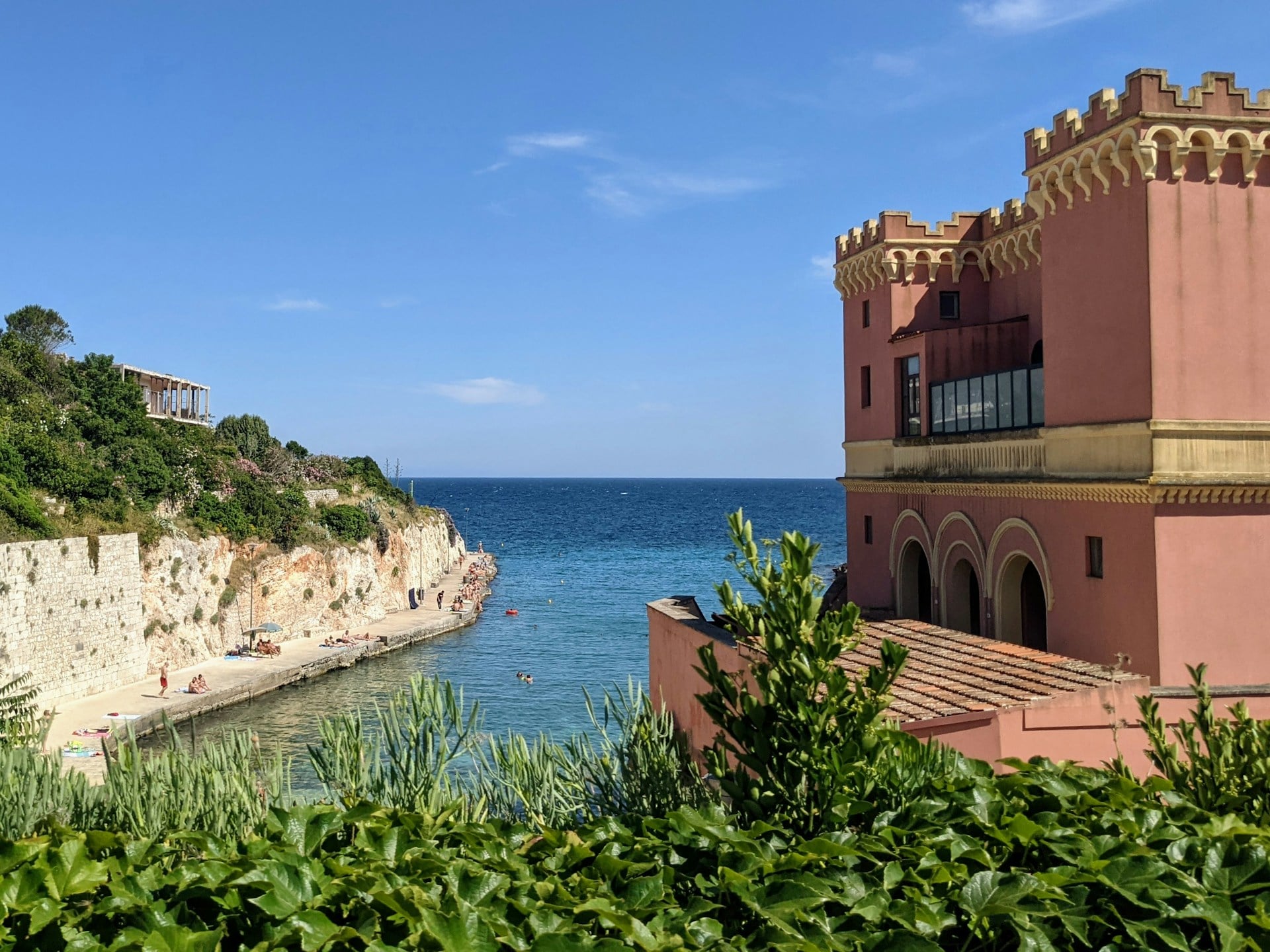
Few regions in the world do a beach getaway better than Puglia. It’s the chosen destination for Italian locals, and thanks to some captivating social media content, it’s attracting more and more foreign visitors each year. While Italy’s train systems could teach Amtrak a lesson or two, as someone who has been to Puglia several times over the years, I can confirm the region is best enjoyed by car.
If you’re willing to brave the chaotic roads of southern Italy, you might as well make a Puglia road trip. For a mix of chic beachside towns, quintessential cities, and some inland staples, follow this guide for your next Puglia road trip.
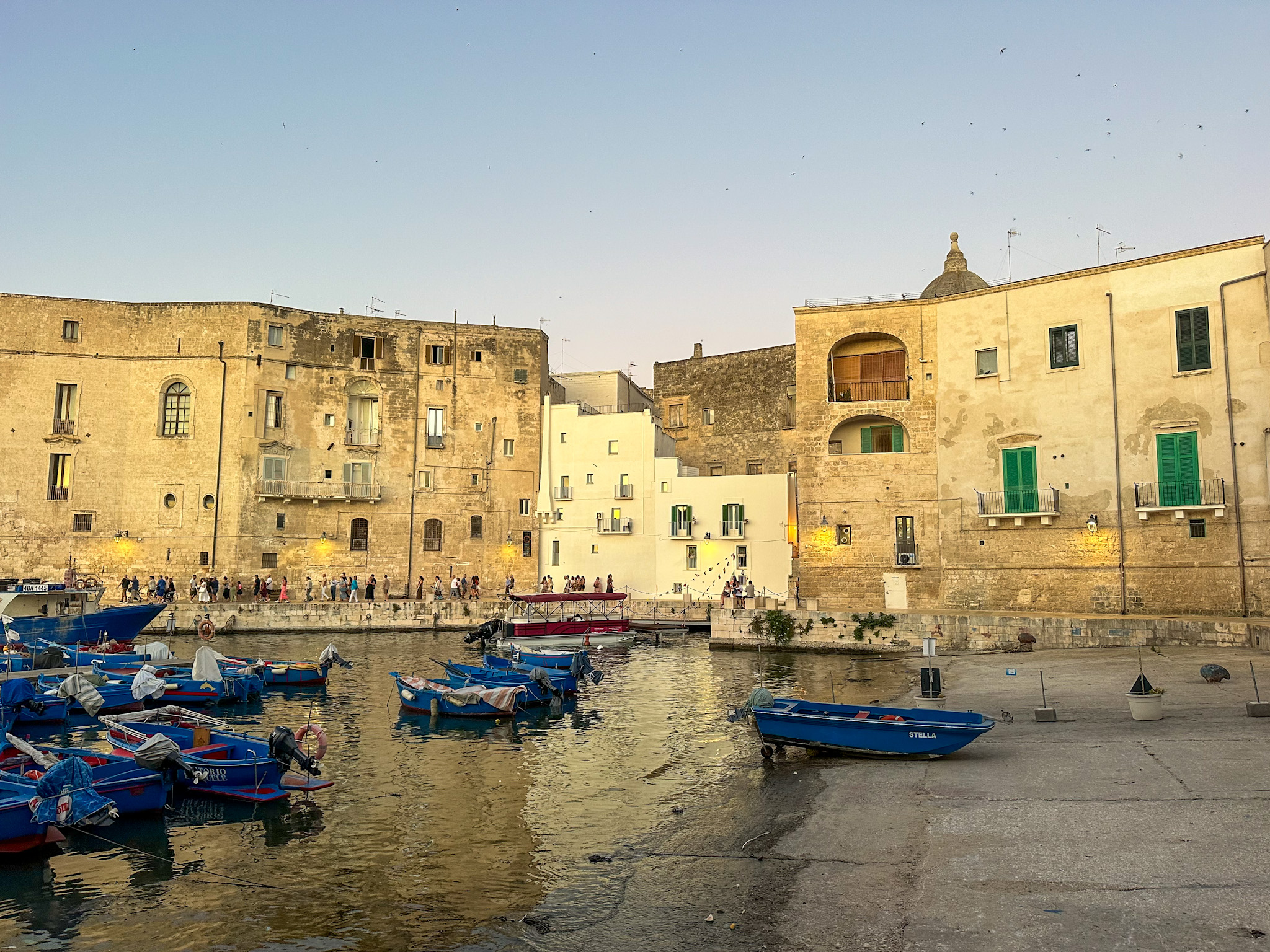
Photo by Kaitlyn Rosati
Monopoli
Polignano a Mare was once the biggest hotspot in the region, and because of that, the northern Pugliese town is often the area’s most crowded. While Polignano is an incredible city in its own right, Monopoli is a better base. You’ll definitely want to check out Madia, a panzerotti shop serving up these handheld, fried staples for less than five euros.
Monopoli is one of the most picturesque cities in the region, with green and stone accents throughout its marvelous white streets. Paired against the deep turquoise of the water, watching the sunset at Porto Antico is a pinch-me experience. Make sure to check out Cattedrale Maria Santissima della Madia, the main Roman Catholic cathedral in town. You can also get a Polignano a Mare cave experience via a boat tour from GetYourGuide, right from Monopoli.
Where to stay: One especially charming thing about Puglia is its lack of chain hotels. I stayed at B&B Anter, which is less than a ten-minute walk to centro storico (the city center), and run by a wonderfully welcoming family. They were quick to offer recommendations on where to eat in town, and even accommodated my late checkout. I even had my own private balcony, a must anywhere in Puglia.

Photo courtesy of Borgo Egnazia
Savelletri
After getting a taste of local life Monopoli, it’s time to treat yourself. Savelletri is the region’s glitzy equivalent of Monaco, attracting the rich and famous. And out of anywhere in this list, this is the probably destination you’re going to visit strictly for the hotel. Borgo Egnazia has appeared on various “best hotels” lists across publications like Travel + Leisure and Condé Nast Traveler, and has also earned a prestigious Michelin key.
So, what makes this place so special? Playing on key architectural elements of the region, Borgo Egnazia is primarily made of white tufo stone, adorned with olive trees, and overlooks the majestic Adriatic Sea. There are five restaurants and bars on-site, the most notable being Michelin-starred Due Camini. Borgo Egnazia is home to 182 rooms, ranging from classic rooms and suites all the way up to La Casa Pedronale, a 5,382 square feet villa equipped with a pool. Make sure to book a spa appointment at VAIR Spa, an award-winning wellness center.
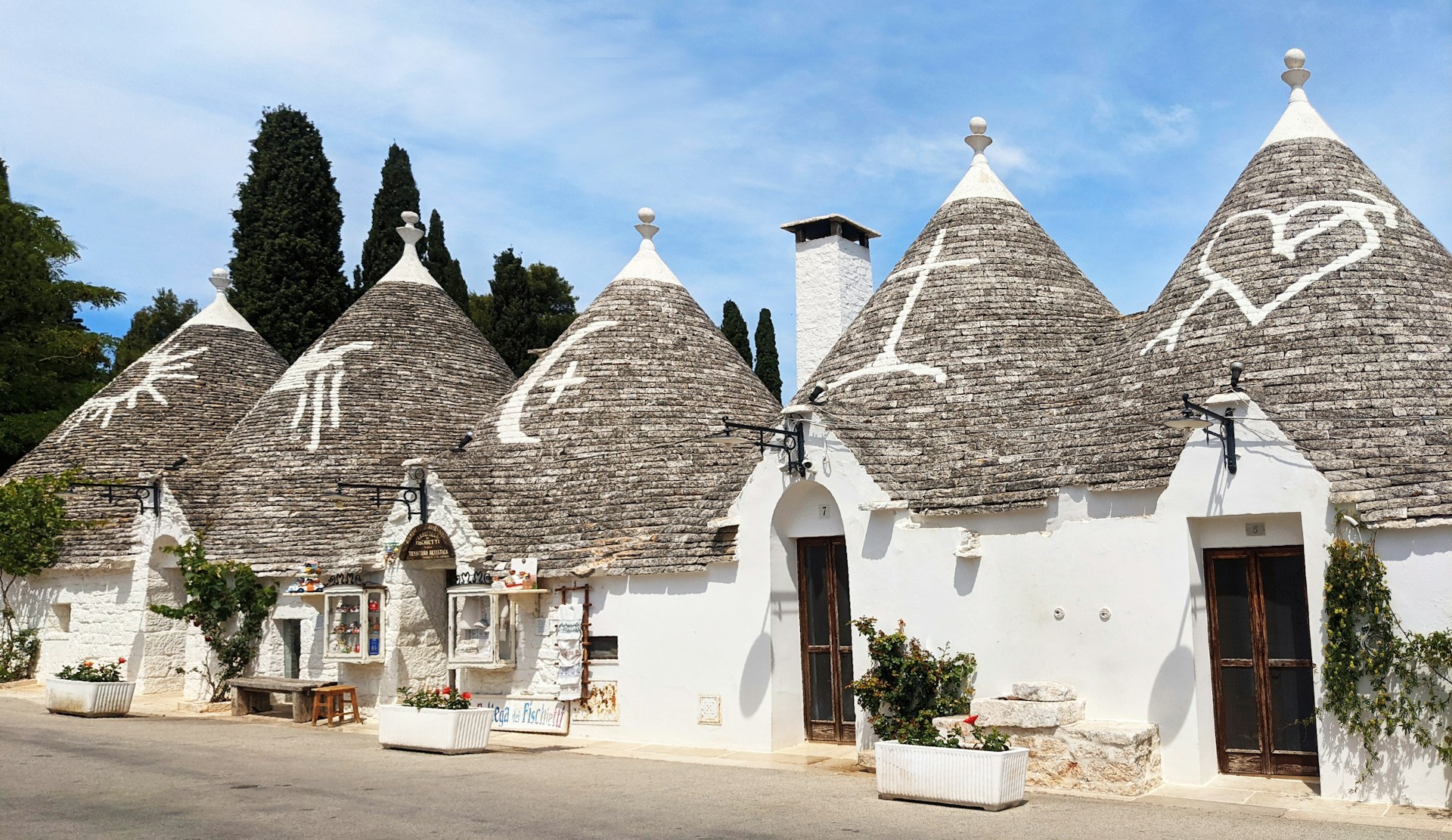
Photo by Mathilde Ro on Unsplash
Alberobello
One of the most unique Pugliese towns requires about a 30-minute drive inland from Savelletri. Alberobello is the epitome of charm with more than 1,000 trulli, making it feel like you’re living in an actual fairytale. What are trulli? They’re charming white houses made of dry stone, each topped with a cone-shaped grey roof. Many of them are painted with symbols, from hearts to suns. The tradition of these houses date back thousands of years, and have deep connections with southern Italy’s mistrust of the establishment. Property taxes were exorbitant in the Middle Ages, and legend has it that when tax inspectors came to town, farmworkers dismantled their trulli to evade taxes.
Today, the Trulli of Alberobello are a designated UNESCO World Heritage Site. While they’re charming to look at, what’s even cooler is spending the night in one. For a true Pugliese meal, head to Trattoria “Casa Amatulli” di Gianvito Amatulli and order the orecchiette con cime di rapa.
Where to stay: During my visit to Alberobello, I obviously had to sleep in a trullo, and I would highly recommend Trulli Holiday. While there’s really not a ton to do in town, it is completely worth an overnight stay to experience these unique homes. I mean, how often can you say you slept in a UNESCO World Heritage Site?
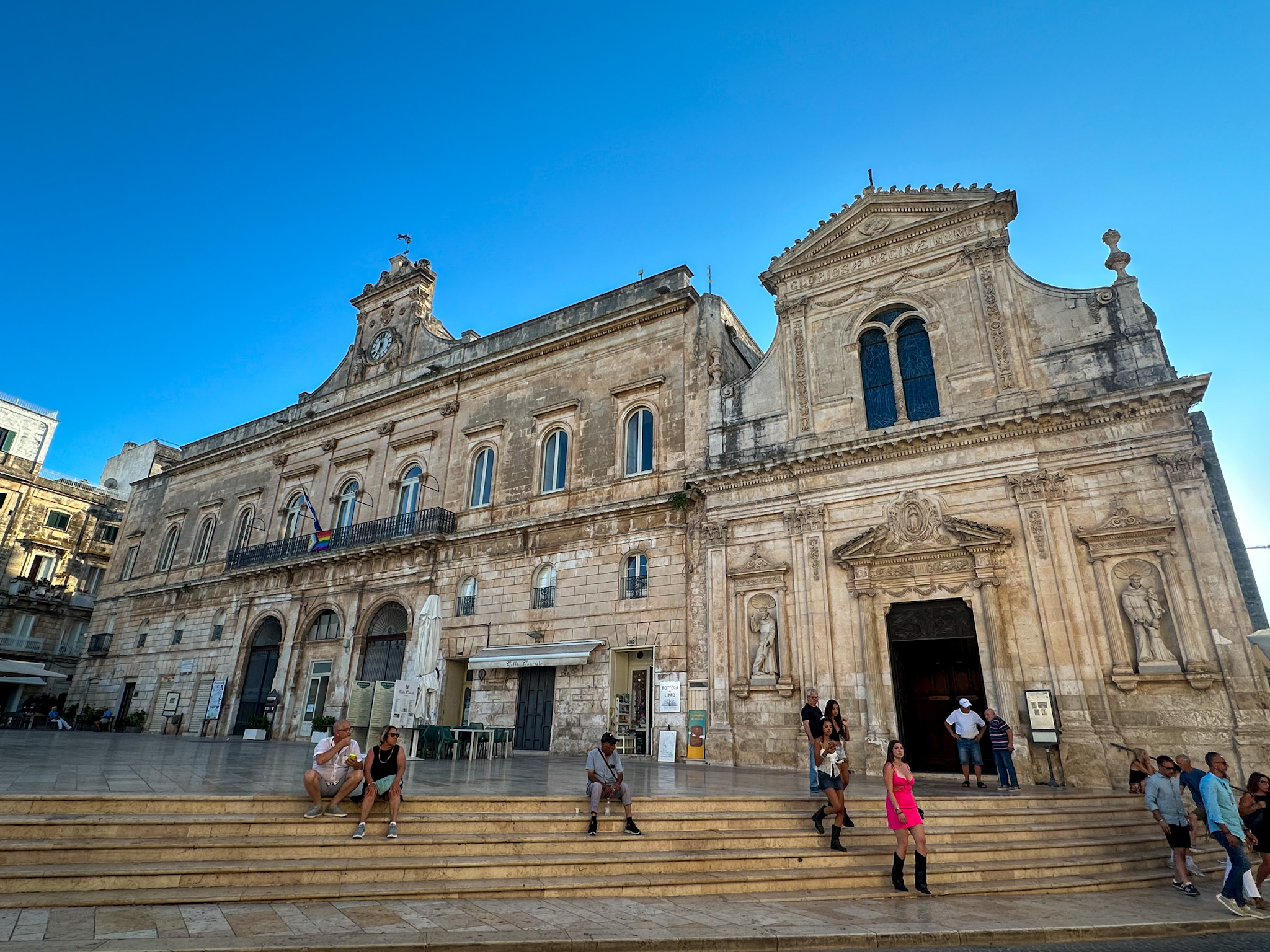
Photo by Kaitlyn Rosati
Ostuni
Next stop is Ostuni, the designated White City of Puglia. I was skeptical of the moniker, especially in a region that is already very conspicuously white, but Ostuni manages to exceed expectations. While approaching the small coastal town, you see a massive block of white amidst the verdant sea of trees. Once I saw it, I understood the name.
Ostuni is a sleepy town, much quieter than its northern counterparts like Monopoli and Polignano a Mare. But that’s part of the charm. This is a place to enjoy la dolce far niente, the art of doing nothing. Simply walk around and admire the white walls, hit up an aperitivo bar or two—I recommend Passaporto Alchimia & Cucina or SottoSopra Cocktail Bar. Soak up the booze with a puccia sandwich, made of a typical Pugliese bread made using leftover pizza dough. You can fill it with whatever your heart desires, but for a true taste of Puglia, go for pulpo (octopus) and burrata, the straciatella-stuffed mozzarella. The best places for a puccia sandwich in Ostuni are Sapori D’eccellenza and Borgo Antico Bistrot.
Where to stay: For a contemporary resort that’s just steps from the sea, Ostuni a Mare is a 202 room hotel with open-air dining and an inviting pool that’s the perfect antidote to hot southern Italian sun. With the Rosa Marina at your doorstep, enjoy the property’s private beach access at Il Pontile. Room styles range from superior (with private balconies) all the way up to the spacious Rosa Marina Suite.
Lecce
If you want the flair of northern Italy in Puglia, let me introduce you to Lecce, often referred to as the “Florence of the South.” Known for richly captivating history and art, it’s no secret how this city got its name. However, classifying Lecce as merely a “Florence dupe” doesn’t do the city justice.
Here, you’ll get a history lesson through cucina povera, which quite literally translates to “poor cuisine.” Like most southern Italian regions, Puglia has historically faced extreme poverty, and treasured food traditions make the most of products like bread, beans, and seasonal ingredients. The result is often rustic meals that feel home-cooked, even when you’re dining out. At Trattoria Nonna Teti, try ciceri e tria, a pasta dish with both fresh and fried pasta for added texture and chickpeas for protein. If you’ve ever had the sweet, custard-filled pastry pasticciotto, you have Galatina, a small town near Lecce, to thank.. Try the best one in town at Natale Pasticceria, and be sure to try the house specialty, which includes chocolate and rum.
Food aside, Anfiteatro Romano di Lecce is a second-century Roman amphitheater that’s well worth a visit. For even more history, check out the “three arches” of Lecce: Porta Napoli, Porta San Biagio, and Porta Rudiae. All of them can be found at various entrances into Lecce’s Centro Storico.
Where to stay: Far from its impoverished past, Lecce is now home to a plethora of luxury hotels. Two of the city’s hotels have even earned one Michelin key, Palazzo de Noha and La Fiermontina Palazzo Bozzi Corso. You really can’t go wrong with either, but if you want a more local experience, book a stay at Attico Barocco, with stunning views of the Baroque Lecce Cathedral.